Caravelle 10R/11R
Sud Aviation
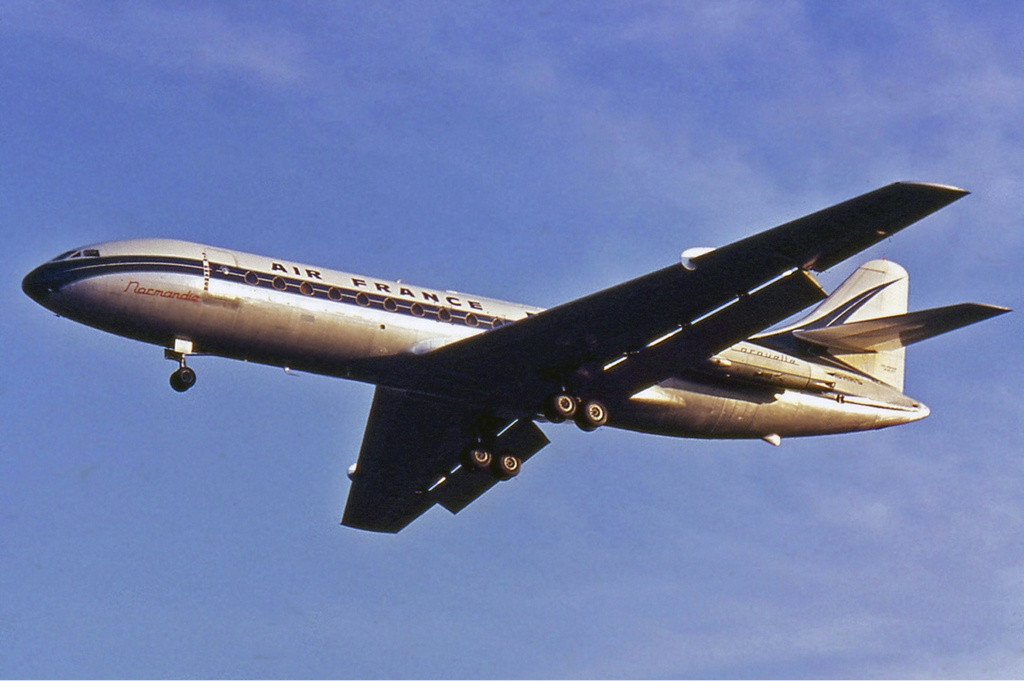
Historical Context & Origins
The Sud Aviation Caravelle, launched in 1959, revolutionized short-medium range flight. Its initial success pushed Sud Aviation to search for greater range and performance, thus giving rise to the "R" variants.
The Sud Aviation Caravelle 10R, with its first flight in 1965, was a crucial evolution. It offered more autonomy and better operational adaptability, especially for longer routes and airports with "hot & high" conditions.
The Caravelle 11R further consolidated these improvements. Both versions responded to the growing demand for a versatile regional jet, capable of serving an expanding customer base.
Architecture & Technological Design
The Caravelle 10R/11R architecture retained the iconic rear-mounted engines on the fuselage, ensuring an exceptionally quiet cabin. The "R" stood for enhanced range and the introduction of effective thrust reverse systems on all engines, crucial for safety.
The technological heart was the adoption of the Pratt & Whitney JT8D engines, a strategic departure from the previous Rolls-Royce Avon. These turbofans offered more power, better fuel efficiency and greater reliability, while reducing operating costs.
Significant aerodynamic changes included slotted flaps to improve low-speed performance and a larger dorsal fin to increase directional stability. These refinements further increased the operational capabilities of the aircraft.
Onboard Specifications
- ◆Pratt & Whitney JT8D Engines: High efficiency and power for superior performance.
- ◆Advanced Thrust Reversers: For shorter, safer takeoffs and landings.
- ◆Extended operational autonomy: Optimized for medium-long range routes.
Operational Career & Operators
The Caravelle 10R and 11R attracted several prestigious airlines thanks to their versatility and operational reliability. The ability to operate on short runways and in various climatic conditions allowed the opening of new routes.
Prominent operators included companies such as United Air Lines and Finnair. French elegance combined with the robustness of American engines proved to be a winning combination, ensuring comfortable and punctual journeys.
These jets were notable for their extraordinary operational longevity, with many examples serving for decades. Their presence in the skies helped define the golden era of air travel, offering a high-quality experience even on regional routes.
Legacy & Cultural Impact
The Sud Aviation Caravelle 10R/11R was not just an airplane, but a symbol of progress and avant-garde aeronautical design. Its iconic silhouette and quiet cabin consolidated the idea of jet travel as a refined and accessible experience.
The choice of an American engine for the R variants demonstrated Sud Aviation's engineering flexibility. This move influenced subsequent generations of aircraft, combining the best of European and American engineering.
Today, the Caravelle 10R/11R is remembered as a regional jet pioneer, a true forefather of a category of aircraft that would dominate modern air travel. His legacy lies in technical innovations and his contribution to connecting the world.
Telemetria Specs (HUD)
Hangar Trivia & Curiosità
- 💡The Caravelle was one of the first jet airliners to feature rear-mounted engines, a design choice that significantly reduced cabin noise.
- 💡Its distinctive nose section, including the cockpit windows, was famously derived from the de Havilland Comet, following a licensing agreement.
- 💡The 10R and 11R variants were powered by Pratt & Whitney JT8D turbofan engines, offering improved fuel efficiency and performance over earlier Rolls-Royce Avon-powered models.
Archivio Avvistamenti Spotter
Immagini scattate dalla community in tutto il mondo
Vettori Rilevati (Flotta Attiva)







Vettori Rilevati (Flotta Storica / Dismessa)

Indian Airlines
Stato: Dismesso

Swissair
Stato: Dismesso

EAS Europe Aero Service
Stato: Dismesso

LTU International
Stato: Dismesso
Air Inter
Stato: Dismesso
Sabena
Stato: Dismesso

United Airlines
Stato: Dismesso

Alitalia
Stato: Dismesso

Aviaco
Stato: Dismesso