Ca.73
Caproni
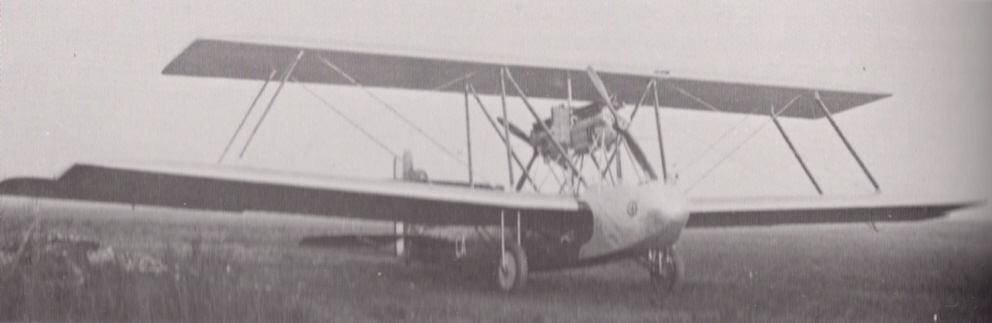
Historical Context & Origins
The beginning of the 1920s represented a period of fervent reorganization and development for world aeronautics, with Italy committed to consolidating its nascent Regia Aeronautica. In this dynamic context, requests were oriented towards robust and versatile aircraft, capable of covering multiple roles, from bombing to transport. Legendary engineer Gianni Caproni, with his namesake company, was at the forefront of this evolution.
The Caproni Ca.73, with its first flight in 1924, emerged as a bold and innovative response to these needs. Designed as a medium-heavy bomber, it was among the first Italian aircraft to conceive a dual function from the initial stages: the offensive military one and the civil one for transporting goods or passengers. This modular approach immediately defined its avant-garde character.
Architecture & Technological Design
The Ca.73 had a majestic biplane configuration, characterized by an impressive wingspan that emphasized its range and load capacity. The most revolutionary aspect lay in its combined structure: a robust welded steel tube frame for the fuselage and wings, combined with a canvas covering, a significant step towards modern and more resistant aircraft construction.
Propulsion was entrusted to a pair of engines, typically the Isotta Fraschini Asso 500 or similar, strategically positioned to optimize thrust and weight distribution. This twin-engine configuration not only provided the power needed to lift considerable loads, but also offered a crucial safety margin in the event of one thruster failure, a valuable feature for long-range missions.
The design of the cockpit and crew environments, which could range from 4 to 6 members, reflected attention to operational functionality. Defensive positions were well distributed, often with machine guns arranged to cover large sectors, making the Ca.73 a formidable adversary in the skies of the 1920s.
Onboard Specifications
- ◆Innovative mixed structure: The welded steel tube frame guaranteed sturdiness and high resistance to structural stress, distinguishing it from previous entirely wooden models.
- ◆Twin-engine configuration: With engines such as the Isotta Fraschini Asso 500, it offered excellent performance in terms of power and reliability, crucial for bombing and transport missions.
- ◆Operational versatility: Designed to be rapidly reconfigured from bomber to transport aircraft, demonstrating cutting-edge flexibility of use for its time and a pragmatic military-economic approach.
Operational Career & Operators
The Caproni Ca.73 quickly entered service with the Regia Aeronautica, mainly covering the role of day and night bomber, but also as a long-range reconnaissance aircraft. Its size and load capacity made it ideal for the transport of equipment and personnel, acting as a bridge between military needs and the emerging potential of civil aviation.
Although it was not used in major conflicts, the Ca.73 played a fundamental role in training crews and defining the operational doctrines of Italian strategic bombing in the 1920s. Its ruggedness and reliability helped train a generation of aviators and tested early theories about the aircraft's use as a large-scale airpower carrier.
Legacy & Cultural Impact
The Caproni Ca.73 represents a milestone in the evolution of Italian aeronautics, consolidating Gianni Caproni's reputation as a pioneer and innovator. It was a transitional aircraft, which moved the Italian industry from the predominantly wooden and single-engine constructions of the Great War era towards more modern and multi-engine structures, anticipating future trends.
Its success paved the way for further developments, directly influencing subsequent Caproni models, such as the Ca.74 and Ca.79, and helping to shape the identity of the Italian military and civil air force. The Ca.73 remains a symbol of interwar Italian ingenuity, an eloquent example of how technological innovation and strategic vision merged to create an aircraft that left a lasting impression.
Telemetria Specs (HUD)
Hangar Trivia & Curiosità
- 💡Despite its designation, the Ca.73 was a development of the Ca.70, originally conceived as a night bomber.
- 💡Its robust design allowed for various roles beyond bombing, including transport, reconnaissance, and even experimental passenger configurations.
- 💡It was one of the first twin-engine bombers to serve with the newly formed Regia Aeronautica (Italian Royal Air Force).
Archivio Avvistamenti Spotter
Immagini scattate dalla community in tutto il mondo