C.440 Goéland
Caudron
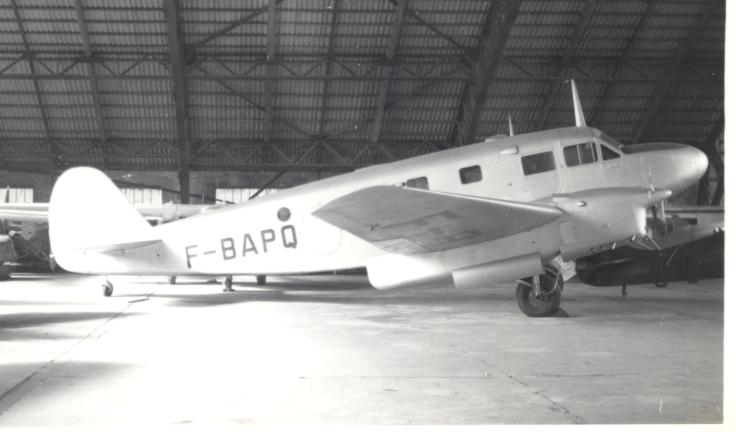
Historical Context & Origins
The 1930s represented a golden age for French aviation, a period of fervent innovation and rapid expansion in both the civil and military sectors. In this dynamic context, the need for a multi-purpose aircraft emerged: capable of excelling as a light transport aircraft, multi-engine trainer and even as a military liaison aircraft.
It was in response to these needs that the renowned Caudron company, already famous for its record-breaking and racing aircraft, developed the C.440 Goéland. Its first flight, which took place in 1934, marked the beginning of an industrious career that would see this twin-engine aircraft become a pillar of pre-war French aviation, combining elegance and robustness.
Architecture & Technological Design
The Caudron C.440 Goéland epitomized French aeronautical engineering of the time, featuring a clean and efficient design. It was a low-wing twin-engine monoplane, a configuration that guaranteed stability and good aerodynamic performance, essential for the roles for which it was intended.
Its structure was predominantly made of wood, a common choice for the time that combined lightness with strength, using a combination of plywood and spruce. A notable innovation for an aircraft of its category was the adoption of retractable landing gear, which significantly contributed to reducing aerodynamic drag, thus increasing maximum speed and efficiency.
Propulsion was entrusted to two inverted in-line engines Renault Bengali Six, air-cooled. These engines, known for their reliability and balanced power delivery, provided the Goéland with the necessary thrust for its various missions, from transporting passengers to training future multi-engine pilots.
Onboard Specifications
- ◆Advanced Wooden Structure: A lightweight yet robust architecture optimized for aerodynamic performance and handling.
- ◆Retractable Landing Gear: State-of-the-art feature that reduced drag, improving aircraft speed and efficiency.
- ◆Renault Bengali Six engine: Two reliable 6-cylinder engines, ideal for ensuring a balance between power and fuel consumption.
Operational Career & Operators
The Caudron C.440 Goéland found rapid application in numerous fields. In the civil sector, it was widely used by Air France and other regional airlines for short and medium-haul routes, offering comfortable and efficient passenger transport. Its versatility soon made it popular also as a private aircraft.
Its robustness and ease of piloting made it an ideal trainer for pilot training on multi-engine aircraft, helping to prepare an entire generation of French aviators. Numerous examples were also used by the Armée de l'Air for liaison and light transport tasks before and during the Second World War.
With the outbreak of the conflict, many civilian Goélands were requisitioned for military purposes. After the fall of France, some examples were even used by the Luftwaffe and other Axis forces for secondary roles, demonstrating its intrinsic usefulness and its ability to adapt to different operational needs.
Legacy & Cultural Impact
The Caudron C.440 Goéland, while not a record-breaking aircraft or an iconic fighter, has left a significant imprint on the history of French aviation. It was a silent "workhorse", whose reliability and adaptability made it indispensable for the civil and military operations of its era.
Its importance also lies in the crucial role it played in the training of countless pilots on multi-engine aircraft, laying the foundations for future generations of aviators. It symbolizes a period of great creativity and pragmatism in French aeronautical engineering, capable of producing elegant and functional aircraft.
Today, the Goéland is remembered as an eloquent example of Caudron's versatility and construction ingenuity. Its longevity and use in such diverse contexts cement its place as a fundamental piece of France's rich aeronautical history.
Telemetria Specs (HUD)
Hangar Trivia & Curiosità
- 💡Over 1,700 Goéland aircraft, including various sub-variants, were produced, making it one of the most prolific French aircraft of its time.
- 💡Despite its French origin, a substantial number of Goélands were manufactured and operated by the German Luftwaffe for liaison and training during World War II.
- 💡The name 'Goéland' is French for 'Gull,' reflecting the aircraft's graceful design and relatively light appearance.
Archivio Avvistamenti Spotter
Immagini scattate dalla community in tutto il mondo