Britannia 300
Bristol
Historical Context & Origins
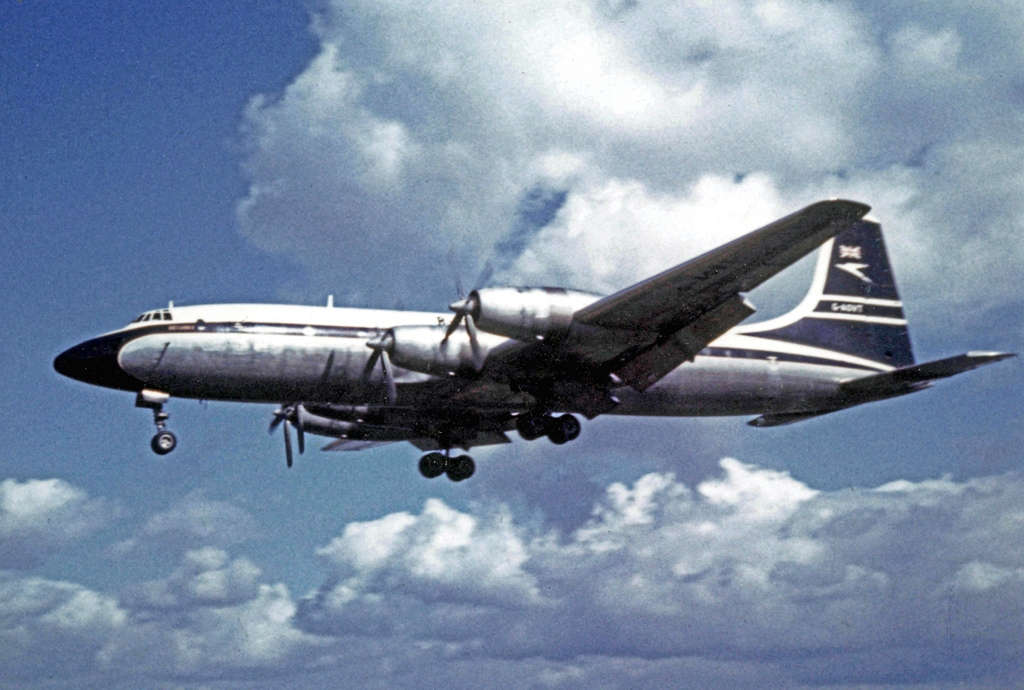
In the post-war turmoil, with the British aeronautical industry eager to establish itself again, the need emerged for a civil aircraft capable of covering long distances. The Bristol Britannia, a bold design of the Bristol Aeroplane Company, answered this call, developed in response to the Brabazon Committee's Type III requirement for a transatlantic airliner.
Early variants, such as the 100 Series, laid the foundations for an aviation icon, but it was with the extended-fuselage versions that the Britannia fully realized its potential. The 300 model, and in particular the long-range 310, represented the culmination of this evolution, aiming to capture the burgeoning global air travel market. The first flight of the Britannia 300 variant occurred in 1956, marking the beginning of a new era.
Architecture & Technological Design
The Britannia 300 was a true jewel of British engineering, characterized by an elegant design and cutting-edge technical solutions for its time. Its majestic silhouette and large wings gave it a discreet grandeur, while the choice of turboprop engines made it a pioneer in the field of airliner propulsion.
At the heart of its performance were the four Bristol Proteus turboprop engines, famous for their efficiency and remarkable silence in the cabin. This feature earned him the affectionate nickname of "Whispering Giant", a tribute to his ability to offer an incredibly smooth and restful flight experience, far from the din of piston engines.
Advanced aerodynamics and robust structure allowed the Britannia to operate effectively on intercontinental routes. The pressurized cabin, combined with superior soundproofing, ensured unprecedented comfort for passengers, making it a favorite for long journeys across oceans and continents.
Onboard Specifications
- ◆Bristol Proteus 755 turboprop engines: Four units, for efficient and silent thrust.
- ◆Pressurized and air-conditioned cabin: For a comfortable flying experience at high altitudes.
- ◆Innovative thermal degiver system: For greater safety in adverse weather conditions.
Operational Career & Operators
The Bristol Britannia 300 entered service with some of the world's most prestigious airlines, including BOAC (British Overseas Airways Corporation), who deployed it on key routes to the British Empire and beyond. Other prominent operators were Canadian Pacific Air Lines and El Al Israeli Airlines, which exploited its autonomy and reliability to expand their international networks.
Despite some initial engine icing problems, quickly resolved with engineering changes, the Britannia earned a solid reputation for its reliability and exceptional performance. Its ability to fly long range with superior comfort made it a true workhorse, appreciated by crews and passengers alike.
Legacy & Cultural Impact
The Britannia 300 holds a unique place in aviation history as the link between the piston engine age and the advent of the pure jet age. It convincingly demonstrated the feasibility and advantages of turboprop engines for long-range scheduled transportation, paving the way for subsequent technological developments.
Although its commercial career was relatively short due to the rapid rise of jet aircraft such as the Boeing 707 and Douglas DC-8, the Britannia left a lasting legacy. It helped shape the experience of modern air travel, raising standards of comfort and quietness for passengers, and remains a symbol of mid-century British aeronautical ingenuity.
Telemetria Specs (HUD)
Hangar Trivia & Curiosità
- 💡It was affectionately known as 'The Whispering Giant' due to its remarkably quiet turboprop engines, especially compared to contemporary piston-engined airliners.
- 💡The Britannia faced significant development delays, including issues with engine icing, which hampered its early service introduction.
- 💡Though primarily a passenger aircraft, many Britannias were later converted for cargo duties, notably with the Royal Air Force, showcasing its versatility.
Archivio Avvistamenti Spotter
Immagini scattate dalla community in tutto il mondo