BN-2 Islander
Britten-Norman
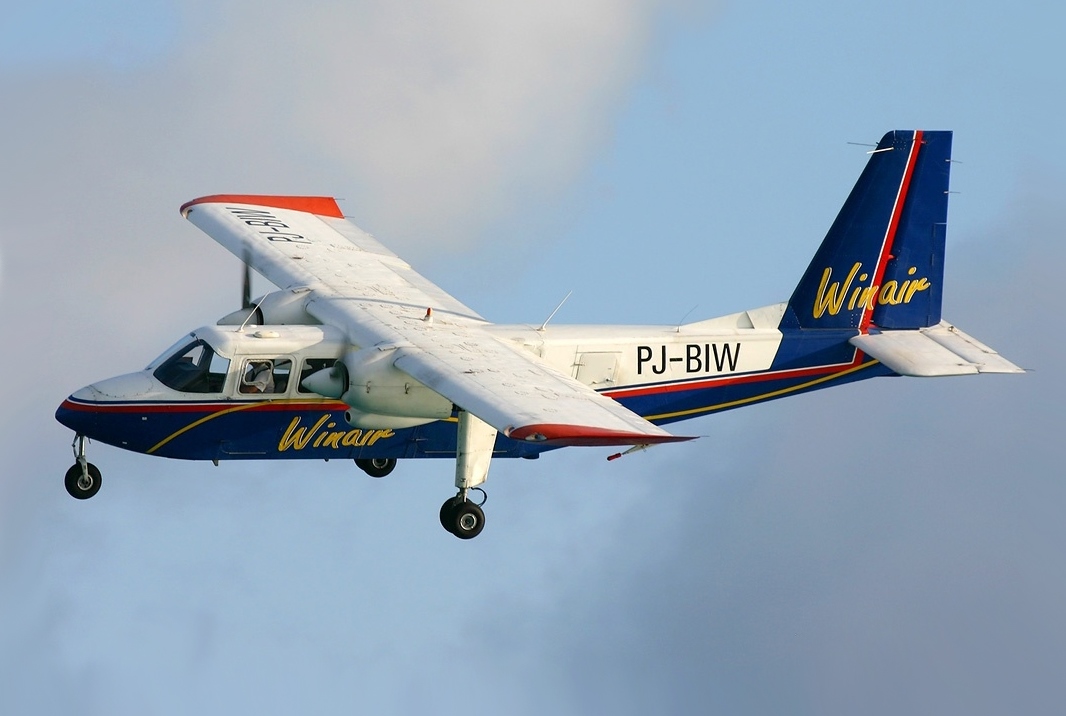
Historical Context & Origins
The Britten-Norman BN-2 Islander was born in an era of post-war aeronautical fervor, when the need for robust, economical and versatile aircraft for short-haul connections, particularly between islands and remote areas, was pressing. The Britten-Norman company, founded by John Britten and Desmond Norman on the Isle of Wight, UK, aimed to fill this market gap.
Their goal was to create an aircraft that was simple to build, easy to maintain and capable of operating from rudimentary runways. The project focused on a high-wing, twin-engine, non-pressurized design that could offer high passenger or cargo carrying capacity for its weight and size. The BN-2 Islander made its first flight on June 13, 1965, marking the beginning of a utility aviation legend.
Architecture & Technological Design
The architecture of the BN-2 Islander is a manifesto of engineering efficiency and pragmatism. Its design philosophy was based on simplicity, robustness and minimized maintenance. This resulted in an all-metal construction, straight wings and fixed landing gear, elements that helped reduce operational complexity and costs.
The high-wing design, large wing surfaces and generous flaps gave the Islander exceptional STOL (Short Take-Off and Landing) capabilities. This feature made it ideal for operating from extremely short and unprepared runways, a crucial competitive advantage for operators in island, mountainous or infrastructure-limited regions.
Typically equipped with two Lycoming O-540 piston engines, the Islander benefited from powerplants known for their reliability and ease of maintenance. The twin-engine configuration also ensured high operational safety and adequate efficiency for transporting significant loads over short distances.
Onboard Specifications
- ◆Modular capacity: Up to 9 passengers or equivalent cargo volume, for unrivaled versatility.
- ◆Simplified maintenance: Modular design that allowed quick interventions and reduction of machine downtime.
- ◆Reinforced fixed carriage: Essential for operations on unpaved surfaces, providing unique operational resilience.
Operational Career & Operators
The operational career of the BN-2 Islander has been extraordinarily extensive and diverse, finding use in over 120 countries on every continent. It has served as a regional passenger airliner, light cargo carrier, air ambulance, maritime patrol aircraft, and even in military support roles.
Its legendary robustness and low operating costs have made it a mainstay for countless smaller airlines and charter operators, especially in regions such as the Caribbean, Pacific and Africa, where airport infrastructure is often basic or non-existent. The Islander has become synonymous with connectivity in these areas.
Nearly 60 years after its first flight, hundreds of BN-2 Islanders continue to fly regularly every day, an incredible testament to the validity of its design. Its longevity and continuous operation are proof of its intrinsic reliability and its irreplaceable market niche.
Legacy & Cultural Impact
The Islander has left an indelible legacy in global aviation, becoming an connectivity icon for many remote communities. It has served as a true "lifeline", carrying people, vital cargo and humanitarian aid to places unreachable by most other aircraft.
Numerous variants were derived from the BN-2, including the BN-2T Turbine Islander, the Defender for military applications and the Trislander, a three-engine version with increased capacity. This ability to evolve demonstrates the robustness of the original design concept and its inherent adaptability.
Even today, the Islander's simplicity, reliability and extraordinary STOL capabilities remain extremely relevant. They influence the design of modern utility aircraft and maintain the BN-2 as an unsurpassed benchmark in aeronautical engineering for multi-role, low-maintenance, extreme-condition aircraft.
Telemetria Specs (HUD)
Hangar Trivia & Curiosità
- 💡It is one of the most successful and long-lived British commercial aircraft designs, remaining in continuous production for over 50 years.
- 💡The Islander is particularly famous for its operations in remote and island communities worldwide, often providing vital links where larger aircraft cannot land.
- 💡Its unique 'boxy' fuselage design allows for easy loading of cargo or conversion for passenger configuration, optimizing its utility.
Archivio Avvistamenti Spotter
Immagini scattate dalla community in tutto il mondo