BAe ATP
British Aerospace
Historical Context & Origins
In the 1980s, the regional aviation landscape was rapidly evolving, with growing demand for aircraft that were more fuel-efficient, quiet and comfortable than previous generation models. British Aerospace (BAe) responded to this need with the British Aerospace BAe ATP, an ambitious project aimed at modernizing its offering. Its first flight occurred in 1986, marking an important step in the evolution of turboprops.
The ATP, acronym for Advanced Turboprop, was born as an evolution of the popular but now dated Hawker Siddeley HS 748. The objective was to create an aircraft that could compete effectively in the short and medium range flight segment, offering regional carriers a technologically advanced solution. The drive towards innovation was dictated by the need to reduce operating costs and improve the travel experience of passengers.
Architecture & Technological Design
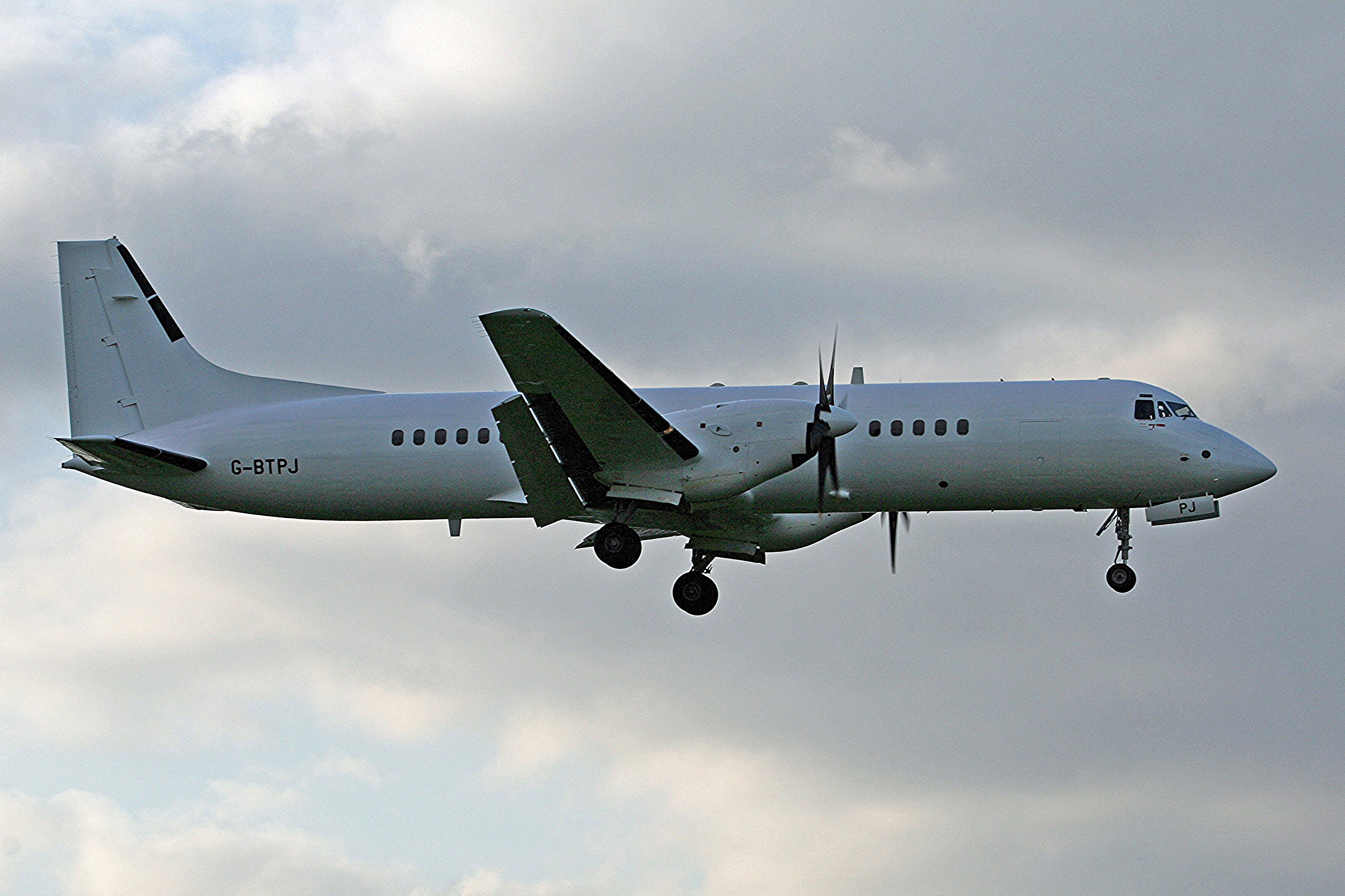
The BAe ATP was notable for its conventional but optimized architecture, a high-wing twin-engine turboprop designed to maximize aerodynamic efficiency and stability. The lengthened fuselage, compared to its predecessor, allowed for greater seating capacity, making it competitive for busier regional routes. The design was conceived specifically with durability and ease of maintenance in mind.
The technological heart of the ATP lay in its propulsion: two Pratt & Whitney Canada PW126A engines, known for their reliability and excellent power/weight ratio. These engines were paired with innovative Dowty Rotol composite six-blade propellers, a crucial choice to significantly reduce cabin noise and external sound footprint. This approach ensured superior comfort for passengers and minimized environmental impact.
Onboard Specifications
- ◆Six-bladed Dowty Rotol propellers: Essential for reducing noise and increasing propulsive efficiency, representing one of the most significant innovations.
- ◆Pratt & Whitney Canada PW126A engines: Powerful and efficient turboprops, guaranteeing reliable performance and lower fuel consumption.
- ◆Spacious and quiet passenger cabin: Designed to maximize comfort, with large windows and an advanced climate control system for its time.
Operational Career & Operators
The BAe ATP entered service with British Midland in 1988, which was its launch customer and largest operator. Although it did not reach the sales volumes of some competitors, the ATP found use with several regional airlines around the world, praised for its reliability and ability to operate on short runways and in varying weather conditions. Its robustness made it ideal for intensive shuttle services.
Despite relatively limited production, the ATP carved out a niche in the market, serving regional routes in Europe, North America and Asia. Some operators also used it for cargo services thanks to its versatility. Its operational career has demonstrated the validity of the concept of an advanced turboprop focused on efficiency and passenger comfort.
Legacy & Cultural Impact
The BAe ATP, while not a bestseller, has made an important mark in regional aviation as a pioneer of advanced turboprop technologies. It demonstrated that it was possible to combine fuel efficiency with a comfortable and quiet travel experience, influencing subsequent generations of regional aircraft. Its emphasis on noise reduction has become an industry standard.
The legacy of the ATP lies in its demonstration that thoughtful design and the integration of innovative technologies can extend the useful life and competitiveness of a traditional aircraft concept such as the turboprop. It has helped shape passenger and operator expectations for regional aircraft, pushing the industry towards increasingly sustainable and comfort-oriented solutions.
Telemetria Specs (HUD)
Hangar Trivia & Curiosità
- 💡The 'ATP' in its name stands for 'Advanced Turboprop,' reflecting its design goals for efficiency and comfort.
- 💡It featured distinctive six-bladed propellers, specifically designed to reduce cabin noise and vibration levels for a smoother passenger experience.
- 💡Despite its advanced features and focus on comfort, the BAe ATP faced stiff competition from contemporary turboprops like the Fokker 50 and ATR 72, which ultimately limited its sales success.
Archivio Avvistamenti Spotter
Immagini scattate dalla community in tutto il mondo



