B-1
Boeing
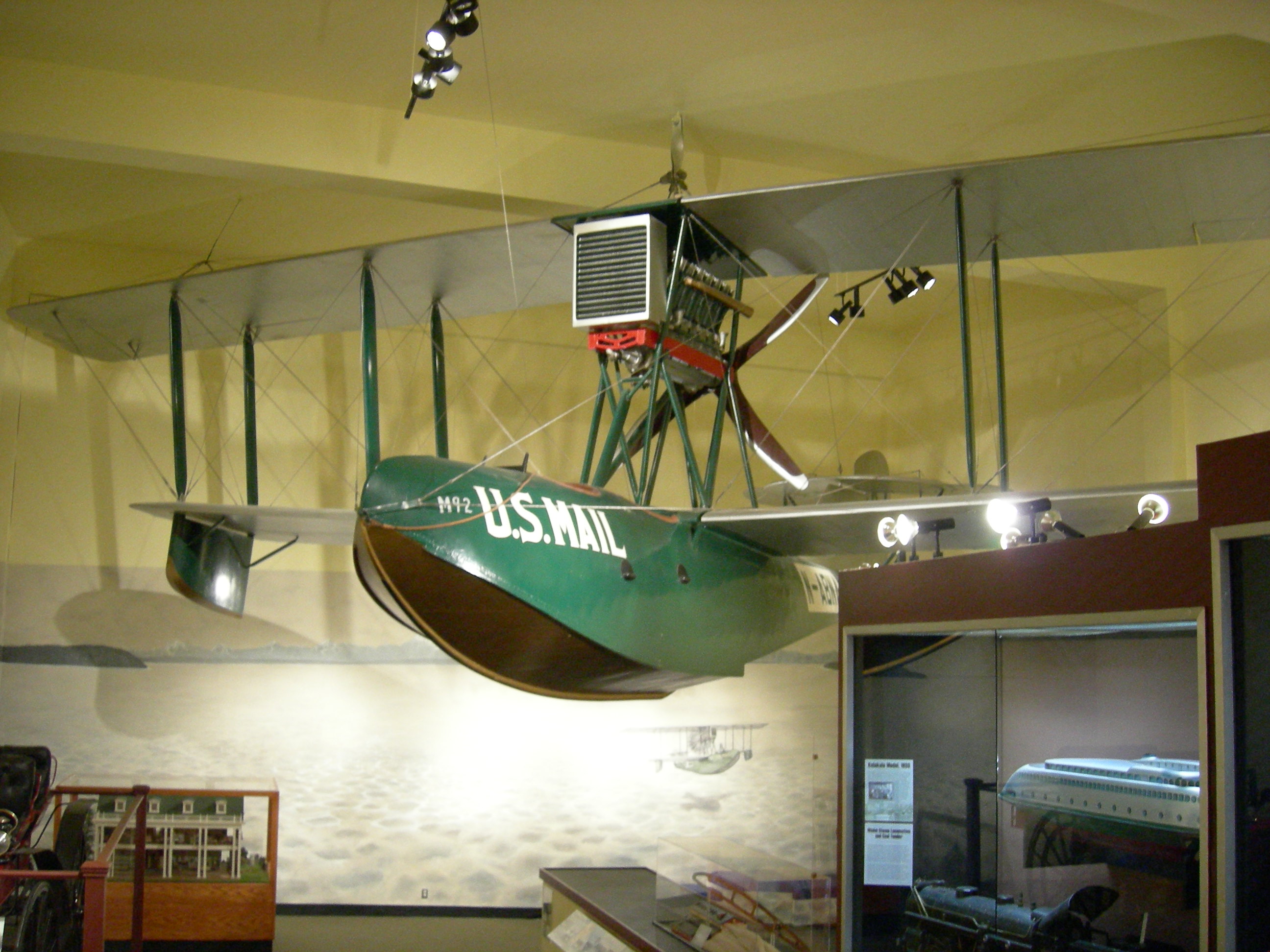
Historical Context & Origins
At the end of the First World War, the global aeronautical industry found itself faced with a crucial reconversion challenge, moving from war production to the civilian market. It was in this dynamic scenario that the nascent Boeing Airplane Company, founded by William Boeing, sought new opportunities, sensing the potential of commercial air transport, especially in the peculiar environment of the Pacific Northwest, rich in coasts and waterways.
In response to this vision, Boeing developed the B-1 (Boat-1), a biplane seaplane designed to transport mail and passengers. Its first flight in 1919 marked a bold step for the company and American commercial aviation, demonstrating confidence in the future of air connections and the ability to adapt military technology for peaceful purposes.
Architecture & Technological Design
The Boeing B-1 sported an architecture typical of its time, but with significant refinements for the seaplane role. It was a center-hull biplane, made primarily of wood with fabric covering, a combination that offered strength and lightness. Its configuration included two stabilizer floats located under the lower wing, essential for stability in the water during floating and low-speed maneuvers.
The engine was a 200 hp Liberty L-6 piston engine, mounted in a pusher configuration above the central hull between the two wings. This design choice not only protected the propeller from water spray during takeoff and landing, but also offered a better view for the pilot and reduced cabin noise for passengers, anticipating ergonomic considerations.
Onboard Specifications
- ◆Pushing Propeller Configuration: Key innovation for efficiency and safety in the aquatic environment.
- ◆Limited but Versatile Capacity: Designed to carry one pilot and two passengers or an equivalent load of mail.
- ◆Wooden Hull with Floats: Materials and design optimized for navigation and flight.
Operational Career & Operators
The Boeing B-1 entered service predominantly under the operations of William Boeing himself, through his Boeing Air Transport, before it became one of the major US airlines. Its primary mission was air mail and, to a lesser extent, passenger transportation, connecting key cities in the Pacific Northwest. Although the number of units produced was limited to seven units, their impact was notable.
These aircraft were instrumental in establishing the feasibility and reliability of seaplane airmail service. The B-1 stood out for its robustness and ability to operate in often adverse weather conditions, helping to lay the foundation for future trade routes and Boeing's expansion into civil aviation, overcoming the logistical challenges of the time.
Legacy & Cultural Impact
The Boeing B-1, despite being a modest-sized and limited-production aircraft, occupies a significant place in the history of aviation. He was one of the pioneers in proving the viability of commercial air transportation and air mail, especially in geographically complex regions where land transportation was slow or impractical. His operational experience provided Boeing with valuable data and know-how for the development of subsequent, larger, higher-performance seaplanes.
In an era of fervent experimentation, the B-1 represented a symbol of American ingenuity and the entrepreneurial vision of William Boeing. His legacy lies not only in the technical innovations he introduced, but also in the role he played in shaping the aviation industry, setting the course for Boeing's future successes and solidifying the idea that the sky was the next great front for commerce and communications.
Telemetria Specs (HUD)
Hangar Trivia & Curiosità
- 💡It was Boeing's first commercial aircraft, preceding its more famous military and later passenger jet designs.
- 💡Primarily utilized for scheduled mail and passenger services between Seattle, Washington, and Victoria, British Columbia.
- 💡Only a single Boeing B-1 was ever constructed, registered as NC5870, making it a unique piece of aviation history.
Archivio Avvistamenti Spotter
Immagini scattate dalla community in tutto il mondo