ATR 42-500
ATR
Historical Context & Origins
The success of the Italian-French ATR (Regional Transport Aircraft) consortium, born from the collaboration between Aérospatiale and Aeritalia (now Leonardo), was immediately tangible with the ATR 42 series. Launched in 1984, the original ATR 42 quickly established itself as the standard for regional transport. Its reliability and versatility made it a fundamental pillar for numerous airlines.
However, as the 1990s progressed, the market demanded even more high-performance, quiet and comfortable aircraft. The need to face more challenging operating conditions, such as "hot and high" flights (high temperatures and high altitudes) and on short runways, pushed ATR to develop a significantly improved version.
It was in this context that the ATR 42-500 saw the light of day, making its first flight in 1994. It was not simply an upgrade, but a true redesign aimed at raising the standards of capability, comfort and operational sustainability, consolidating ATR's reputation in regional scheduled aviation.
Architecture & Technological Design
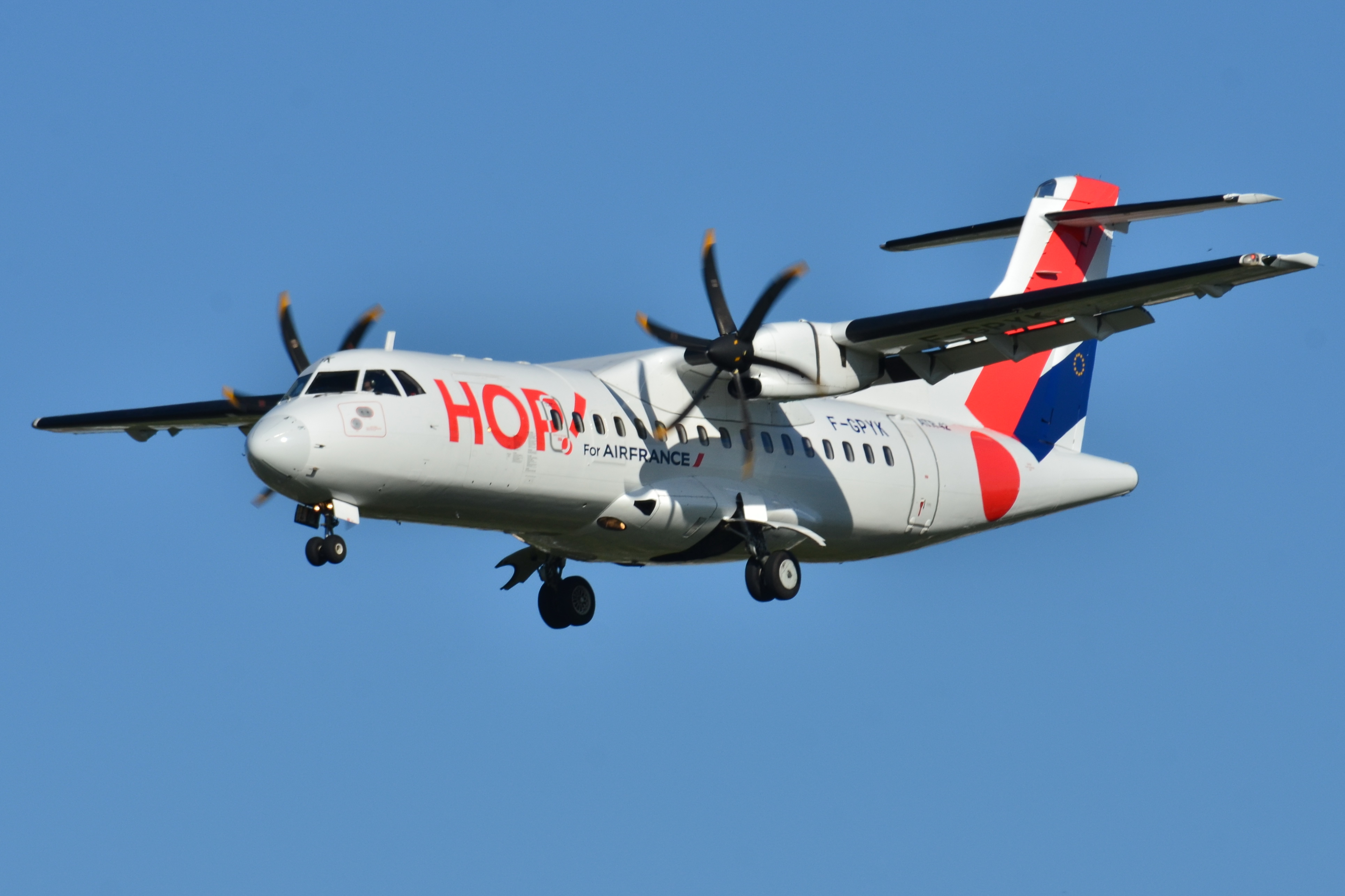
The ATR 42-500 represented a notable leap in quality thanks to a series of targeted technological innovations. The heart of these improvements lay in the new Pratt & Whitney Canada PW127E engines, more powerful and, above all, coupled with six-bladed propellers. This configuration not only increased the available thrust but drastically reduced noise and vibrations in the cabin, significantly improving the travel experience.
The structure of the aircraft underwent significant reinforcements, in particular to the landing gear and wing spars, ensuring greater robustness and operational life. This allowed the ATR 42-500 to operate with larger loads and on less prepared runways, expanding its capabilities in complex operational scenarios.
The avionics were completely modernized, introducing advanced digital systems that improved navigation, flight management and reduced pilot workload. The attention to detail also extended to the interior, which was redesigned to offer greater comfort, space for hand luggage and more welcoming lighting.
Onboard Specifications
- ◆Pratt & Whitney Canada PW127E engines with six-bladed propellers: Greater power, efficiency and acoustic comfort.
- ◆Advanced digital avionics: Improved flight management and operational safety.
- ◆Reinforced structure and upgraded climate control system: Durability and optimized comfort for passengers.
Operational Career & Operators
Since its debut, the ATR 42-500 has established itself as an indispensable workhorse for global regional transportation. Its exceptional ability to operate on short and medium routes, connecting smaller airports with major hubs, has made it the favorite choice of hundreds of operators in every corner of the world.
It has served the fleets of prestigious airlines such as Air Corsica, Silver Airways, FedEx Express (for the cargo variant) and many others, demonstrating unparalleled versatility. Its reputation comes from the winning combination of low operating costs, high reliability and the ability to provide essential connections for remote or underserved communities.
The ATR 42-500 has excelled not only in passenger transport, but also in specialized roles such as cargo transport, maritime surveillance missions or VIP flights, a testament to its inherent adaptability and the robustness of its design.
Legacy & Cultural Impact
The ATR 42-500 was not just a successful aircraft; has significantly shaped the regional aviation landscape. Its introduction raised the standards of what could be expected from a turboprop, demonstrating that it was possible to combine efficiency and performance with unprecedented passenger comfort for its category.
It became a symbol of connectivity, an air bridge that united regions and people, facilitating trade and tourism where other aircraft could not operate as efficiently. Its longevity on the market and its continuous operation are a clear testimony to its forward-thinking concept and its intrinsic validity.
The legacy of the ATR 42-500 lives on not only in the skies, but also in the evolution of subsequent ATR models. It established a benchmark for excellence in Italian-French aeronautical engineering, confirming ATR's position as the undisputed leader in the regional turboprop aircraft sector.
Telemetria Specs (HUD)
Hangar Trivia & Curiosità
- 💡"ATR" is an acronym for "Aerei da Trasporto Regionale" in Italian and "Avions de Transport Régional" in French, reflecting its Franco-Italian heritage.
- 💡The -500 series introduced six-blade propellers, which significantly reduced cabin noise and improved fuel efficiency compared to earlier ATR 42 variants.
- 💡Known for its robust design and excellent short-field performance, making it suitable for operations into challenging regional airports with shorter runways.
Archivio Avvistamenti Spotter
Immagini scattate dalla community in tutto il mondo