Arava
IAI
Historical Context & Origins
1970 marked a turning point for the Israeli aviation industry with the first flight of the IAI Arava, an aircraft destined to redefine the concept of utilitarian transport in extreme conditions. Developed by Israel Aerospace Industries (IAI), the Arava was born from a strategic need for Israel: to have a robust and versatile aircraft, capable of operating from semi-prepared or improvised runways.
Its genesis reflected the need for a means of transportation that could support both military operations and civilian needs in a complex geographic and political context. The goal was to create a STOL (Short Take-Off and Landing) aircraft, i.e. with short take-off and landing capabilities, which was at the same time economical, reliable and easy to maintain.
This ambitious project positioned IAI at the forefront of indigenous aircraft development, demonstrating the country's growing technological and engineering capabilities. The Arava was not just an aircraft, but a statement of intent for the Israeli aerospace industry, projecting it as an innovative player on the world stage.
Architecture & Technological Design
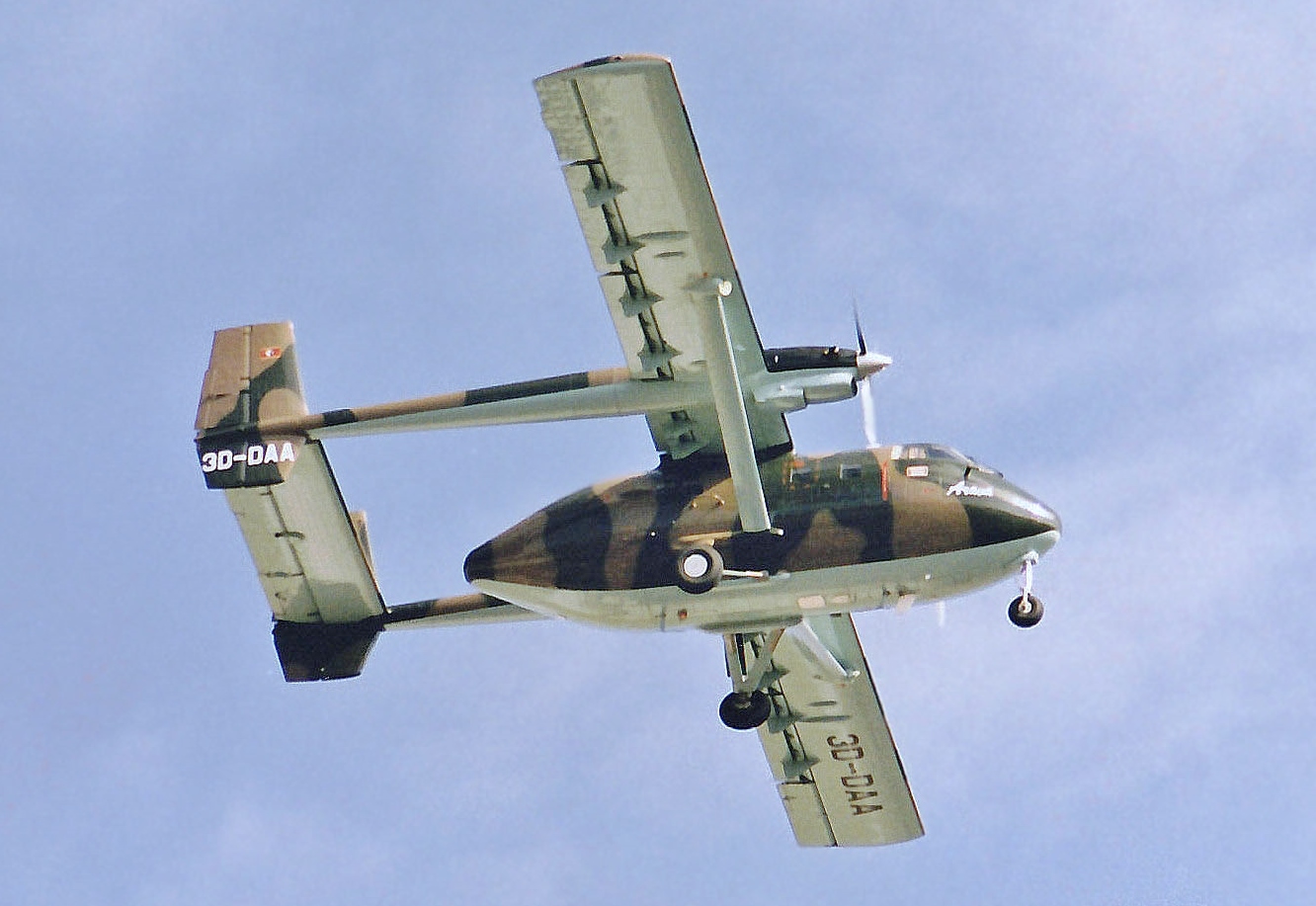
The IAI Arava was distinguished by a functional and distinctive design, optimized for its STOL capabilities. The high-wing monoplane configuration not only provided excellent lift at low speeds, but also elevated the engines and propellers away from the ground, protecting them from debris during operations on unprepared runways.
Powered by two Pratt & Whitney Canada PT6A turboprop engines, the Arava offered considerable power and remarkable reliability, essential for its many applications. The "capsule" fuselage was designed to maximize internal volume, allowing easy loading of bulky cargo or the transportation of large numbers of passengers or paratroopers.
The robust and simple fixed tricycle landing gear contributed to its durability and ease of maintenance, key elements for an aircraft intended to operate in remote environments and often without advanced infrastructure. This modular architecture made the Arava easily adaptable to different roles, from maritime patrol to tactical transport.
Onboard Specifications
- ◆Advanced STOL capability for operations from short, unprepared runways.
- ◆Rear loading door with ramp for easy and quick loading/unloading of goods and light vehicles.
- ◆Compact wide-body architecture that optimized interior space for its segment.
Operational Career & Operators
The operational career of the IAI Arava was extraordinarily versatile, spanning both military and civilian spheres. It became a mainstay for the Heyl Ha'Avir (Israeli Air Force), employed on troop transport, parachute drop, maritime patrol and even electronic warfare missions.
Its success transcended Israel's borders, with numerous exports to countries in Latin America, Africa and Asia. Here, the Arava proved irreplaceable in its ability to reach isolated communities, deliver humanitarian aid, and perform logistical support and surveillance roles in hostile environments.
Its ruggedness and reliability in extreme operating conditions, from desert heat to rainforests, earned it a reputation as the "workhorse" of the air. Many examples remained in service for decades, testifying to the solidity of its design and construction.
Legacy & Cultural Impact
The IAI Arava was not just an aircraft, but a symbol of Israeli ambitions and industrial capabilities. It demonstrated to the world that an emerging aerospace nation could design and produce highly successful aircraft capable of competing with products from more established companies.
His legacy lies in demonstrating that innovation does not have to sacrifice practicality or reliability. The Arava paved the way for IAI's subsequent developments, consolidating its position as a manufacturer of specialized aviation solutions.
Even today, although most have been retired from active service, its distinctive silhouette is remembered as that of a pioneer. The IAI Arava remains an eloquent example of how purposeful, functional design can generate a lasting impact on global aviation, embodying the spirit of versatility and resilience.
Telemetria Specs (HUD)
Hangar Trivia & Curiosità
- 💡The IAI Arava was Israel Aircraft Industries' first complete aircraft designed and built entirely in-house for both civil and military markets.
- 💡Its distinctive rear fuselage features twin booms supporting the tail and a large clamshell door, enabling easy loading of bulky cargo or paradropping.
- 💡Known for exceptional STOL capabilities, the Arava can operate from very short, unpaved runways, making it highly versatile for remote area access and tactical missions.
Archivio Avvistamenti Spotter
Immagini scattate dalla community in tutto il mondo