An-72
Antonov
Historical Context & Origins
The brainchild of the Antonov Design Bureau in the then Soviet Union, the Antonov An-72 emerged as a bold response to military tactical transport needs. Its first flight occurred in 1977, marking the beginning of an era for transport aircraft capable of operating in extreme conditions and on semi-prepared runways.
The primary objective was to replace the aging An-26, drastically improving short take-off and landing (STOL) capabilities and operational versatility. The An-72 was designed to serve the Soviet Armed Forces, with a specific focus on Arctic regions and remote areas without advanced airfield infrastructure.
Architecture & Technological Design
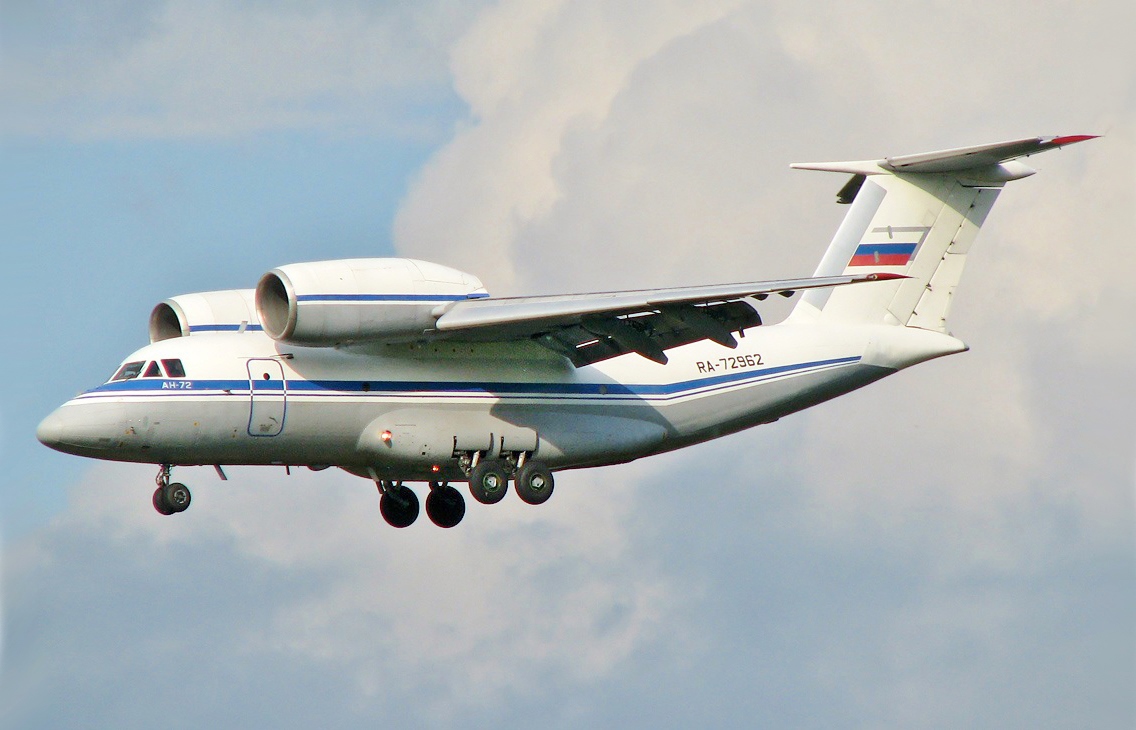
The distinctive and immediately recognizable feature of the An-72 is the innovative configuration of its engines. The two Lotarev D-36 turbofan engines are mounted in a raised position above the wings, in an architecture designed to exploit the Coandă effect. This design allows exhaust gases to be directed over the top of the wing and onto the flaps, significantly increasing lift and reducing takeoff and landing distances.
This engineering choice not only maximizes STOL performance, but also helps to protect the engines from debris ingestion during operations on unprepared runways. The high wing and robust landing gear are further elements that underline its vocation for operations in hostile environments. Due to its distinctive silhouette, with large, high-mounted engines, the aircraft quickly earned the affectionate nickname "Cheburashka".
Onboard Specifications
- ◆Excellent STOL Performance: Essential for operating from short, semi-groomed runways in all weather conditions.
- ◆Rugged Landing Gear: Designed to withstand impacts and landings on rough terrain, including snow and ice.
- ◆Multifunctional Loading Compartment: Large and easily reconfigurable for transporting troops, goods, vehicles or special missions.
Operational Career & Operators
The An-72 has demonstrated extraordinary versatility, covering roles ranging from tactical transport to maritime patrol, from Arctic reconnaissance to search and rescue. In addition to serving the Soviet and Russian Air Forces, numerous examples have been employed by other CIS nations and by civil and government operators around the world, especially in its An-74 variants.
Its reliability in extreme conditions, combined with the ability to operate autonomously from remote bases, has made the An-72 an irreplaceable platform. Particularly appreciated were the An-74 versions, specifically optimized for polar operations, equipped with advanced navigation systems and additional heating for crew and engines.
Legacy & Cultural Impact
The Antonov An-72 represents a milestone in aeronautical engineering, having successfully demonstrated the effectiveness of the blown wing concept (Coandă effect) on a medium-sized transport aircraft. Its bold design and exceptional operational capabilities influenced the development of future projects and consolidated Antonov's reputation in the industry.
Even today, decades after its first flight, many An-72s and its variants are in active service, an eloquent testimony to the robustness and foresight of its design. The An-72 is not just an aircraft, but a symbol of Soviet ingenuity in overcoming the challenges posed by the most inhospitable environments on the planet.
Telemetria Specs (HUD)
Hangar Trivia & Curiosità
- 💡I suoi motori sono posizionati sopra le ali per ridurre l'ingestione di detriti su piste non preparate e per utilizzare l'effetto Coandă, dove i gas di scarico che scorrono sulle ali e sui flap aumentano significativamente la portanza, migliorando le prestazioni STOL.
- 💡A causa delle sue voluminose gondole motore che ricordano le orecchie del personaggio dei cartoni animati sovietici, l'An-72 ha guadagnato l'affettuoso soprannome di "Cheburashka" in alcuni paesi dell'ex blocco sovietico.
- 💡L'An-72 è stato specificamente progettato per operare in ambienti ostili, tra cui l'Artico, essendo in grado di atterrare su neve, ghiaccio e piste non asfaltate grazie al suo robusto carrello d'atterraggio e alla sua costruzione resistente.
Archivio Avvistamenti Spotter
Immagini scattate dalla community in tutto il mondo