An-3
Antonov
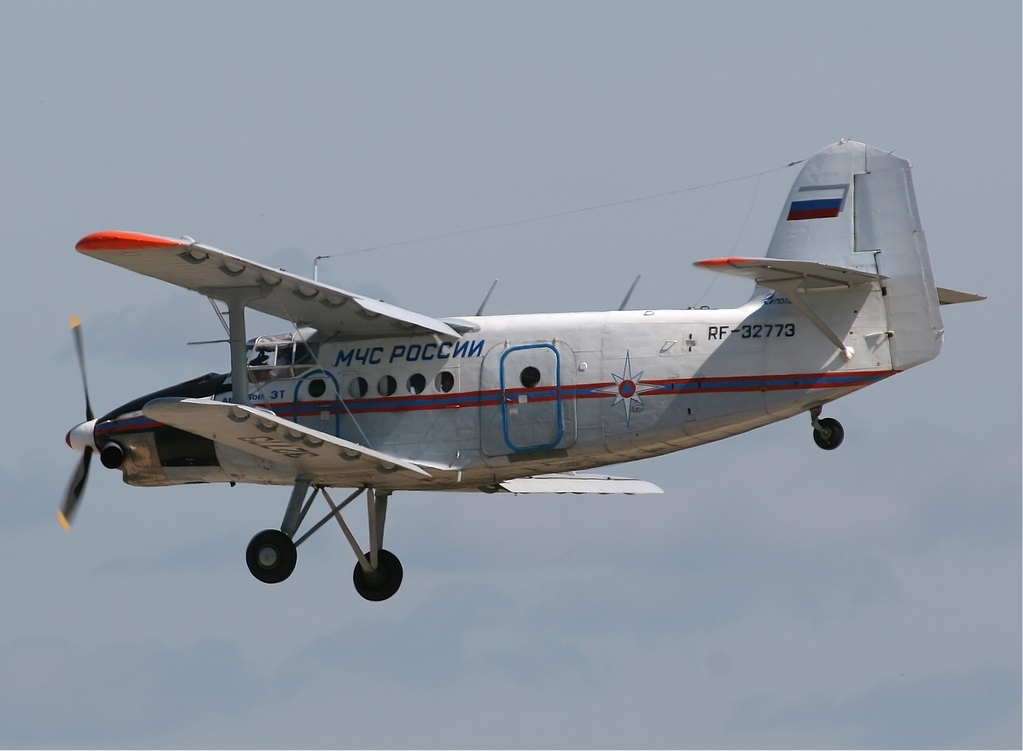
Historical Context & Origins
The Antonov An-2, the "Working Biplane", wrote glorious chapters in the history of aviation, becoming one of the most produced aircraft ever and a mainstay of countless operations in remote environments. However, its reliability was tied to a piston engine, the Shvetsov ASh-62, which, while robust, had limitations in terms of fuel efficiency, specific power output and maintenance complexity in the turboprop era.
The need for modernization became evident to prolong the usefulness of this exceptional platform and adapt it to the challenges of the future. The idea of redesigning the An-2 with a more modern engine gave birth to the An-3 project. Its first flight, in 1980, marked a bold step towards integrating advanced technologies onto a proven structure.
The An-3 was not an entirely new aircraft, but rather a thoroughly revamped An-2, designed to combine the legendary structural strength of its predecessor with the power and efficiency of turboprop engines. This engineering approach aimed to maximize the investment in an airframe already extensively tested and loved.
Architecture & Technological Design
The most significant transformation of the An-3 lies in its propulsive heart: the adoption of the 1375 HP Glushenkov TVD-20** turboprop engine. This revolutionary choice replaced the old radial piston engine, drastically reducing vibration and noise, improving reliability and significantly increasing the overall performance of the aircraft.
The new engine gave the An-3 a greater load capacity, a higher cruise speed and a significantly improved rate of climb, while maintaining intact the extraordinary STOL (Short Take-Off and Landing) capabilities that made the An-2 indispensable. Its ability to operate from unprepared or semi-prepared runways remained unmatched, crucial for more isolated regions.
In addition to propulsion, the An-3 benefited from an overall cockpit upgrade, with more modern instrumentation, improved navigation systems and greater attention to ergonomics for the crew. This made it more competitive and comfortable than its ancestor, while retaining the robustness and ease of maintenance necessary for a work aircraft.
Onboard Specifications
- ◆Glushenkov TVD-20 turboprop engine: Superior power and reliability for optimal performance.
- ◆Advanced STOL capabilities: Maintains legendary operation from short, unprepared runways.
- ◆Modernized cabin and digital avionics: Improved human-machine interface and navigation systems.
Operational Career & Operators
Despite its technical promise, the An-3's operational career never achieved the mass deployment of the An-2. Economic factors, such as the higher cost of production and the need to repurpose existing turboprop fuel infrastructure, held back rapid large-scale adoption.
However, the An-3 found its niche in specific roles where its improved performance was essential. It has been used as an agricultural aircraft, light cargo aircraft, and for transporting passengers in rural and remote areas, especially in Russia and some former Soviet republics. Its ability to operate in extreme weather conditions and from improvised fields has made it invaluable to operators such as Aviaion Zagorye.
Production of the An-3 has been intermittent and in limited numbers, with variants such as the An-3T (cargo) and An-3P (agricultural) demonstrating its versatility. While it did not replace its predecessor, it served as a proof of concept and a modern alternative for very specific needs.
Legacy & Cultural Impact
The Antonov An-3 represents a fascinating chapter in aviation history, embodying the attempt to breathe new life into a classic design through technological innovation. It symbolizes engineering tenacity and a willingness to adapt, transforming a pre-war era biplane into a more modern, high-performance aircraft.
Its legacy is measured not so much by the number of examples produced, but by its demonstration of the validity of turboprop conversion for existing aerial platforms. The An-3 proved that even older designs can be reinvented, extending their usefulness in a rapidly changing world.
While remaining a relatively niche aircraft, the An-3 is a testament to Soviet and Russian ingenuity, a bridge between the An-2's glorious past and futuristic needs. It continues to inspire admiration for its robustness and its ability to face challenges that few other aircraft would dare consider.
Telemetria Specs (HUD)
Hangar Trivia & Curiosità
- 💡È essenzialmente una ri-motorizzazione a turboprop dell'onnipresente biplano An-2, famoso per la sua lunghissima carriera produttiva.
- 💡Il progetto ha affrontato significativi ritardi e problemi di finanziamento; sebbene il primo prototipo volò nel 1980, la produzione iniziò solo nei primi anni 2000.
- 💡Nonostante il motore turboprop, mantiene la configurazione biplana dell'An-2, rendendolo uno dei pochi biplani moderni a entrare in produzione limitata.
Archivio Avvistamenti Spotter
Immagini scattate dalla community in tutto il mondo