An-28
Antonov
Historical Context & Origins
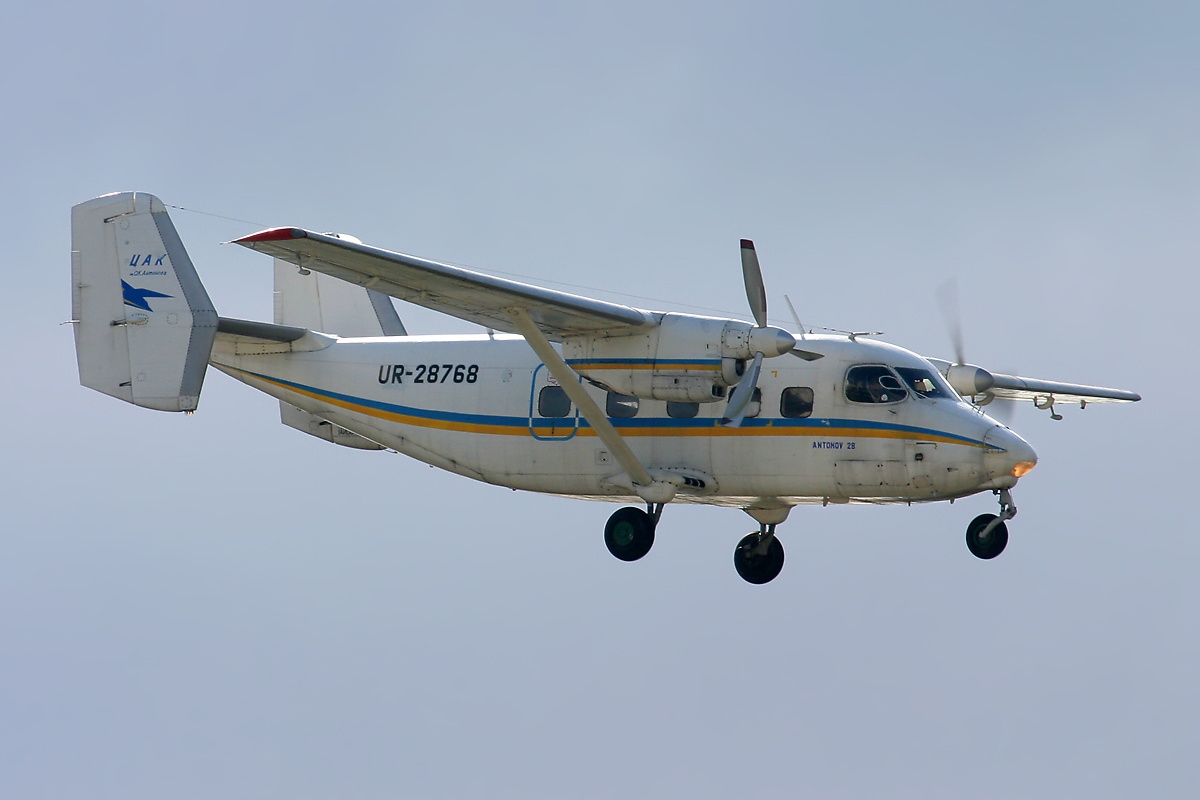
The legendary Antonov An-28, whose first flight was in 1975, emerged from a pressing need for the Soviet Union to have a light transport aircraft capable of operating in extreme conditions and from improvised runways. Designed as a successor to the twin-engine An-14 "Pchelka", the An-28 was conceived to overcome the limitations of its predecessor, offering greater capacity and performance.
The project aimed to create a robust and reliable aircraft, suitable for the regional transport of passengers and cargo in remote areas, often without adequate airport infrastructure. Its genesis reflected the Soviet doctrine of developing aircraft capable of operating effectively over vast territories with complex geographies, from the Siberian steppes to rugged mountainous regions.
Architecture & Technological Design
The An-28 is notable for its high-wing, twin-turbine monoplane architecture, a configuration that maximizes STOL (Short Take-Off and Landing) capabilities and visibility. The design incorporated fixed tricycle landing gear, reinforced to absorb the impacts of landings on unprepared surfaces, underlining its nature as the true "workhorse" of the skies.
Propulsion was entrusted to two turboprop engines Glushenkov TVD-10B (later PZL-10S in Polish production), known for their robustness and ability to operate in a wide range of temperatures and altitudes. This allowed the An-28 to maintain high performance even in hostile environments, cementing its reputation as an incredibly resilient and versatile aircraft.
Onboard Specifications
- ◆High aspect ratio wing and double-slotted slats: key elements for excellent STOL performance, allowing very short take-offs and landings.
- ◆Robust all-metal structure: Designed to withstand heavy loads and the stresses resulting from operation on austere runways and in adverse weather conditions.
- ◆Basic but reliable avionics for operations in marginal conditions: a pragmatic and intuitive onboard system, focused on safety and efficiency in utilitarian transport missions.
Operational Career & Operators
The Antonov An-28 has embarked on an extensive and diverse operational career, becoming a mainstay of the air fleets of numerous countries, particularly those in the former Soviet bloc and beyond. Its robustness and versatility made it indispensable for the transport of passengers and goods in remote regions, where the ground infrastructure was often insufficient.
In addition to civil transport, the An-28 has held crucial roles in the military and paramilitary fields, operating as a maritime patrol aircraft (in the Polish PZL M-28 Bryza variant), for border surveillance and for search and rescue missions. Its ability to operate from grass, gravel or snow runways has made it an irreplaceable asset in difficult operational contexts, from Siberia to Africa.
Legacy & Cultural Impact
The legacy of the Antonov An-28 is deep and lasting. While the original design is dated, its design philosophy of ruggedness, operational simplicity and STOL capability continues to be relevant. Licensed production in Poland as PZL M-28 Skytruck/Bryza further extended its longevity and influence globally.
The An-28 remains a symbol of reliability and resilience in utility aviation. It has contributed significantly to connecting isolated communities, transporting essential goods and people, demonstrating how a well-conceived design can transcend eras, maintaining its usefulness and a prominent place in aviation history.
Telemetria Specs (HUD)
Hangar Trivia & Curiosità
- 💡It was developed from the Antonov An-14 'Pchelka' (Little Bee) and shares many design features, being a larger, more powerful evolution.
- 💡License production occurred in Poland by PZL-Mielec, where it was known as the PZL M28 Skytruck/Bryza, and many variants are still produced today.
- 💡The An-28 is renowned for its excellent STOL (Short Take-off and Landing) performance, allowing it to operate from unpaved or rudimentary airstrips.
Archivio Avvistamenti Spotter
Immagini scattate dalla community in tutto il mondo
Vettori Rilevati (Flotta Storica / Dismessa)

Cubana de Aviación
Stato: Dismesso
Tajik Air
Stato: Dismesso
Air Vanuatu
Stato: Dismesso
Moldavian Airlines
Stato: Dismesso
Vostok Aviation Company
Stato: Dismesso
Sakha Avia
Stato: Dismesso
Aeroflot
Stato: Dismesso
Uzbekistan Airways
Stato: Dismesso