An-26
Antonov
Historical Context & Origins
The Antonov An-26, nicknamed "Curl" by NATO, was born from the Soviet Union's need for a versatile, robust tactical transport aircraft capable of operating from semi-prepared or unpaved runways. Its genesis is directly linked to the success of the An-24, of which it takes the wing and much of the fuselage, but with a marked emphasis on rapid loading and unloading capabilities.
Developed by the eminent Antonov design bureau, already known for its expertise in STOL (Short Take-Off and Landing) aircraft and operations in hostile environments, the An-26 represented a crucial evolutionary step. His first flight took place in 1969, marking the beginning of a long and illustrious operational career that would see him play a leading role on a global scale.
The request was for an aircraft that could support the Soviet and Warsaw Pact armed forces, ensuring efficient logistics and the ability to operate in complex operational scenarios. The An-26 was designed to be the workhorse in these conditions, providing a reliable airlift under any circumstances.
Architecture & Technological Design
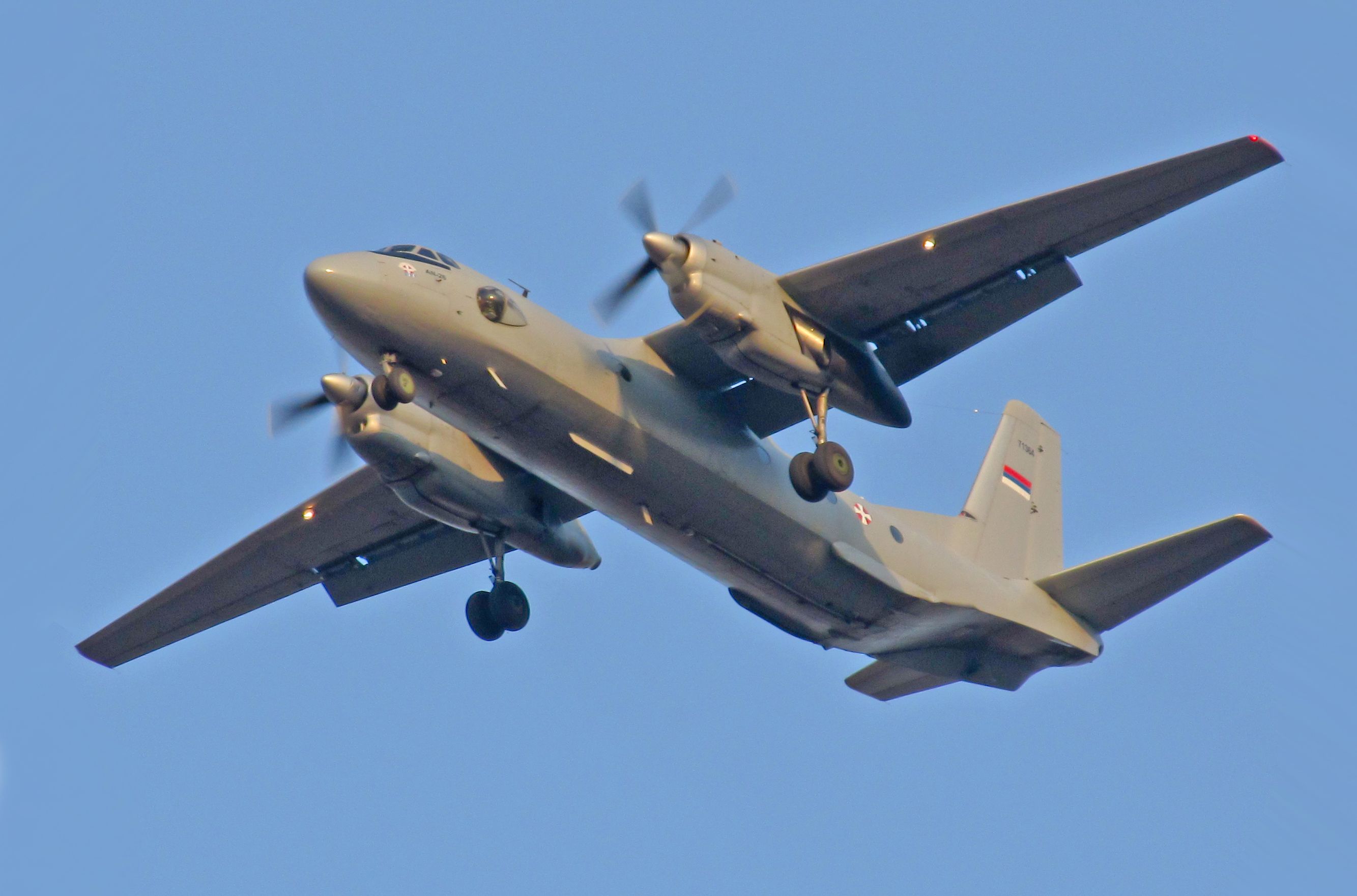
The architecture of the An-26 is a striking example of functional design, oriented towards maximum operational efficiency in difficult conditions. Its high-wing configuration provides excellent lift and considerable ground clearance for the propeller, facilitating operations in rough terrain and loading bulky cargo.
The technological heart of the An-26 lies in its robust Ivchenko AI-24VT turboprop engines, known for their reliability and ability to operate across a wide spectrum of temperatures and altitudes. These engines, combined with the aerodynamic configuration, give the aircraft excellent short take-off and landing performance, essential for its tactical mission.
The distinctive and most innovative feature is undoubtedly its rear loading ramp, designed for unprecedented versatility. This ramp can lower to the ground for direct loading or slide under the fuselage for airdrops of paratroopers and cargo, making the An-26 extremely efficient in every logistics scenario.
Onboard Specifications
- ◆Unique Rear Loading Ramp: Designed for rapid loading of vehicles and dropping of paratroopers and materials.
- ◆Ivchenko AI-24VT turboprop engines: Dual power and reliability for operations in different environments.
- ◆High Wing Configuration: Optimizes STOL performance and stability during low altitude flight.
Operational Career & Operators
The An-26 has enjoyed a far-reaching operational career, becoming one of the most popular tactical transport aircraft in the world. It was used extensively by the Soviet Air Force and later the Russian Air Force, as well as over 30 nations on all continents.
It has served in numerous conflicts and humanitarian missions, demonstrating its resilience and adaptability in scenarios ranging from freezing Arctic tundras to hot African deserts. Its ability to carry both troops and heavy loads, or be quickly reconfigured for medical evacuations, has made it irreplaceable for many operators.
Even today, decades after its first flight, the An-26 continues to fly in many air forces and civilian operators, testifying to the robustness of its design and its relatively simple maintenance. Its ubiquitous presence is proof of its success as the benchmark tactical transport aircraft.
Legacy & Cultural Impact
The Antonov An-26 has left a lasting legacy in the aviation landscape, serving as an emblem of Soviet aeronautical engineering dedicated to functionality and robustness. Its influence is visible in several generations of transport aircraft, which have sought to replicate its unrivaled versatility and operational reliability.
More than just an aircraft, the An-26 has become an icon of resilience, associated with rescue operations, logistical support in remote areas and complex military missions. Its distinctive silhouette is instantly recognizable and represents a symbol of connectivity in many of the world's most inaccessible regions.
Its longevity and consistent service in different parts of the globe are an unmistakable testament to the brilliance of its original design. The An-26 remains a seminal piece of aviation history, a workhorse that continues to play a crucial role, proving that a well-conceived design can overcome the limitations of time.
Telemetria Specs (HUD)
Hangar Trivia & Curiosità
- 💡Its NATO reporting name is 'Curl', a common designation for Soviet-era aircraft.
- 💡A distinctive feature is its large rear loading ramp, which can slide underneath the fuselage for easy cargo handling and air dropping.
- 💡Developed from the successful An-24 regional airliner, it shares many components, contributing to its robust design and ease of maintenance.
Archivio Avvistamenti Spotter
Immagini scattate dalla community in tutto il mondo
Vettori Rilevati (Flotta Attiva)


Vettori Rilevati (Flotta Storica / Dismessa)

Belavia - Belarusian Airlines
Stato: Dismesso
Air Koryo
Stato: Dismesso
Cubana de Aviación
Stato: Dismesso
Enimex
Stato: Dismesso
Interflug
Stato: Dismesso
Malév Hungarian Airlines
Stato: Dismesso
Vietnam Airlines
Stato: Dismesso
Aeroflot
Stato: Dismesso
TAROM
Stato: Dismesso
TAAG Angola Airlines
Stato: Dismesso
Uzbekistan Airways
Stato: Dismesso