An-24
Antonov
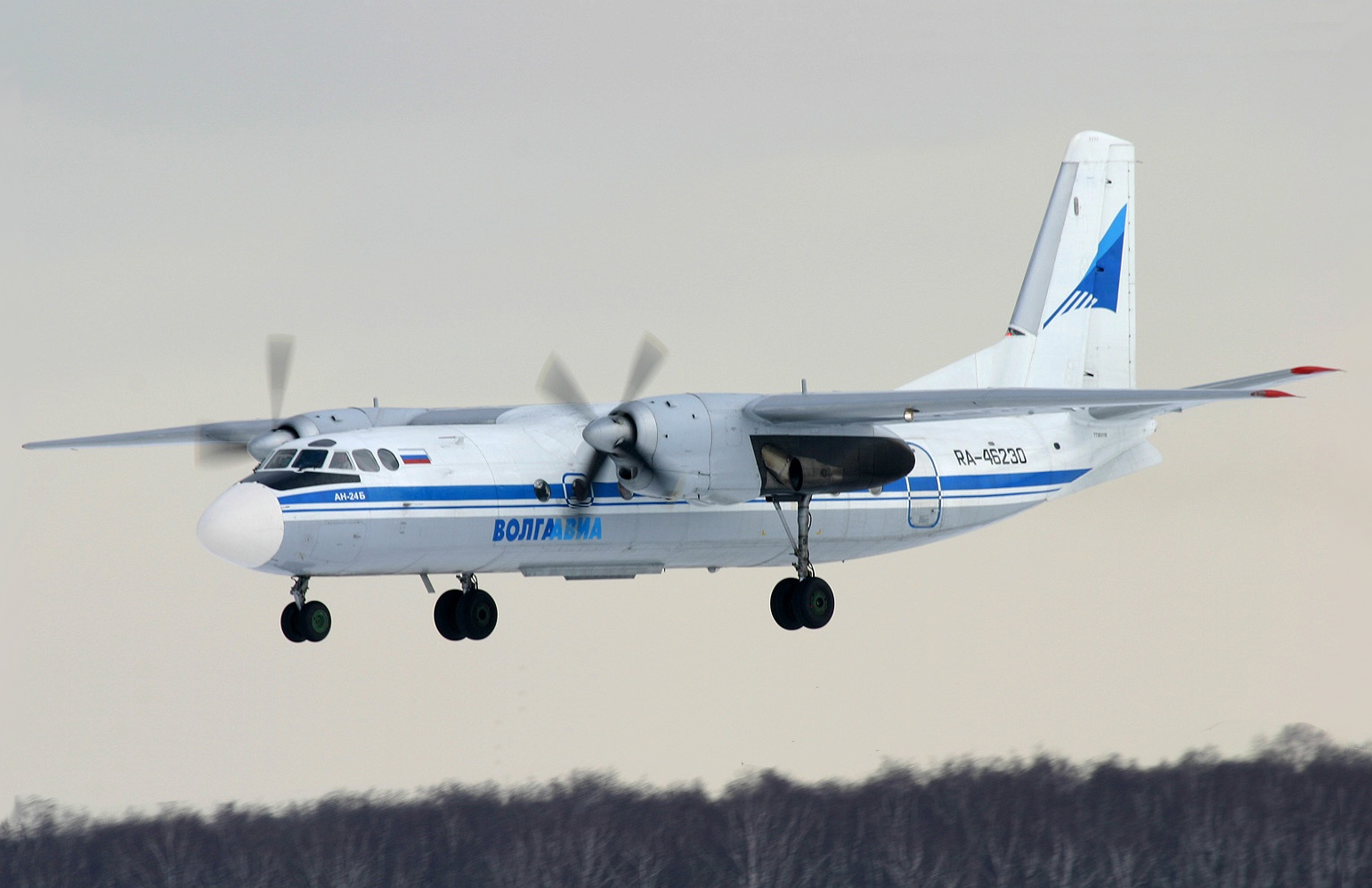
Historical Context & Origins
1959 marked the first flight of the legendary Antonov An-24, a twin-engine turboprop passenger jet that would revolutionize regional air transportation in the Soviet Union and beyond. Born from the need to replace the aging Ilyushin Il-14 and Li-2, the An-24 was designed to operate in extreme conditions and from semi-prepared runways, with an emphasis on robustness and reliability.
Its genesis took place in an era of rapid expansion of domestic air connections, where it was essential to have an aircraft capable of reaching the most remote locations. The Antonov office responded with a design that ensured not only safety and efficiency, but also surprising operational versatility in environments lacking advanced airport infrastructure.
Architecture & Technological Design
The An-24 sports a classic yet ingeniously optimized architecture, featuring a high wing and a twin-engine turboprop configuration. This choice not only provides improved propeller clearance from debris on unpaved runways, but also contributes to greater aerodynamic stability and easy access for loading and unloading.
Its robust semi-monocoque design, made of aluminum alloys, is designed to withstand the repeated stresses typical of intense regional operations. The combination of a durable airframe, reliable engines and reinforced landing gear made the An-24 a true workhorse, capable of tackling arduous challenges.
Onboard Specifications
- ◆Ivchenko AI-24 Engines: Powerful and reliable turboprops, the beating heart of the An-24, optimized for efficiency and performance in a wide range of operating conditions.
- ◆High, Strong Wing: Designed to maximize lift, protect the propellers from damage in rough terrain, and improve stability in low-altitude flight and during landing.
- ◆Reinforced landing gear: A key element for its ability to operate from unprepared or semi-prepared runways, ensuring the necessary resistance for landings on uneven surfaces.
Operational Career & Operators
The Antonov An-24 has enjoyed an extraordinary operational career, becoming a mainstay of the airline fleets not only of Aeroflot but also of dozens of other companies around the world, especially in the Eastern Bloc countries. Its ability to transport up to 52 passengers or bulky loads in difficult contexts has made it irreplaceable.
Cargo, military and special mission variants have further expanded its range, demonstrating its inherent flexibility. Many examples are still in active service today, eloquent testimony to its durability, ease of maintenance and low operating costs which have guaranteed its exceptional longevity.
Legacy & Cultural Impact
The An-24 is not just an aircraft, but an iconic symbol of Soviet regional aviation, representing the connectivity and development of vast geographical areas. It helped unite remote communities, facilitating trade, tourism and access to essential services, leaving an indelible mark on aviation history.
Its technical and operational legacy influenced generations of engineers and pilots, setting new standards for regional transport aircraft. Its presence is still vivid in the collective memory, often in documentaries and cinematic works, solidifying its status as a gentle giant of the skies and a testament to Soviet ingenuity.
Telemetria Specs (HUD)
Hangar Trivia & Curiosità
- 💡Many An-24s remain in active service, particularly in former Soviet countries, over six decades after its first flight, showcasing its enduring design.
- 💡It was specifically designed for robustness, capable of operating from unpaved and less-prepared airfields, a common requirement in its intended operational regions.
- 💡A significant variant, the Xian Y-7, was produced under license in China, contributing to its global presence.
Archivio Avvistamenti Spotter
Immagini scattate dalla community in tutto il mondo
Vettori Rilevati (Flotta Attiva)

Angara Airlines
In Flotta: x4 u.
Air Koryo
In Flotta: x3 u.
Motor Sich Airlines
In Flotta: x3 u.
Turukhan Airlines
In Flotta: x18 u.
IrAero
In Flotta: x8 u.
UTair
In Flotta: x8 u.
Polar Airlines
In Flotta: x4 u.