An-22 Antei
Antonov
Historical Context & Origins
During the 1960s, the Soviet Union needed a transport aircraft capable of moving large military equipment, including heavy tanks and missile systems, across vast distances and over unprepared runways. The goal was to ensure strategic mobility for the Soviet armed forces in an era of geopolitical tensions.
- ◆*OKB Antonov**, already known for its robust transport aircraft, was commissioned to develop this colossal machine. The project aimed to overcome the limitations of existing aircraft, introducing load capacity and operational versatility that were revolutionary for the time.
The result was the Antonov An-22 Antei, which made its first flight on 27 February 1965. This giant was not only the largest aircraft in the world at the time, but also a symbol of Soviet engineering determination in heavy air transport.
Architecture & Technological Design
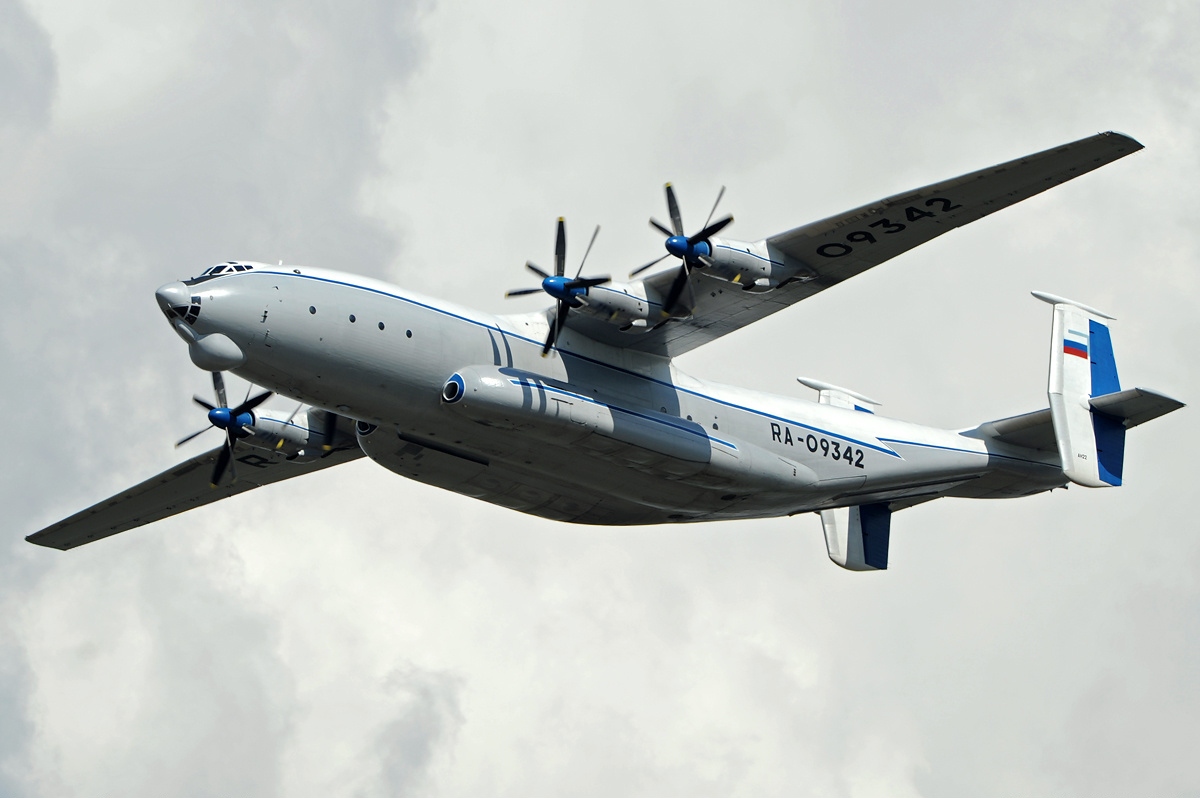
The An-22 Antei represents a masterpiece of aeronautical engineering, conceived to combine massive payload capacity with remarkable operational versatility. Its imposing structure is dominated by a high wing, which allows for a large cargo compartment, and by an incredibly powerful propulsion system.
The beating heart of the Antei is made up of four Kuznetsov NK-12MA turboprops, each driving a pair of counter-rotating propellers. This configuration provides exceptional thrust and contributes to efficiency, allowing the aircraft to operate from short, semi-prepared runways, a distinctive feature for an aircraft of this size.
The double rudder tail design is not only aesthetic, but functional to structural strength and easy access to the rear load compartment. Its multi-wheel landing gear, designed to distribute weight on soft surfaces, gives it the ability to operate in hostile environments lacking modern airport infrastructure.
Onboard Specifications
- ◆Four Kuznetsov NK-12MA turboprops with counter-rotating propellers: Offer a combined thrust of more than 60,000 shp, essential for takeoff and flying with heavy loads.
- ◆Exceptional load capacity of 80 tons: Allowed the transportation of large military equipment such as T-62 tanks or complete missile systems.
- ◆Multi-wheel landing gear for unprepared runways: Includes 14 main wheels on each side, allowing operations on grass, dirt or ice airfields.
Operational Career & Operators
The An-22 Antei entered service with the Voyenno-Transportnaya Aviatsiya (VTA), the Soviet military transport aviation, establishing itself as the backbone of heavy strategic operations. Its role was crucial to the rapid deployment of troops and equipment to remote areas of the Soviet Union and beyond.
In addition to its military use, the An-22 has played a vital role in numerous humanitarian and international relief missions. Its ability to transport massive volumes of aid and equipment has made it an irreplaceable tool in response to natural disasters and global crises, demonstrating its versatility.
Despite the introduction of more modern aircraft such as the An-124 Ruslan, a limited number of An-22 Antei continue to fly today, mainly with the Russian Air Force. Their longevity is a testament to the robustness and engineering that has characterized them, making them true workhorses of the skies.
Legacy & Cultural Impact
The Antonov An-22 Antei is not just an aircraft, but a symbol of an era and the forerunner of a lineage of giants. Its conception and construction set new standards in heavy air transport, directly influencing the development of later, larger aircraft, such as the An-124 Ruslan and the iconic An-225 Mriya.
Its presence in the skies has captured the imagination, not only for its colossal size but also for the unmistakable sound of its powerful counter-rotating propellers. The An-22 remains a tangible testament to the ingenuity and ambition of the Soviet aviation industry.
Its impact extends beyond technical specifications, taking root in aviation culture as an icon of heavy air transport. This true “Antelope,” as its Russian name suggests, opened new frontiers for aviation, and its legacy lives on in every heavy lift mission that takes to the skies.
Telemetria Specs (HUD)
Hangar Trivia & Curiosità
- 💡It was the world's largest aircraft when it first flew in 1965, a record it held for several years until the introduction of the C-5 Galaxy.
- 💡Its four Kuznetsov NK-12MA turboprop engines are among the most powerful turboprop engines ever produced.
- 💡The An-22 features twin tail fins, which improves control and redundancy, and facilitates easier cargo loading due to the design.
Archivio Avvistamenti Spotter
Immagini scattate dalla community in tutto il mondo