An-2
Antonov
Historical Context & Origins
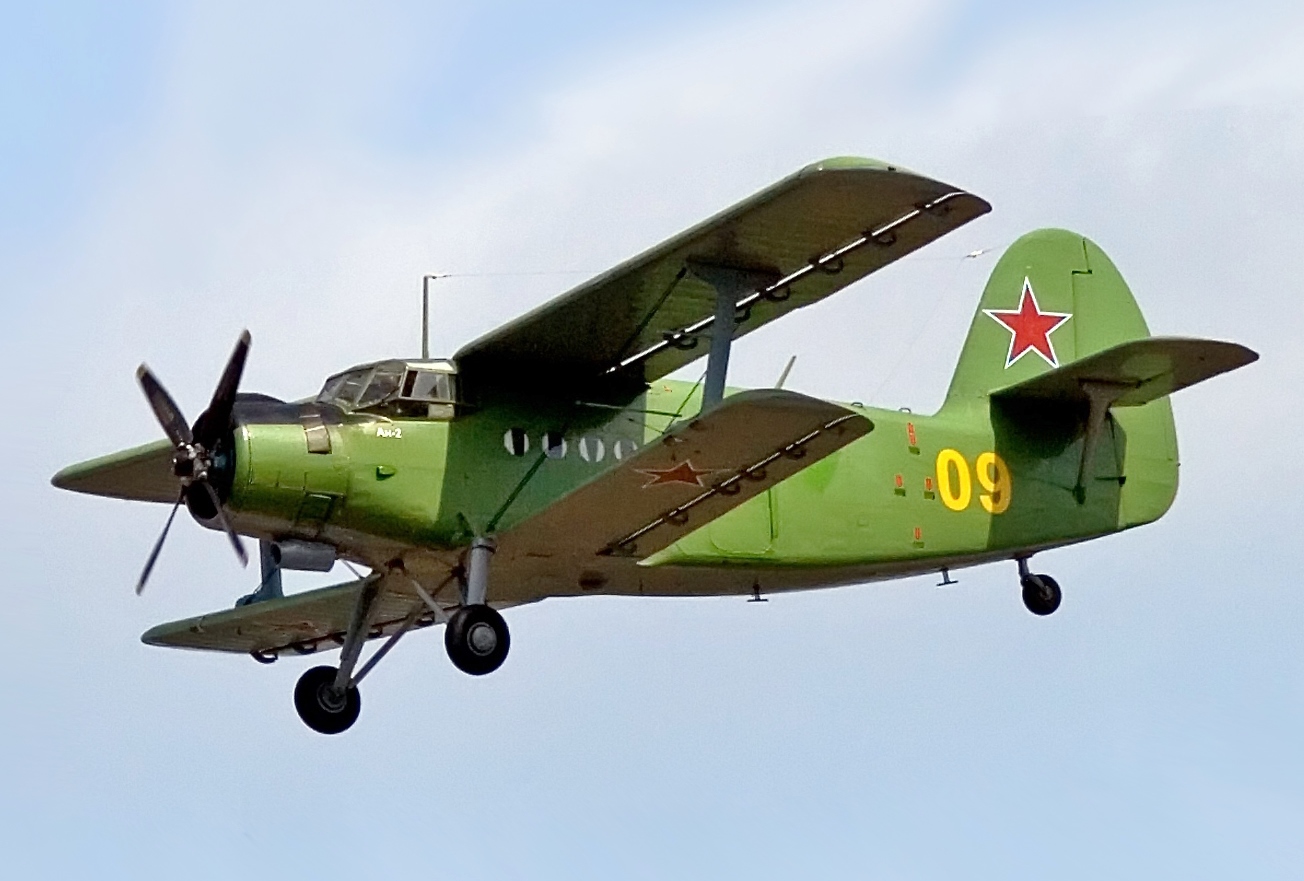
1947 marked the beginning of an aeronautical legend with the first flight of the Antonov An-2, an aircraft designed to address the immense and varied needs of the post-war Soviet Union. Engineer Oleg Antonov conceived an extremely robust and versatile aircraft, capable of operating in extreme conditions and from unprepared runways, quickly becoming the embodiment of Soviet aviation practicality and reliability.
Born out of an urgent need to motorise large-scale agriculture and secure vital links to remote and often inaccessible rural regions, the An-2 was intended to be a true workhorse. Its primary mission was agricultural work, but its modular design and intrinsic versatility made it suitable for an infinite number of roles, from logistics to short-distance passenger transport.
Architecture & Technological Design
The An-2 is immediately recognizable for its iconic biplane configuration, a design choice which, although it may have seemed anachronistic for the time of the first flight, proved to be absolutely brilliant for the intended purposes. The two overlapping wings maximized lift, allowing extremely low flight speeds and near-unrivaled STOL (Short Take-Off and Landing) performance for an aircraft of its size.
Its structure was a masterpiece of strength and engineering simplicity: a metal frame covered in fabric, a lightweight but impact-resistant solution and incredibly easy to repair in the field. The beating heart was the 1,000 hp Shvetsov ASh-62IR radial engine, a powerful, reliable and well-tested engine, ideal for ensuring constant performance even in the most hostile and diverse operating environments.
Onboard Specifications
- ◆1,000 HP Shvetsov ASh-62IR radial engine: Guarantee of reliability, high power and exceptional durability for every mission.
- ◆Biplane configuration with high lift and high lift systems: Offers unique STOL capabilities and extremely stable flight at low speeds.
- ◆Robust fixed trolley with large low-pressure tires: Allows safe and flexible operations from unprepared surfaces, such as grassy fields or improvised dirt roads.
Operational Career & Operators
With over 18,000 units produced in several countries and uninterrupted service for over 75 years, the Antonov An-2 holds the world production record for a biplane and stands out as one of the longest-serving aircraft in the history of aviation. Its extraordinary versatility has seen it used in an infinite number of roles: from agricultural spraying over vast areas to transporting passengers and goods in isolated areas, from parachute drops to meteorological reconnaissance, and even as a life-saving ambulance plane.
Affectionately nicknamed "Annushka" or "Kukuruznik" (meaning "corn farmer") in the Soviet Union, the An-2 served with dozens of air forces and civilian operators around the world, from Eastern Europe to Asia, including significant license production in China as the Y-5. Its unrivaled ability to land and take off from improvised runways, grassy fields, plowed land or even short stretches of road has made it irreplaceable in remote and difficult to access contexts.
Legacy & Cultural Impact
The Antonov An-2 is not just an aircraft, but a true icon of aeronautical engineering and a symbol of operational resilience. Its incredible longevity and chameleonic ability to adapt to any need have cemented its status as the "workhorse of the skies" par excellence. It has demonstrated unequivocally that a simple, robust and intrinsically reliable design can overcome technological fads and remain highly relevant for many decades.
Even today, the An-2 continues to fly actively in many parts of the world, often to perform specific roles that no modern aircraft could perform with the same economy, flexibility and reliability. Its legacy endures, bearing witness to Oleg Antonov's pioneering vision and design philosophy that prioritized practical functionality and durability, influencing entire generations of engineers and aeronautics enthusiasts.
Telemetria Specs (HUD)
Hangar Trivia & Curiosità
- 💡The An-2 holds the Guinness World Record for the longest production run of any aircraft, exceeding 45 years, with licensed production continuing even longer.
- 💡It is affectionately nicknamed 'Kukuruznik' (Corn Duster) in Russia, reflecting its widespread use in agricultural crop-dusting roles.
- 💡Known for its incredibly low stall speed, the An-2 can famously fly so slowly that it can appear to fly backwards in a strong headwind, making it notoriously difficult for jet fighters to intercept during training exercises.
Archivio Avvistamenti Spotter
Immagini scattate dalla community in tutto il mondo