An-14
Antonov
Historical Context & Origins
In the fervent post-war Soviet climate, a pressing need emerged for robust and versatile aircraft, capable of connecting the vast and often inaccessible regions of the Union. The Design Bureau Antonov, under the visionary leadership of Oleg Antonov, excelled in the creation of utility aircraft, and the An-14 "Pchelka" (Ape) was their response to that challenge. Its first flight in 1958 marked the beginning of an era for local air travel.
The An-14 was conceived as an ideal successor to older biplanes, particularly the An-2, but with a smaller operational footprint and more modern technology. The primary objective was to develop a multi-role light aircraft, excellent in short take-off and landing (STOL) operations, designed for unprepared and remote runways, common throughout the Soviet territory.
The need for a reliable aircraft for local routes, transportation of passengers and light cargo, agricultural services and even medical care, pushed Antonov to design an aircraft that combined operational simplicity with exceptional performance in harsh conditions, embodying the Soviet design philosophy of maximum practicality.
Architecture & Technological Design
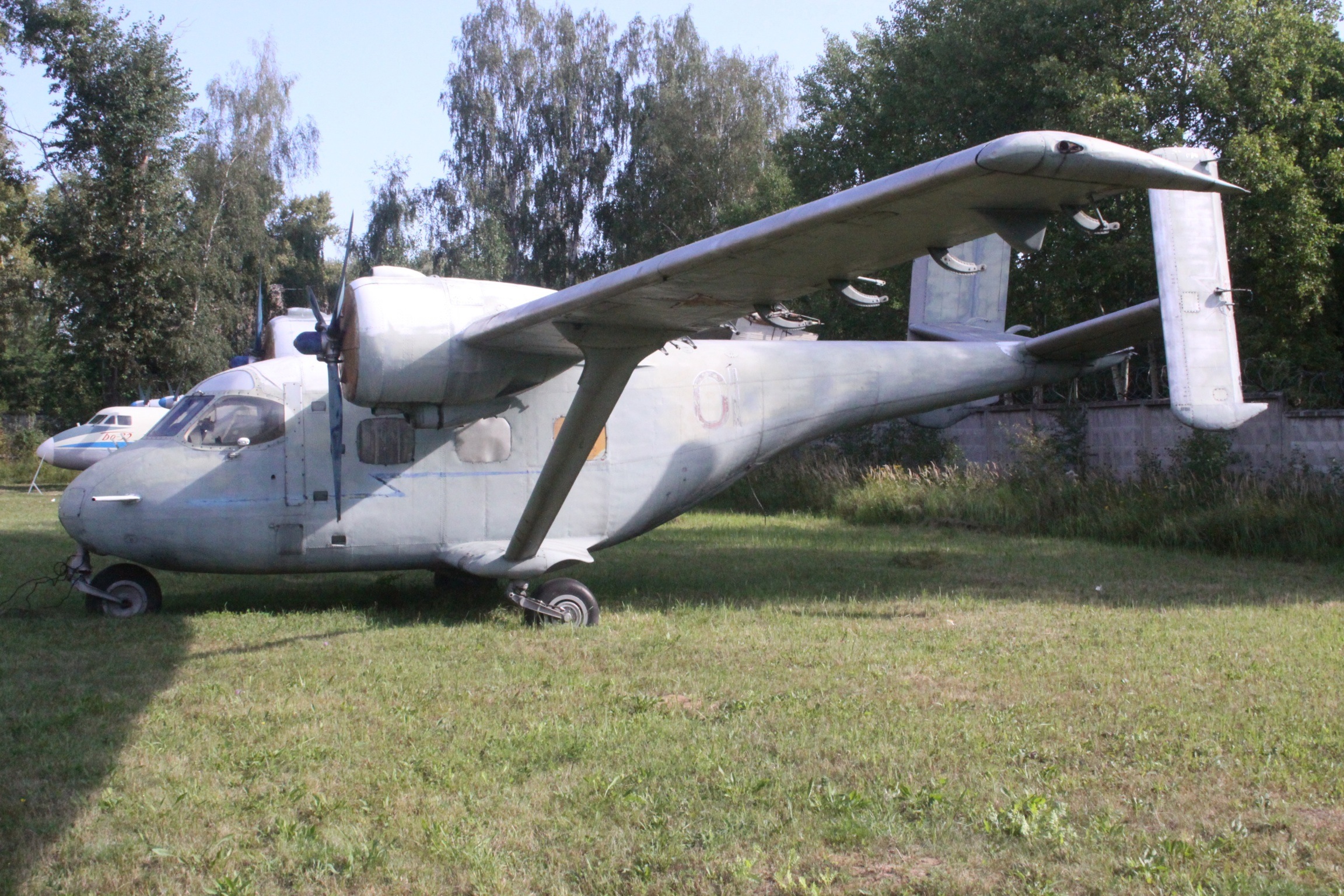
The Antonov An-14 is notable for its twin-engine high-wing architecture and a distinctive twin tail boom configuration, a solution that maximized aerodynamic efficiency and facilitated rear loading. Its "boxy" design was not random, but optimized to ensure maximum internal volume and easy reconfiguration between different modes of use.
The An-14's exceptional STOL capabilities resulted from an ingenious combination of aerodynamic characteristics. The large-area wing, equipped with large flaps and slats, generated considerable lift even at low speeds, allowing takeoffs and landings over incredibly short distances, essential for operating from improvised runways or grass.
The particularly robust, low-pressure fixed tricycle landing gear was another testament to its pragmatic nature, designed to absorb impacts from rough surfaces without compromising the structural integrity of the aircraft, a key prerequisite for its operational mission.
Onboard Specifications
- ◆Ivchenko AI-14RF radial engines: Pair of reliable thrusters, guaranteed the necessary power for STOL operations in all weather conditions.
- ◆High-wing design with advanced slats: Incorporated dual-slotted flaps and automatic slats to maximize lift and reduce stall speed.
- ◆Double tail boom configuration: Not only supported the empennages, but also improved directional control at low speeds and longitudinal stability.
Operational Career & Operators
Although its first flight occurred in 1958, series production of the An-14 did not begin until 1966, with nearly 340 examples built before its termination in 1972. The Soviet national airline, Aeroflot, became the main operator, deploying the "Pchelka" extensively on its "mestnye vozdushnye linii" (local airlines), reaching villages and towns isolated.
The aircraft was widely praised for its ease of use, relatively simple maintenance and its inherent robustness, characteristics that made it a workhorse in difficult operational environments. In addition to civilian use, the An-14 also found use in light military roles, such as liaison, observation and tactical transport of small teams or cargo.
Numerous Eastern Bloc nations and countries friendly to the USSR, such as Bulgaria, East Germany, Mongolia and even Afghanistan, received the An-14, taking advantage of its unique capabilities for transport to rural and mountainous areas, where airport infrastructure was limited or non-existent.
Legacy & Cultural Impact
The Antonov An-14, affectionately nicknamed "Pchelka" (little bee) for its characteristic buzz and tireless industriousness, left a lasting imprint on the history of Soviet and world aviation. Although it did not reach the production numbers of the legendary An-2, it unequivocally demonstrated the excellence of Antonov engineering in creating utility aircraft.
The "Pchelka" is not just a plane; it is a symbol of engineering's ability to overcome extreme logistical challenges, connecting remote communities and contributing to the economic development of otherwise isolated regions. Its legacy lies in demonstrating that reliability, simplicity and STOL performance can coexist in a pragmatic and effective design.
Today, the An-14 is a piece of history that continues to fascinate enthusiasts, witness to an era in which functionality and resilience were primary design values. Its cultural impact is recognizable in the way it shaped regional air transport and paved the way for future larger and more complex Antonov projects, keeping alive the philosophy of an airplane for the people.
Telemetria Specs (HUD)
Hangar Trivia & Curiosità
- 💡It earned the nickname 'Pchelka' (Little Bee) in Russian, reflecting its industrious nature and compact size within the Soviet aviation fleet.
- 💡The An-14 was specifically designed to be easily maintainable and reliable, capable of operating in harsh conditions with limited ground support.
- 💡Its high-wing configuration and twin tail booms were distinctive features, contributing to its STOL performance and overall stability.
Archivio Avvistamenti Spotter
Immagini scattate dalla community in tutto il mondo