An-12
Antonov
Historical Context & Origins
The Antonov An-12, with its first flight in 1957, emerged as a crucial response to the Soviet Union's pressing logistical and military needs during the height of the Cold War. Designed by the legendary OKB Antonov under the leadership of Oleg Antonov, it represented a fundamental pillar in the Soviet air power projection strategy.
Born in parallel with the An-10, the passenger variant, the An-12 was conceived from the beginning as a robust workhorse for tactical transport. Its mission was clear: move troops, equipment and heavy supplies rapidly, often operating from unprepared runways and hostile environments.
Architecture & Technological Design
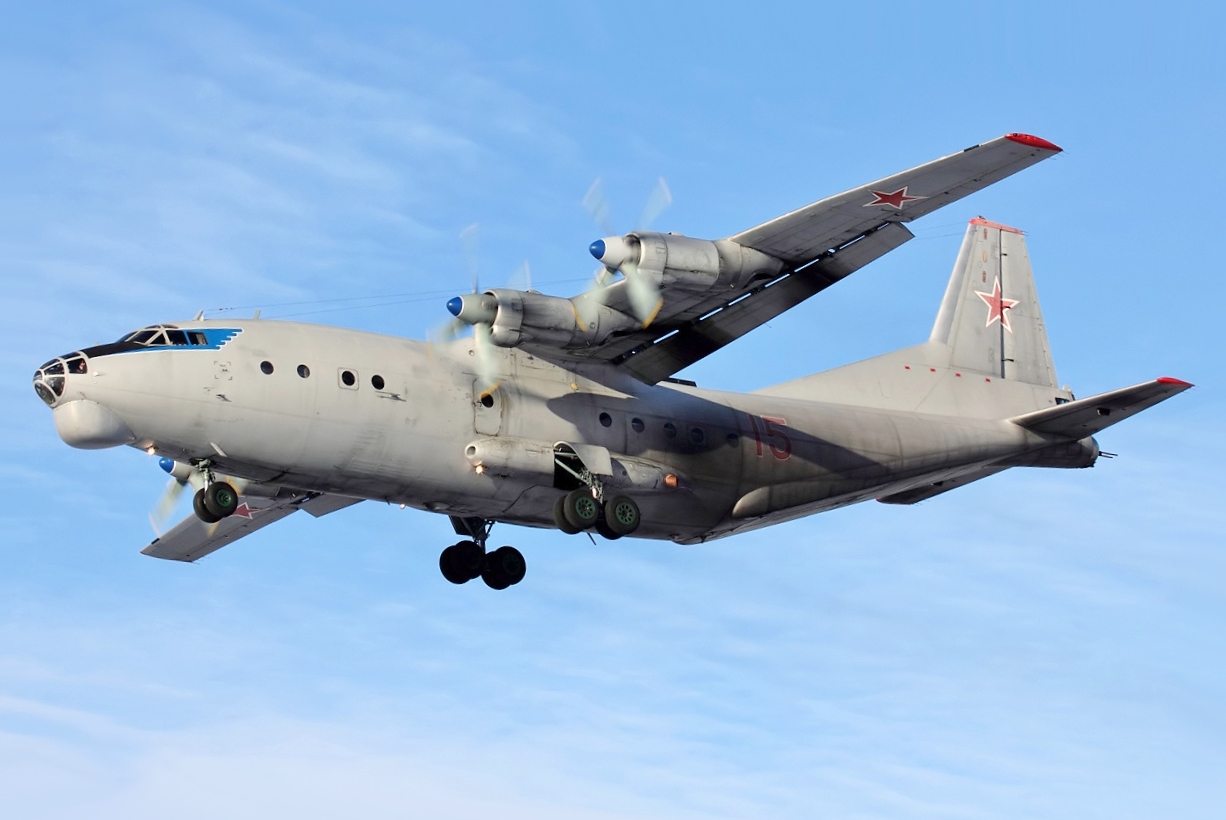
The Antonov An-12 stood out for its functional and incredibly resistant architecture, a four-engine turboprop that became an icon of tactical transport. Its unmistakable silhouette was dominated by a wide-section fuselage and a raised tail, engineering solutions to maximize load capacity and facilitate ground operations.
The design featured a large rear loading ramp, which allowed for the rapid embarkation and disembarkation of military vehicles, artillery and paratroopers. The structural robustness, combined with an oversized landing system, guaranteed the An-12 unparalleled operational versatility, even on improvised airfields.
Onboard Specifications
- ◆Large rear loading ramp: Allowed rapid loading of vehicles, artillery and bulky cargo, revolutionizing military air logistics.
- ◆Rugged Low Pressure Landing Gear: Designed to operate effectively from semi-prepared or unpaved runways, giving it exceptional operational flexibility.
- ◆Four Ivchenko AI-20 turboprop engines: Guaranteeing reliable power, long range and significant lift capacity, essential for heavy transport missions.
Operational Career & Operators
The An-12 quickly became the backbone of the Soviet Armed Forces (VVS), serving in every conceivable scenario, from Arctic exercises to desert operations. It was the protagonist of countless troop transport, paratroop drop and logistical supply missions, demonstrating exceptional reliability in extreme conditions.
Its career was marked by critical uses in conflicts such as the War in Afghanistan, where it proved irreplaceable for the transport of equipment and personnel. Beyond the USSR, the An-12 was widely exported, operating in over 50 nations in Africa, Asia and the Middle East, becoming a symbol of air capability for many allies.
Legacy & Cultural Impact
The Antonov An-12 left an indelible legacy in world aviation, serving as a model and inspiration for the next generation of transport aircraft. His conception of robustness and versatility directly influenced the development of giants such as the An-22 "Antei" and, indirectly, the Il-76, consolidating the Soviet design philosophy.
Even today, decades after its first flight, numerous examples of the An-12 continue to fly the skies in a civilian role, demonstrating the longevity and effectiveness of its original design. It is a symbol of Soviet engineering might and an aircraft that shaped not only military logistics, but also global airlift capabilities, remaining a beloved icon among enthusiasts.
Telemetria Specs (HUD)
Hangar Trivia & Curiosità
- 💡The An-12 is the military cargo variant developed from the passenger Antonov An-10.
- 💡Over 1,200 units were built, making it one of the most produced large turboprop aircraft.
- 💡Its Chinese counterpart, the Shaanxi Y-8, is a reverse-engineered and licensed variant that remains in production and widespread use.
Archivio Avvistamenti Spotter
Immagini scattate dalla community in tutto il mondo