An-10
Antonov
Historical Context & Origins
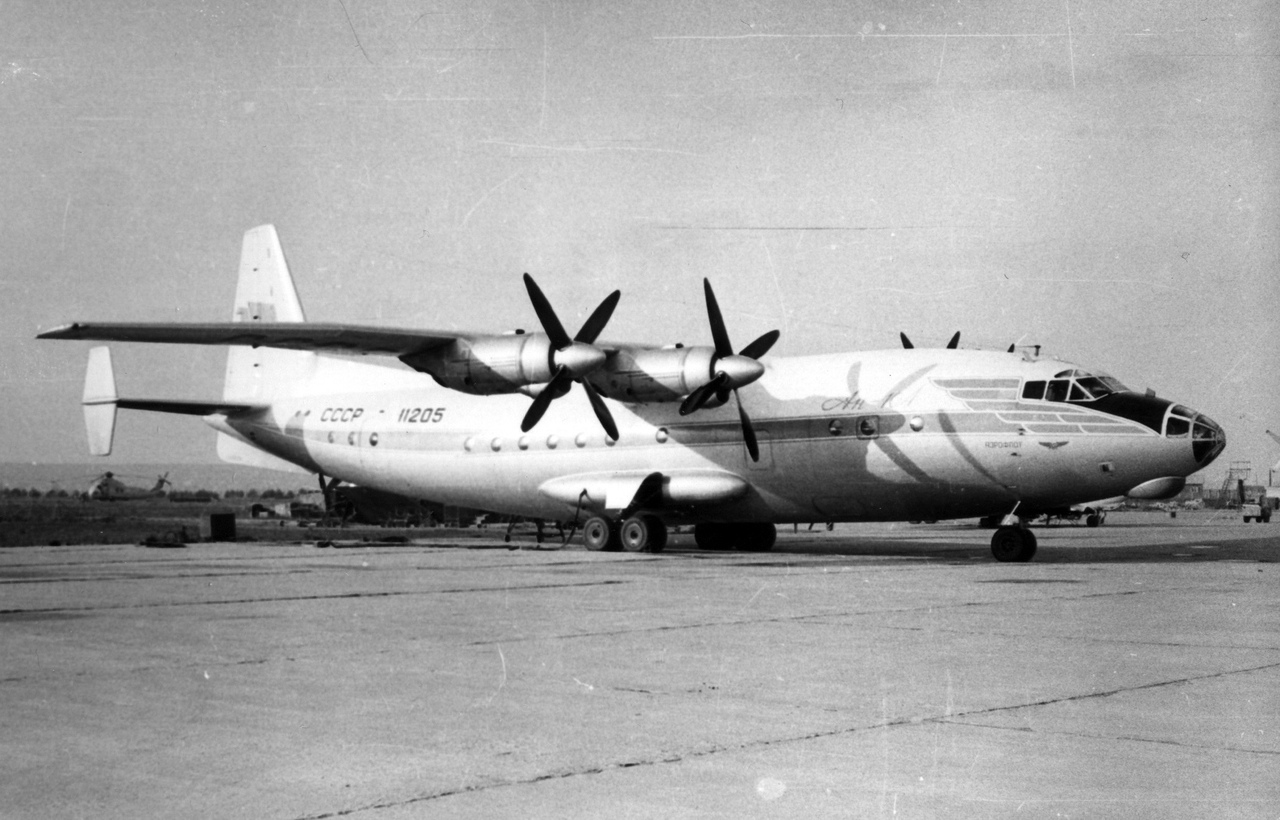
The Antonov An-10 "Ukraina" was born in the mid-1950s as a response to a crucial need of the Soviet Union: a medium-range passenger aircraft capable of operating effectively from airports with unprepared runways. The vast expanse of Soviet territory, often characterized by limited airport infrastructure, required extremely robust and versatile aircraft.
The Antonov design bureau, under the leadership of the brilliant Oleg Antonov, capitalized on the experience gained with heavy transport aircraft such as the An-8. The goal was to create a new passenger aircraft that combined reliability and the ability to operate in diverse and often challenging environmental conditions, typical of the most remote regions of the USSR.
The first flight of the An-10 occurred on 7 March 1957, marking a significant moment. This event introduced Antonov to the jet passenger transport sector, with a design philosophy of maximum robustness and operational pragmatism that would characterize his future successes.
Architecture & Technological Design
The Antonov An-10 was a distinctive four-engine, high-wing turboprop, a configuration chosen for its many advantages. The high-positioned wing offered greater protection for the engines and propellers from debris on unpaved runways and provided excellent lift, crucial for operations in marginal conditions.
Its sturdy fuselage was designed to accommodate a considerable number of passengers, initially 85, later increased to 100 and even 118 in later versions. The tricycle landing gear, reinforced and equipped with low-pressure tires, was specifically designed for use on grassy, dirt or snowy surfaces.
The engines were the Kuznetsov NK-4 or, more frequently, the Ivchenko AI-20, turboprop engines renowned for their power and proven reliability. These guaranteed the thrust necessary for short takeoffs and to maintain a good cruising speed, establishing the An-10 as a tireless "workhorse" in the Soviet skies.
Onboard Specifications
- ◆High aspect ratio cantilever wings: Optimized to ensure maximum aerodynamic efficiency and lift in different conditions.
- ◆Reinforced and durable structure: Designed to withstand high operational loads and the abrasion of unprepared slopes.
- ◆Advanced (for the time) navigation systems: Included weather radar, essential for safe operations in variable weather conditions.
Operational Career & Operators
The An-10 entered service with Aeroflot in July 1959, quickly becoming a staple of domestic medium-range routes. Its distinctive ability to operate in remote regions and with less developed airfields made it indispensable for connecting the vast and often inaccessible reaches of the Soviet Union.
It was used on a wide variety of routes, from the Baltic Sea to Siberia, carrying passengers and occasionally cargo. Its robustness and versatility were particularly appreciated, despite some initial lateral stability problems which were later resolved with the introduction of ventral stabilizers and a lengthening of the centerboard.
Total production of the An-10 amounted to 104 examples, including the closely related An-12 cargo version. Despite its unquestionable usefulness, the An-10's operational career was relatively short, ending in an early retirement from passenger service in 1972 due to a series of accidents.
Legacy & Cultural Impact
Although its career was cut short prematurely, the Antonov An-10 left a significant legacy in the aviation landscape. He contributed substantially to the development of Soviet civil aviation, demonstrating the full feasibility of large turboprop aircraft for transporting passengers on domestic routes characterized by operational challenges.
It was the direct predecessor of the Antonov An-12, a hugely successful cargo version that inherited much of its structural and aerodynamic characteristics. The An-12 became one of the leading military and civilian transport aircraft globally for decades, cementing Antonov's reputation.
The An-10 perfectly embodies the spirit of post-war Soviet engineering: practical, intrinsically robust and always oriented towards functionality. It remains an eloquent symbol of an era in which the ability to overcome the imposing logistical difficulties of the area was the absolute priority for any new aeronautical project.
Telemetria Specs (HUD)
Hangar Trivia & Curiosità
- 💡L'An-10 era conosciuto con il nome in codice NATO 'Cat' e il soprannome 'Ukraina', in riferimento alla sua origine nella SSR Ucraina.
- 💡Era la variante civile passeggeri sviluppata dal trasporto militare An-8 e condivideva molte componenti, inclusi l'ala e la coda, con il più famoso cargo militare An-12.
- 💡Nonostante la sua robusta progettazione per operare in condizioni difficili, una serie di incidenti fatali, principalmente dovuti all'affaticamento strutturale delle ali, portò alla messa a terra e al ritiro dell'intera flotta An-10 entro il 1972.
Archivio Avvistamenti Spotter
Immagini scattate dalla community in tutto il mondo