Albatross
de Havilland
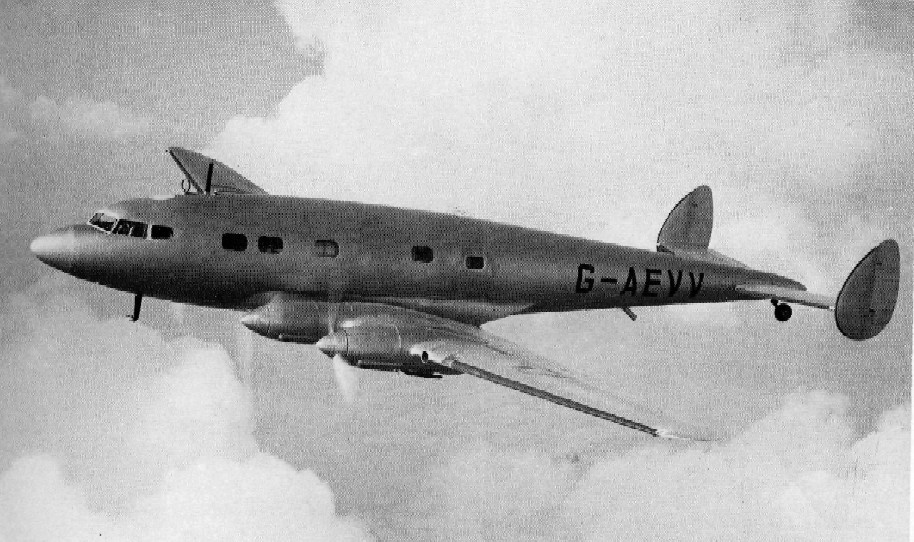
Historical Context & Origins
In the late 1930s, civil aviation was booming and there was a growing demand for faster, larger and more comfortable airliners. The prestigious Imperial Airways, the British national airline, was looking for a cutting-edge aircraft to expand its long-haul routes, including the ambition of transatlantic flights.
The need was to surpass the performance and capacity of seaplanes and biplanes of the time, offering a high-speed, luxury travel experience. De Havilland, already renowned for its aeronautical successes and mastery of wooden construction, accepted the challenge, proposing a radical design for its time.
The project, called DH.91, aimed to combine the company's expertise in lightweight construction with the latest aerodynamic and propulsion innovations. The result was an aircraft that promised not only speed but also an unprecedented level of comfort, positioning itself as a pioneer in the modern liner industry.
Architecture & Technological Design
The de Havilland Albatross was a masterpiece of aerodynamic design and materials engineering, particularly its innovative composite wood construction. The fuselage was a semi-machined monocoque, made with a balsa core between two layers of plywood, a technique that ensured structural lightness and considerable strength.
This construction approach gave the Albatross its incredibly fluid and streamlined lines, minimizing aerodynamic drag and contributing to an elegant and futuristic aesthetic. It was a low-wing monoplane, with a four-engine configuration that distinguished it from most of its contemporaries.
It was powered by four de Havilland Gipsy Twelve engines, inverted-V engines of 525 hp each, housed in aerodynamic nacelles that blended harmoniously with the wings. The Albatross also had fully retractable landing gear, a cutting-edge feature that further enhanced its efficiency and speed.
Onboard Specifications
- ◆Semi-monocoque construction in balsa-plywood: Revolutionary for its time, it guaranteed exceptional lightness and resistance to vibrations.
- ◆Four de Havilland Gipsy Twelve engines: Each engine provided 525 hp, allowing a cruising speed of approximately 322 km/h.
- ◆Highly soundproof passenger cabin: Carefully designed to minimize noise and vibration, providing superior comfort for 22 passengers.
Operational Career & Operators
The Albatross entered service with Imperial Airways in 1938, operating primarily on European and African routes. With its ability to carry 22 passengers in luxurious, quiet surroundings, it quickly earned a reputation for elegance and performance, representing the pinnacle of pre-war air travel.
However, production was limited to only seven examples due to the complex and laborious construction technique, which made each aircraft a work of art. The onset of World War II interrupted her commercial career, with the Albatrosses being requisitioned by the RAF for VIP transport and high-speed liaison duties.
Despite its relatively short operational life as an airliner, the Albatross convincingly demonstrated the feasibility of fast, long-range commercial flights. Its wooden structure, although advanced, proved sensitive to the elements, requiring intensive maintenance that limited its longevity.
Legacy & Cultural Impact
The de Havilland Albatross, although not produced in large numbers, left an indelible mark on the history of aviation. It demonstrated the potential of high-speed civil air transport, becoming an important precursor to modern multi-role airliners.
His advanced composite wood construction technique was not lost; on the contrary, it was refined and found its greatest expression in the legendary de Havilland Mosquito fighter-bomber, known as "The Wooden Wonder". The Albatross therefore helped forge the know-how that would later define one of the most effective aircraft of the war.
In addition to its technical merits, the Albatross is remembered for its timeless beauty and elegance, a true symbol of British ambition in pre-war aviation. It remains an icon of design and engineering, celebrated by aviation enthusiasts as one of the most fascinating and innovative aircraft of its era.
Telemetria Specs (HUD)
Hangar Trivia & Curiosità
- 💡Its distinctive stressed-skin plywood monocoque construction, while revolutionary for its time, was its Achilles' heel due to susceptibility to rot in certain climates.
- 💡Only seven Albatross aircraft were ever built. Two were converted for military transport duties during World War II, carrying VIPs and performing essential liaison work.
- 💡The aircraft was powered by four de Havilland Gipsy Twelve inverted V-12 engines, marking a significant step in British engine design for civil aircraft.
Archivio Avvistamenti Spotter
Immagini scattate dalla community in tutto il mondo