AL-60B Santa Maria
Aermacchi
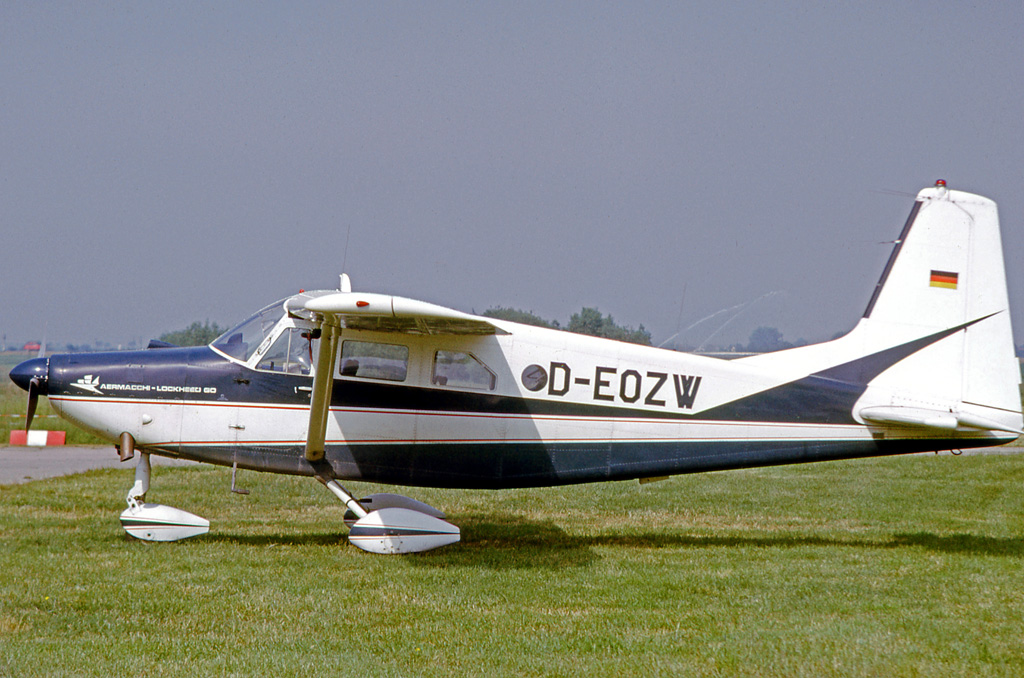
Historical Context & Origins
In the vibrant post-war aeronautical landscape, a clear need emerged for robust and versatile utility aircraft, capable of operating in extreme conditions and from improvised runways. It was in this context that Lockheed-Georgia, with its Model 60, conceived an aircraft destined to become a symbol of reliability.
Aermacchi, an Italian company already established for its trainers and fighters, saw the potential of this design and acquired the production rights. From this collaboration the Aermacchi AL-60 was born, a version optimized and engineered to specifically respond to the needs of the European and international market, in particular for less developed regions.
The first flight of the AL-60 took place in 1959, marking the beginning of an operational career that would see it protagonist in numerous roles. The best-known variant, the AL-60B Santa Maria, received this evocative nickname for its propensity to serve remote communities and its almost "miraculous" ability to bring assistance and connectivity.
Architecture & Technological Design
The Aermacchi AL-60B Santa Maria was conceived as a high-wing monoplane, a configuration chosen to maximize low-speed lift and improve downward lateral visibility, essential qualities for a utility aircraft. Its structure, entirely in light alloy, was designed to withstand considerable stress, guaranteeing durability and ease of maintenance in hostile environments.
The fixed landing gear, robust and often equipped with low-pressure tires, was a key element of its construction philosophy, allowing safe operations from unprepared or semi-prepared surfaces. The large wing surfaces and powerful flaps contributed to its exceptional STOL (Short Take-Off and Landing) capabilities, allowing take-offs and landings over very short distances.
Propulsion was entrusted to a reliable Continental IO-470-R horizontally opposed six-cylinder piston engine, capable of delivering 260 horsepower. This engine, known for its robustness and ease of maintenance, ensured the AL-60B had the performance necessary to transport significant payloads and an autonomy adequate for its purposes.
Onboard Specifications
- ◆Heavy-duty structural strength: Heavy-duty design to operate in extreme conditions with minimal infrastructure requirements.
- ◆Reconfigurable cargo compartments: Modular interiors easily adaptable for passenger transport (up to 6), bulky goods or special configurations (medevac, agriculture).
- ◆Exceptional STOL performance: Capable of short takeoff and landing on improvised runways thanks to the high profile wing and effective flaps.
Operational Career & Operators
The AL-60B Santa Maria found its ideal stage in regions with limited infrastructure, particularly in Africa and Latin America. Its ability to operate in difficult conditions made it invaluable for transport, medical evacuation, surveillance and agricultural support tasks.
The main operators include the air forces and civilian operators of countries such as South Africa, Mexico, Argentina and the then Rhodesia (now Zimbabwe). In South Africa, for example, it was used to connect remote farms and for search and rescue missions in the vast bush.
Its reliability and versatility made the AL-60B a true "workhorse" of the skies, earning the trust of pilots and operators who depended on its ability to reach otherwise inaccessible places. The nickname "Santa Maria" was not just a geographical reference, but a recognition of her almost providential role.
Legacy & Cultural Impact
Although the Aermacchi AL-60B was not produced in very large numbers (around 80 units of the B version produced by Aermacchi, in addition to those under license), its impact was profound on the communities it served. It represents an excellent example of practical aeronautical engineering, focused on functionality and resilience rather than speed or aesthetics.
The AL-60B cemented Aermacchi's reputation not only as a manufacturer of high-performance military aircraft, but also as a creator of effective and reliable civil aviation solutions. Its history testifies to the ability of the Italian industry to design aircraft suitable for niche markets, with unique operational requirements.
Today, the Aermacchi AL-60B Santa Maria is remembered as a symbol of utility aviation, an aircraft that has concretely contributed to the development and well-being of remote regions, embodying the spirit of "bush flying" and Italian ingenuity. Its legacy lies in proving that robust design and purposeful functionality can generate lasting impact.
Telemetria Specs (HUD)
Hangar Trivia & Curiosità
- 💡L'AL-60 fu originariamente progettato come Lockheed CL-475, con l'intento di essere un aereo robusto e a basso costo per i mercati non sviluppati.
- 💡Oltre all'Italia, l'AL-60 ebbe un notevole successo in Sudafrica, dove fu prodotto su licenza come Atlas C4M Kudu, servendo in ruoli militari e civili.
- 💡Il design ad ala alta e il carrello fisso e robusto furono elementi chiave per le sue eccezionali capacità di operare in regioni remote con infrastrutture aeroportuali minime.
Archivio Avvistamenti Spotter
Immagini scattate dalla community in tutto il mondo