A350-900
Airbus
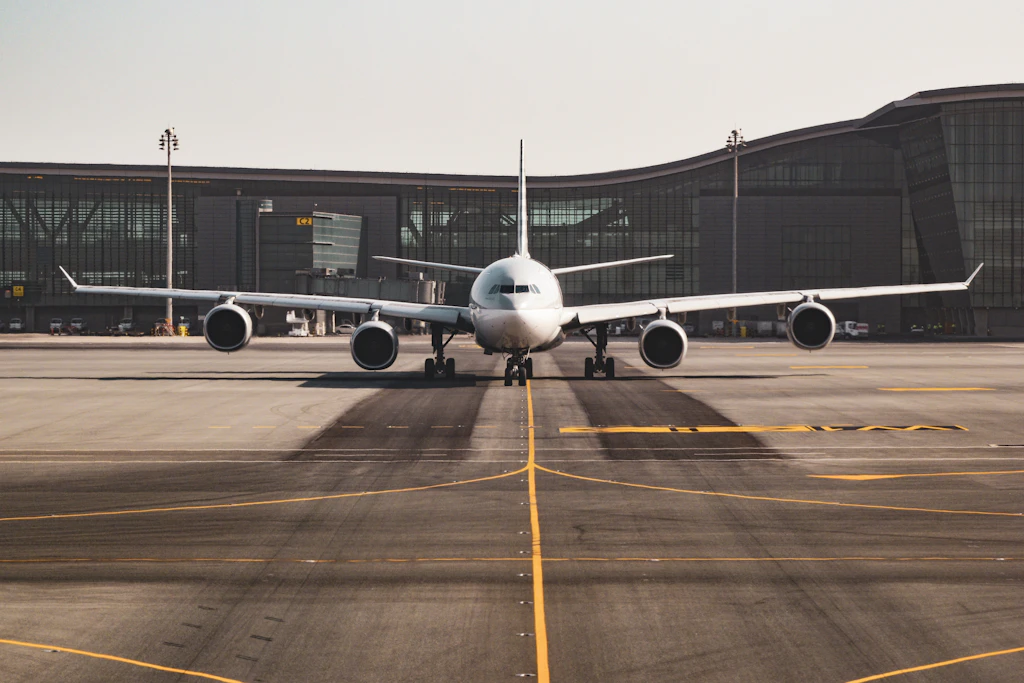
Historical Context & Origins
The Airbus A350-900 represents Europe's response to the growing need for highly efficient, long-range wide-body aircraft, in a market dominated by competition, in particular the Boeing 787 Dreamliner. The project, whose key development phase began around 2010, initially began life as the A330 XWB (eXtra Wide-Body), but strong market demand for radical innovation pushed Airbus towards an entirely new design.
This ambitious redirection led to the development of the A350 XWB, a family of aircraft destined to revolutionize the concept of long-range flight. The first flight of the A350-900 prototype occurred on 14 June 2013, marking a milestone after years of advanced engineering. The primary objective was to maximize passenger comfort, operational efficiency and autonomy.
Architecture & Technological Design
The A350-900 is a true engineering marvel, standing out for its heavy use of advanced composite materials. Over 50% of its structure, including the fuselage and wings, is made of carbon fiber, giving the aircraft unprecedented lightness and structural strength, key factors in reducing fuel consumption and emissions. Its wings feature an innovative aerodynamic design, with curved winglets, which optimize efficiency in flight.
At the heart of its performance are the powerful and quiet Rolls-Royce Trent XWB engines, designed specifically for the A350 and considered among the most efficient wide-body engines. The Airspace by Airbus cabin revolutionizes the passenger experience, offering larger spaces, an advanced climate control system that maintains an internal pressure equivalent to 6,000 feet (compared to the standard 8,000 feet) and greater humidity, reducing jet lag fatigue.
Onboard Specifications
- ◆Structure in 53% composites: Fuselage and wings in carbon fiber, ensuring lightness, resistance and less maintenance.
- ◆Airspace cabin by Airbus: Optimized interior pressure (6,000 feet) and controlled humidity, plus dynamic LED lighting for passenger comfort.
- ◆Rolls-Royce Trent XWB engines: The most efficient and quietest in their class, optimized for the long distances of the A350.
Operational Career & Operators
The Airbus A350-900 entered service with Qatar Airways in January 2015, ushering in a new era in long-haul travel. Since then, it has established itself as a mainstay in the fleets of major global airlines, including Lufthansa, Singapore Airlines, Cathay Pacific and Delta Air Lines, demonstrating its versatility on transcontinental and ultra long-haul routes.
Its ability to operate direct flights over extreme distances, combined with superior operational efficiency, has enabled carriers to open new routes and reduce travel times, significantly improving the passenger experience. The A350-900 is renowned for its low operating costs and reliability, quickly becoming a key asset for global connectivity.
Legacy & Cultural Impact
The Airbus A350-900 is not just a plane; it is a symbol of European ingenuity and innovation in the aeronautical sector. It has set new standards in fuel efficiency and emissions reduction, helping to make air travel more sustainable and demonstrating that excellent performance can go hand in hand with environmental responsibility.
Its introduction has redefined expectations for both passengers and airlines, pushing the industry towards a greener and more comfortable future. The A350-900 remains a benchmark, a technological bastion that continues to influence the development of future wide-body aircraft, cementing Airbus' legacy as a leader in modern aviation.
Telemetria Specs (HUD)
Hangar Trivia & Curiosità
- 💡The A350-900's first flight actually occurred on June 14, 2013, not 2010.
- 💡Over 50% of the A350's airframe is made from composite materials, significantly reducing weight and improving fuel efficiency.
- 💡The Rolls-Royce Trent XWB is the sole engine option for the A350 family, specifically designed for this aircraft.
Archivio Avvistamenti Spotter
Immagini scattate dalla community in tutto il mondo
Vettori Rilevati (Flotta Attiva)


Turkish Airlines
In Flotta: x14 u.

Lufthansa
In Flotta: x22 u.

China Southern Airlines
In Flotta: x18 u.

Air France
In Flotta: x27 u.
Ethiopian Airlines
In Flotta: x16 u.

Qatar Airways
In Flotta: x34 u.
Thai Airways
In Flotta: x12 u.
Vietnam Airlines
In Flotta: x14 u.
Finnair
In Flotta: x17 u.
Philippine Airlines
In Flotta: x9 u.
Air India
In Flotta: x6 u.
Air Fiji
In Flotta: x4 u.

Iberia
In Flotta: x20 u.
China Eastern Airlines
In Flotta: x9 u.
Air Mauritius
In Flotta: x2 u.
Malaysia Airlines
In Flotta: x6 u.

Singapore Airlines
In Flotta: x60 u.

Delta Air Lines
In Flotta: x28 u.

Japan Airlines
In Flotta: x15 u.
Starlux Airlines
In Flotta: x13 u.

ITA Airways
In Flotta: x6 u.

Cathay Pacific
In Flotta: x28 u.