A340-600
Airbus
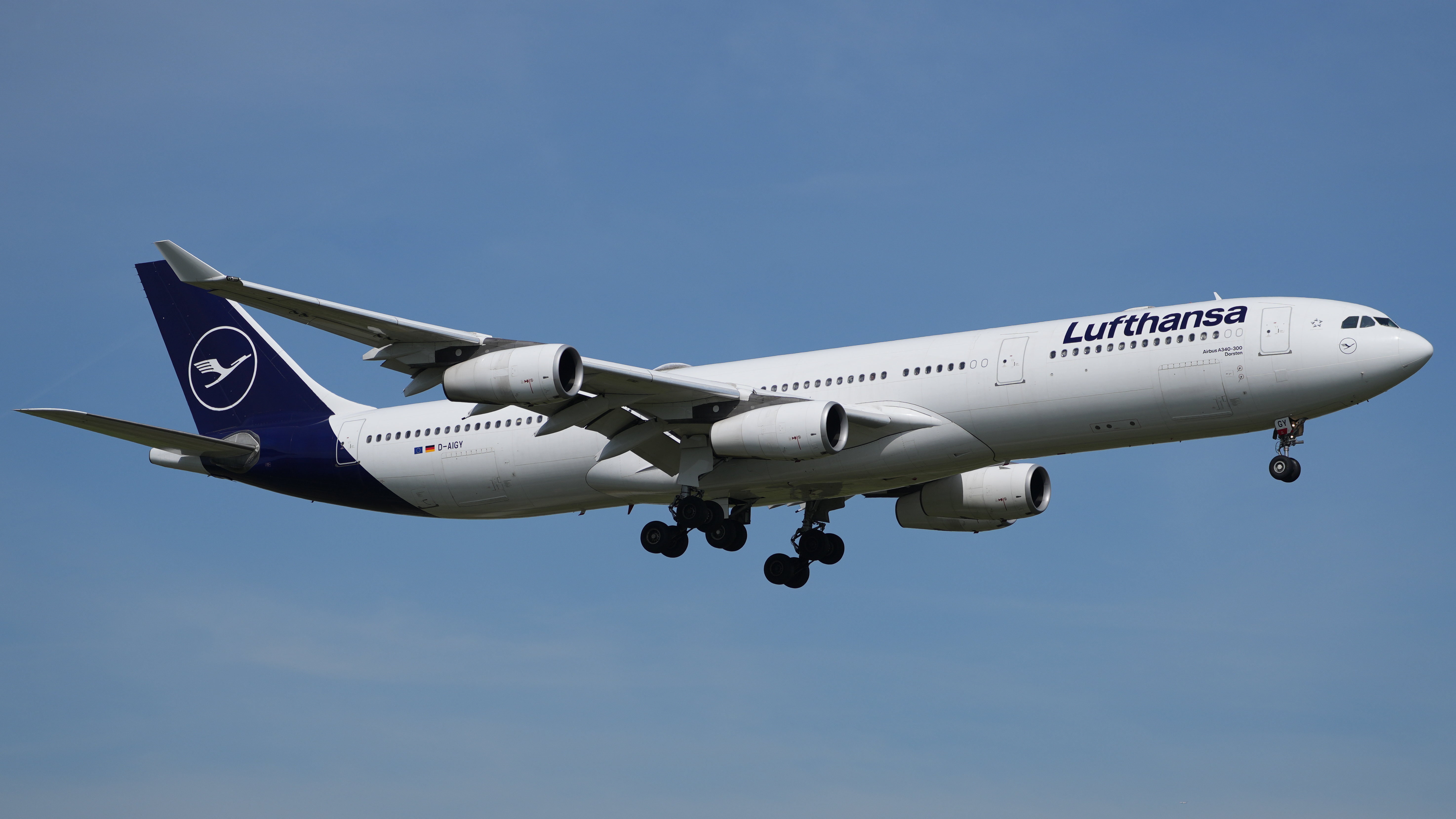
Historical Context & Origins
The Airbus A340-600 emerged at the dawn of the new millennium as a bold response to the growing demand for ultra-long-range, high-capacity air connections. Designed to challenge the dominance of the four-engine Boeing 747s and to offer an alternative to the twin-engine 777s on particularly long and "thin" routes, it represented the evolutionary pinnacle of the A340 family.
With its first flight in 2001, the A340-600 presented itself as a no-compromise solution for airlines requiring an aircraft with exceptional range, without the operational restrictions imposed by the ETOPS rules on twin-engine aircraft. It was an ambitious vision of global connectivity, a bridge between continents.
Architecture & Technological Design
This giant of the skies was a masterpiece of engineering, immediately standing out for its imposing size. With a record length of 75.36 meters, on its debut it became the longest airliner in the world, surpassing even the Boeing 747.
Under each wing, the A340-600 featured four powerful Rolls-Royce Trent 500 engines, specifically designed to provide the thrust needed for fully loaded takeoffs on ultra-long-haul routes, while delivering remarkable efficiency for its time. Its wing was redesigned and enlarged to accommodate greater fuel capacity and optimize aerodynamics.
The design included additional central landing gear, a crucial element for distributing the enormous weight of the aircraft and its nearly 160,000 liters of fuel, ensuring structural safety and operational flexibility. The cockpit, an advanced glass cockpit, benefited from the Airbus commonality philosophy.
Onboard Specifications
- ◆Extended autonomy: Ability to cover distances of up to 14,600 km without stopping.
- ◆Passenger capacity: Typically configured to accommodate 320-380 passengers in three classes.
- ◆Onboard comfort: Large and quiet cabin, with advanced in-flight entertainment (IFE) systems.
Operational Career & Operators
The commercial launch of the A340-600 occurred with the delivery of the first example to Virgin Atlantic in 2002, which immediately deployed it on transatlantic routes. Quickly, it became a mainstay for major global carriers such as Lufthansa, Iberia, South African Airways and Etihad Airways, prized for its ability to serve long-haul markets.
It was the ideal aircraft for direct connections between European hubs and destinations in Asia, Africa and South America, offering passengers a superior travel experience thanks to its silence and smoothness. However, the rise of more efficient twin-engine aircraft, such as the Boeing 777 and Airbus A350, has gradually limited their operational competitiveness due to the higher maintenance costs and fuel consumption of four engines.
Legacy & Cultural Impact
The Airbus A340-600 remains a symbol of aeronautical engineering in the first two decades of the 21st century, demonstrating Airbus' ability to push the boundaries of long-range aircraft design. Although its heyday was relatively short compared to other giants of the skies, it left an indelible mark.
It was a pioneer in passenger comfort for ultra-long-haul flights, known for its stability and reduced perceived turbulence. The A340-600 epitomized elegance and power, closing the golden era of four-engined passenger aircraft, before the efficiency of twin-engined aircraft redefined the landscape of long-haul flights.
Telemetria Specs (HUD)
Hangar Trivia & Curiosità
- 💡For a short period after its introduction, the A340-600 held the title of the world's longest passenger aircraft, surpassing the Boeing 747-400.
- 💡It featured distinctive crew rest compartments located in the lower deck, below the main cabin, accessed via hidden stairs.
- 💡Despite its impressive range, the A340-600's four-engine configuration faced efficiency challenges against more modern twin-engine competitors like the Boeing 777.
Archivio Avvistamenti Spotter
Immagini scattate dalla community in tutto il mondo
Vettori Rilevati (Flotta Attiva)




Vettori Rilevati (Flotta Storica / Dismessa)


Turkish Airlines
Stato: Dismesso

Etihad Airways
Stato: Dismesso
Azerbaijan Airlines
Stato: Dismesso

Virgin Atlantic
Stato: Dismesso

Qatar Airways
Stato: Dismesso

Hainan Airlines
Stato: Dismesso
Thai Airways
Stato: Dismesso
South African Airways
Stato: Dismesso

Iberia
Stato: Dismesso
China Eastern Airlines
Stato: Dismesso
Air Mauritius
Stato: Dismesso
Air China
Stato: Dismesso
