A340-500
Airbus
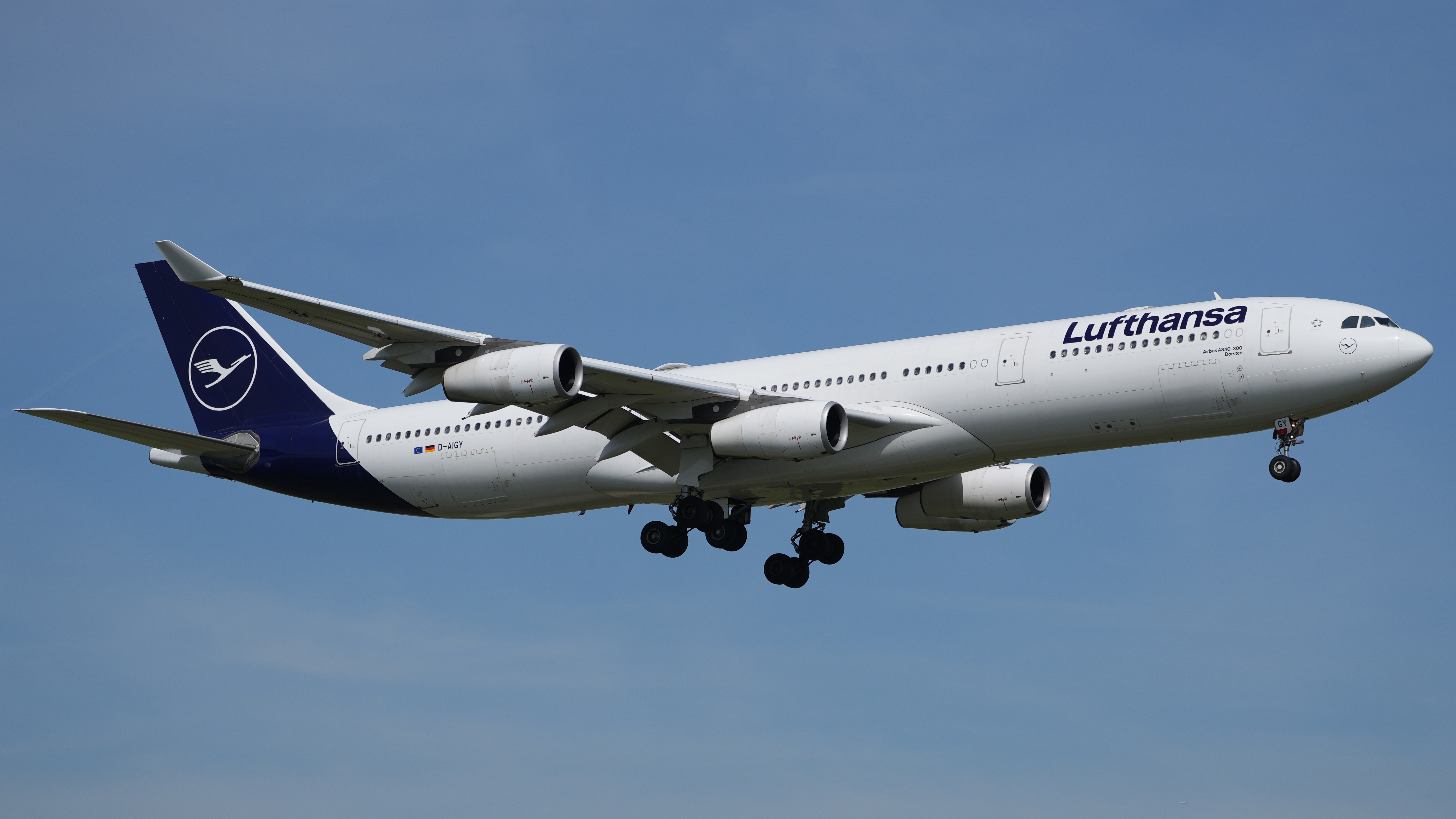
Historical Context & Origins
The Airbus A340-500 emerged at the dawn of the 21st century as a bold, engineering-forward response to the growing need for non-stop ultra-long-haul air connections. Developed starting from the A340 family, the project aimed to overcome the autonomy limits imposed at the time, proposing a four-engine solution in a market that was already seeing the rise of ETOPS twin-engine planes.
The first flight, which took place in 2002, marked the official entry of this giant of the skies onto the world aeronautical scene, promising to revolutionize intercontinental travel. The A340-500 was not just an evolution, but a statement of intent from Airbus, determined to compete directly with Boeing's long-range offerings, particularly the 777-200LR.
Designed to be the world's longest-range airliner upon its debut, the A340-500 opened up previously unthinkable routes. His concept responded to the demand for increasingly global commercial aviation, where the speed and convenience of direct flights became a crucial competitive factor for elite airlines.
Architecture & Technological Design
The architecture of the A340-500 was distinguished by a notable extension of the fuselage compared to previous variants, reaching a length of 67.93 metres. This elongation allowed not only a greater number of passengers and cargo, but above all the installation of additional fuel tanks, essential for its extraordinary autonomy.
A distinctive and crucial element were its four Rolls-Royce Trent 500 engines, a choice that guaranteed powerful thrust and, at the time, offered greater operational flexibility by overcoming the ETOPS restrictions applied to twin-engine aircraft. The wing design was further optimized, with a larger span and new winglets, to maximize aerodynamic efficiency over extreme distances.
The integration of an advanced digital fly-by-wire system and a cockpit common to the Airbus family reduced training costs for pilots and improved the human-machine interface. Every aspect, from the lightweight structure to the sophisticated avionics, was calibrated to ensure unparalleled performance and superior comfort on flights of exceptional duration.
Onboard Specifications
- ◆Maximum Extended Range: Up to 16,670 km, making it capable of connecting almost any two points on the globe in a single flight.
- ◆Four Rolls-Royce Trent 500 Engines: Provided a combined thrust of approximately 228,000 lbf, ensuring power and reliability for transoceanic flights.
- ◆Very High Fuel Capacity: With additional tanks in the cargo compartment and in a central compartment, it allowed approximately 222,000 liters of kerosene to be transported.
Operational Career & Operators
The Airbus A340-500 has left an indelible mark in the history of aviation, above all thanks to its pioneering use on record routes. Prestigious airlines such as Singapore Airlines have used it to operate the world's longest non-stop commercial flight, connecting Singapore to Newark (New York) and Los Angeles, over a period of approximately 18 hours.
Other world-class carriers, including Emirates, Etihad Airways and Thai Airways, have integrated the A340-500 into their fleets, leveraging its ability to reach distant markets with direct flights. Although its niche was well defined, the preference for cheaper twin-engined aircraft progressively reduced its numbers in active service.
Despite the high operating cost, mainly due to the four engines, the A340-500 has demonstrated the commercial viability of ultra-long-haul routes. It has allowed airlines to offer premium service, cutting precious hours from travel times and improving the overall passenger experience.
Legacy & Cultural Impact
The Airbus A340-500, although largely retired or repurposed for special roles today, has had a significant cultural and technological impact. It demonstrated that exceptional endurance flights were not only technically possible, but also commercially desirable, driving innovation throughout the civil aviation sector.
He was a pioneer who paved the way for subsequent developments of long-range aircraft, including modern twin-engine aircraft such as the Boeing 777-300ER and Airbus A350, which now dominate the segment. Its audacity to connect continents non-stop has redefined global travel expectations for millions of passengers.
The A340-500 remains a symbol of engineering elegance and aeronautical ambition. Its history, made up of records and economic challenges, consolidates its image as an extraordinary machine which, with its four engines, made it possible to challenge and overcome distances, leaving a lasting legacy in the era of intercontinental flights.
Telemetria Specs (HUD)
Hangar Trivia & Curiosità
- 💡Per un certo periodo, l'A340-500 ha detenuto il record per il volo commerciale di linea non-stop più lungo del mondo, operando la rotta Singapore-Newark (New York) per Singapore Airlines.
- 💡È facilmente riconoscibile dalle altre varianti dell'A340 per la sua fusoliera significativamente più lunga e la presenza di quattro motori Rolls-Royce Trent.
- 💡L'aereo è stato specificamente progettato per competere con il Boeing 777-200LR nel segmento dei voli a lunghissimo raggio, offrendo capacità simili ma con una configurazione quadrimotore.
Archivio Avvistamenti Spotter
Immagini scattate dalla community in tutto il mondo
Vettori Rilevati (Flotta Storica / Dismessa)


Air Canada
Stato: Dismesso

Emirates
Stato: Dismesso
Etihad Airways
Stato: Dismesso
Azerbaijan Airlines
Stato: Dismesso

Qatar Airways
Stato: Dismesso
Thai Airways
Stato: Dismesso

Singapore Airlines
Stato: Dismesso
TAP Air Portugal
Stato: Dismesso
Arik Air
Stato: Dismesso