A321-200
Airbus
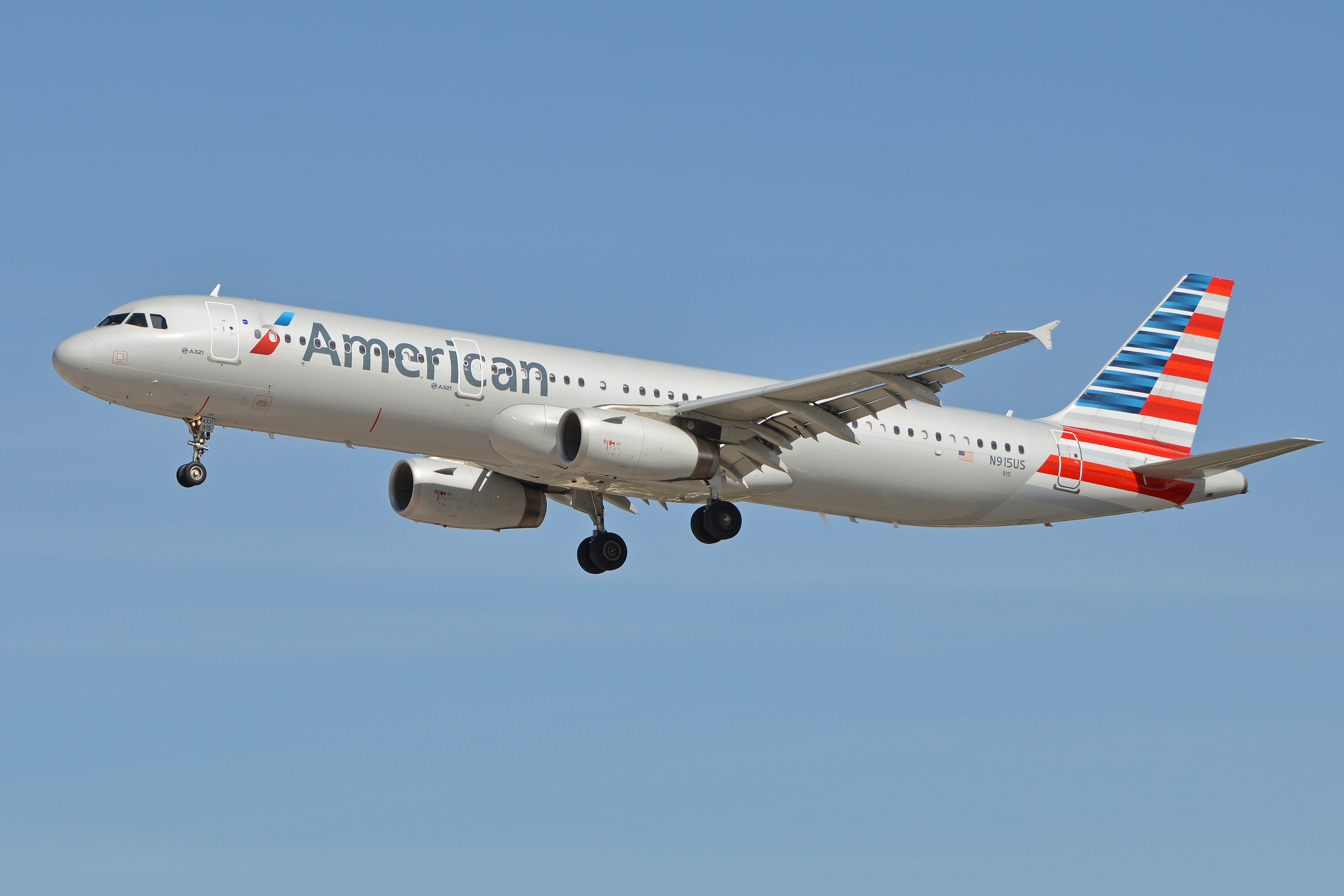
Historical Context & Origins
The Airbus A321-200, the giant of the A320 family, made its first flight in 1996, solidifying Airbus' response to the growing demand for single-aisle aircraft with greater capacity. Born as a stretched version of the innovative A320, its development aimed to offer an efficient solution for medium-range and high-density routes, competing directly with the Boeing 757.
The need for an aircraft with greater range than the previous A321-100 was crucial. The A321-200 model responded to this need, introducing auxiliary fuel tanks and a higher maximum take-off weight (MTOW), transforming it into a true transcontinental "workhorse".
Architecture & Technological Design
The architecture of the A321-200 is based on the proven A320 platform, but with significant structural changes. The fuselage lengthened by 6.93 metres (compared to the A320) allowed it to accommodate up to 230 passengers in a single class configuration, while a reinforced landing gear supported its increased operating weight.
The technological heart remained the fly-by-wire control system, a hallmark of the Airbus family, which guaranteed precision and reduced workload for the pilots. Operational commonality, with an almost identical cockpit to that of other A320s, has represented a huge advantage for airlines in terms of crew training and management.
The increased fuel capacity has increased the range to approximately 5,950 km, making the A321-200 ideal for longer routes. The available engines, CFM56 or IAE V2500, offered efficient and powerful choices, adapting to the different operational needs of the carriers.
Onboard Specifications
- ◆Advanced fly-by-wire: Provided precise control and improved flight safety.
- ◆Cockpit Commonality: Reduced training costs and facilitated pilot transition between A320 Family models.
- ◆Increased fuel capacity: Significantly extended range, opening up new route possibilities.
Operational Career & Operators
Since its introduction, the A321-200 has established itself as a key pillar for numerous global airlines. Its versatility made it perfect for serving both high-density domestic routes and medium-long range transcontinental connections.
Prominent carriers such as Lufthansa, American Airlines, Delta Air Lines and British Airways have integrated the A321-200 into their fleets, taking advantage of its efficiency and reliability. Its ability to carry large numbers of passengers with low operating costs has made it a cost-effective choice for network expansion.
Legacy & Cultural Impact
The Airbus A321-200 has had a profound impact on the aviation industry, redefining expectations for single-aisle aircraft. It demonstrated that a "narrow-body" could tackle routes once reserved for wide-bodies, consolidating Airbus' position in the global market.
Its success laid the foundation for future evolutions, such as the A321LR (Long Range) and the A321XLR (Extra Long Range), which push the boundaries of autonomy for single-aisle aircraft even further. The A321-200 remains a symbol of successful aeronautical engineering and a testament to Airbus' strategic vision.
Telemetria Specs (HUD)
Hangar Trivia & Curiosità
- 💡It is the longest variant within the original Airbus A320 Family of narrow-body aircraft.
- 💡Pilots holding a common type rating for the A320 family can fly the A321-200 with minimal additional training, enhancing airline operational flexibility.
- 💡The A321-200 achieves its extended range capability primarily through the addition of a second center fuel tank, distinguishing it from the earlier -100 variant.
Archivio Avvistamenti Spotter
Immagini scattate dalla community in tutto il mondo
Vettori Rilevati (Flotta Attiva)


Turkish Airlines
In Flotta: x68 u.

American Airlines
In Flotta: x202 u.

Lufthansa
In Flotta: x40 u.

Air France
In Flotta: x20 u.
EgyptAir
In Flotta: x4 u.
Vietnam Airlines
In Flotta: x38 u.

Air Transat
In Flotta: x13 u.
Aeroflot
In Flotta: x31 u.

British Airways
In Flotta: x11 u.

China Eastern Airlines
In Flotta: x77 u.
Delta Air Lines
In Flotta: x127 u.