A321-100
Airbus
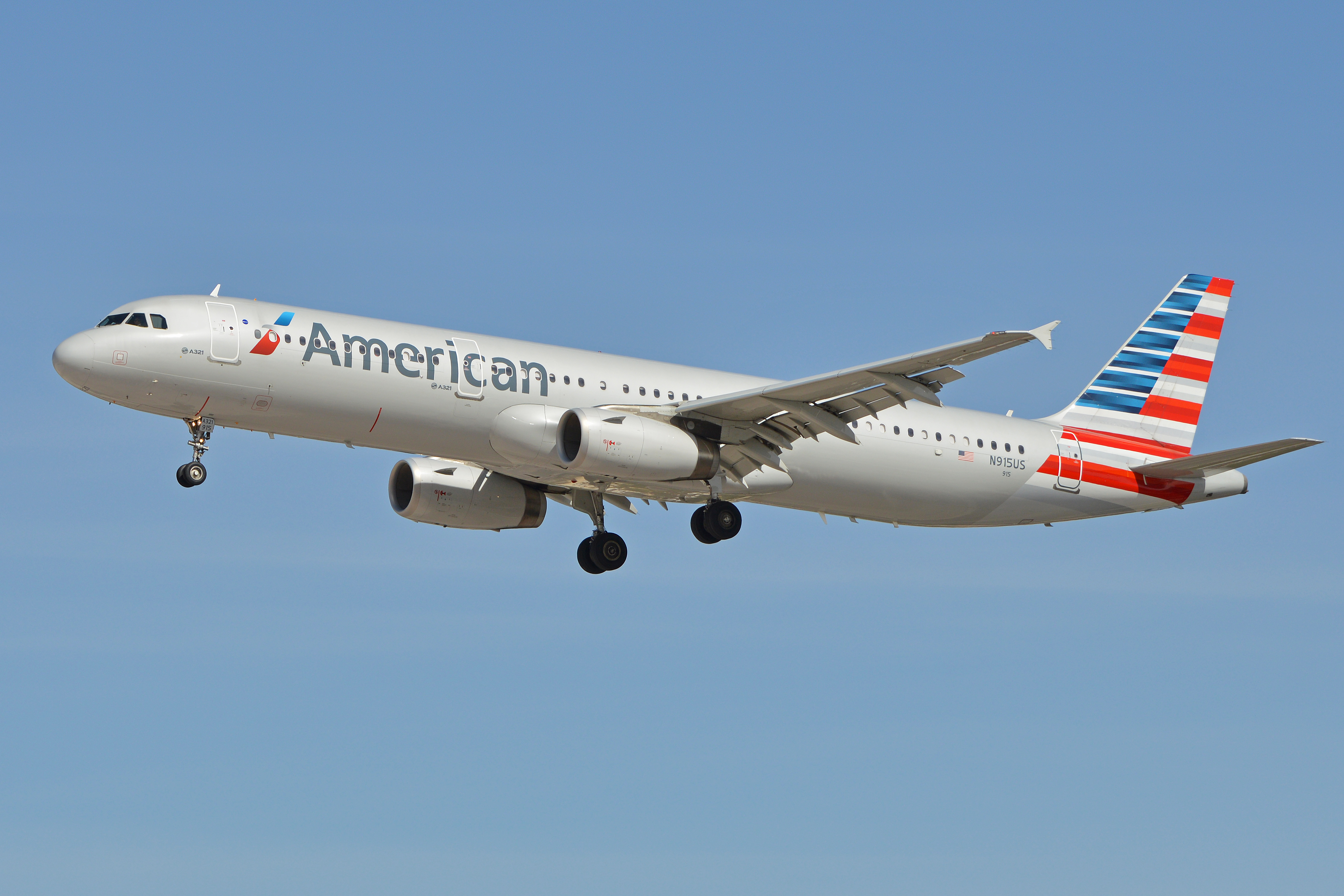
Historical Context & Origins
The European giant Airbus, after the revolutionary success of the A320 with its innovative fly-by-wire system, found itself faced with growing market demand for a single-aisle aircraft with greater capacity. Thus arose the need for a stretched variant, which led to the development of the Airbus A321-100.
This aircraft was designed to serve medium-haul routes with significantly greater numbers of passengers, while maintaining the high efficiency and operational familiarity of the A320 family. Its first flight occurred on 11 March 1993, marking a major expansion in Airbus' market strategy.
The A321-100 represented a direct response to the needs of airlines looking for an aircraft capable of optimizing costs per seat offered on high-density routes, positioning itself as a direct competitor in the large capacity single aisle jet segment.
Architecture & Technological Design
The architecture of the A321-100 was derived directly from the A320, but featured significant structural changes to accommodate the new dimensions. The fuselage was lengthened by as much as 6.94 meters (4.27 m forward of the wing and 2.67 m aft), requiring structural reinforcement and reinforced landing gear to support the increased take-off weight.
The wings, while maintaining the same basic span and aerodynamics, were retrofitted with double-slotted flaps to improve takeoff and landing performance, crucial for a heavier aircraft. This evolution ensured that the aircraft maintained excellent flight characteristics, despite the increase in mass and length.
The technological heart of the A321-100 remained unchanged from the A320, with the same cockpit and the revolutionary digital fly-by-wire flight control system. This ensured significant commonality and significantly reduced training costs for pilots, a key competitive advantage for airlines.
Onboard Specifications
- ◆Digital fly-by-wire: Innovative flight control system that translates pilot inputs into electronic signals, offering unprecedented precision and flight envelope protections.
- ◆Cockpit Commonality: Allows A320-qualified pilots to fly the A321 with minimal additional training, optimizing operational efficiency and reducing airline costs.
- ◆Efficient Engines: Equipped with the powerful and reliable CFM56-5B or IAE V2500 engines, the A321-100 ensured excellent fuel efficiency and robust performance for medium-range flights.
Operational Career & Operators
The A321-100 entered commercial service in 1994, with launch airlines Lufthansa and Alitalia. It immediately proved to be an ideal workhorse for high-demand European and inter-regional routes, thanks to its ability to accommodate up to 220 passengers in a single-class configuration.
Its operational reliability, combined with fuel efficiency and cabin comfort, quickly made it popular among major global carriers. The A321-100 played a crucial role in the expansion of airline networks that needed increased capacity on already established routes.
Many operators appreciated its flexibility, which allowed it to adapt to different cabin configurations, from the high-density layout for low-cost airlines to the mixed one with a significant business class, maximizing returns on a wide variety of markets.
Legacy & Cultural Impact
The Airbus A321-100 has left an indelible legacy in commercial aviation, serving as a precursor for future, longer-lived variants, such as the A321-200 (with extended range) and the current NEO generations. It demonstrated the viability of a "super-stretch" concept in the single-aisle aircraft segment.
Its cultural impact lay in redefining expectations for medium-haul flights: it demonstrated that it was possible to combine high passenger capacity with the efficiency and advanced technologies of a single-aisle aircraft. It has thus shaped the strategy of many airlines around the world.
The A321-100 was not just an aircraft; it was a symbol of cutting-edge European engineering and Airbus' ability to innovate and respond to the needs of an ever-changing market, cementing its position as an irreplaceable pillar in modern aviation.
Telemetria Specs (HUD)
Hangar Trivia & Curiosità
- 💡It was the first A321 variant to enter service, laying the groundwork for subsequent, longer-range models like the A321-200.
- 💡At its introduction, the A321-100 was the longest aircraft in the Airbus A320 family, designed for higher passenger or cargo capacity.
- 💡The A321-100 maintains a high degree of cockpit and systems commonality with other A320 family aircraft, simplifying pilot training and maintenance for airlines.
Archivio Avvistamenti Spotter
Immagini scattate dalla community in tutto il mondo
Vettori Rilevati (Flotta Storica / Dismessa)


Turkish Airlines
Stato: Dismesso
Middle East Airlines
Stato: Dismesso

Lufthansa
Stato: Dismesso

Air France
Stato: Dismesso
Aero Cóndor
Stato: Dismesso

Swissair
Stato: Dismesso
Cyprus Airways
Stato: Dismesso
Austrian Airlines
Stato: Dismesso
Royal Jordanian
Stato: Dismesso

China Eastern Airlines
Stato: Dismesso

Alitalia
Stato: Dismesso
Uzbekistan Airways
Stato: Dismesso
TAP Air Portugal
Stato: Dismesso
Air China
Stato: Dismesso