A320-200
Airbus
Historical Context & Origins
The Airbus A320-200 emerges as an icon of modern aviation, the fruit of a bold vision to revolutionize the single-aisle segment in the 1980s. The A320 project, launched by Airbus Industrie, was conceived to challenge Boeing's hegemony and introduce an unprecedented technological leap in commercial air transport.
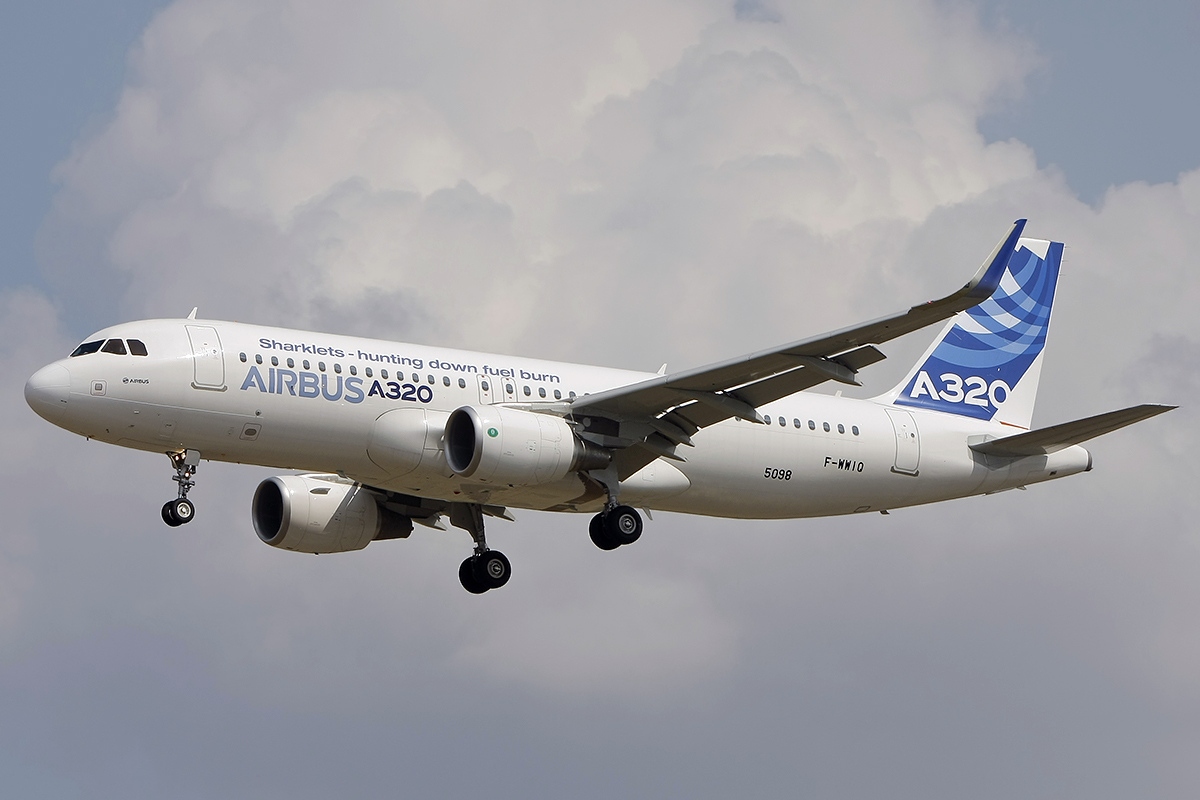
The A320-200 variant, which represents the standard for the A320 family, made its first flight in 1988, one year after the original A320. It was notable for the introduction of wingtip fences (vertical fins on the wingtip) and increased fuel capacity, significantly improving autonomy and efficiency compared to the launch model.
This period was crucial for Airbus, which with the A320-200 not only consolidated its position on the market, but laid the foundations for a design and technology philosophy that would characterize all its future aircraft, focusing on innovation and operational standardization.
Architecture & Technological Design
The heart of the A320-200 revolution was the adoption of the fully digital Fly-by-Wire (FBW) system, a first for a commercial airliner. This system replaced traditional mechanical linkages with electronic signals, managed by flight computers, offering superior control precision and flight envelope protection.
The cockpit, or cockpit, was radically rethought with the introduction of the side-stick instead of the conventional joystick, freeing up space and improving ergonomics. The "Common Cockpit" concept became a mainstay, allowing pilots to transition between different Airbus models with minimal training, a huge operational and economic advantage for airlines.
The extensive use of composite materials in the secondary and primary structures of the aircraft contributed to reducing weight and improving aerodynamic efficiency, increasing autonomy and decreasing fuel consumption. This combination of technological innovations made the A320-200 a point of reference for the entire industry.
Onboard Specifications
- ◆Fly-by-Wire System with Side-Stick: Revolutionary digital flight control that improves safety and reduces pilot workload.
- ◆Common Cockpit: Standardization of the pilot interface between Airbus models, optimizing training and operations.
- ◆Wide Application of Composite Materials: Contributes to a lighter and stronger structure, improving fuel efficiency and aircraft durability.
Operational Career & Operators
Since its introduction, the Airbus A320-200 has enjoyed resounding commercial success, quickly becoming a key pillar of global airline fleets. Its capabilities to operate on short- and medium-haul routes, combined with reliability and efficiency, have made it the preferred choice for countless carriers.
From traditional majors such as Air France, Lufthansa and British Airways, to the explosion of low-cost airlines, the A320-200 has demonstrated exceptional versatility. It enabled the opening of new routes and democratized air travel, carrying hundreds of millions of passengers around the world.
Its operational robustness and ease of maintenance have helped keep operating costs low, making it extremely attractive in an increasingly competitive aviation market. Its career is dotted with thousands of units delivered and an enviable safety record.
Legacy & Cultural Impact
The Airbus A320-200 has left an indelible legacy in the aviation industry, redefining the design and operational standards for commercial aircraft. His pioneering approach to Fly-by-Wire influenced the development of all subsequent aircraft, both by Airbus and, indirectly, by its competitors.
It has become synonymous with modern air travel, a familiar image at every airport in the world. Its influence extends beyond engineering, shaping the expectations of passengers in terms of on-board comfort and connectivity, and of airlines in terms of efficiency and fleet management.
Even today, with the advent of the A320neo family, the original A320-200 continues to fly in large numbers, testament to its excellent design and longevity. It represents a fundamental chapter in the history of aviation, a symbol of innovation that has connected the world and continues to do so.
Telemetria Specs (HUD)
Hangar Trivia & Curiosità
- 💡It was the first commercial aircraft to feature a full digital fly-by-wire flight control system, enhancing safety and reducing pilot workload.
- 💡The A320 family features a distinctive cockpit design with side-stick controllers for the pilots, replacing traditional yokes.
- 💡Its cabin width, at 3.95 meters, is wider than its main competitor, the Boeing 737, allowing for slightly wider seats or aisles.
Archivio Avvistamenti Spotter
Immagini scattate dalla community in tutto il mondo
Vettori Rilevati (Flotta Attiva)


Turkish Airlines
In Flotta: x35 u.

EasyJet
In Flotta: x120 u.

Swiss International Air Lines
In Flotta: x20 u.
Asiana Airlines
In Flotta: x10 u.

Air Canada
In Flotta: x42 u.
Avianca
In Flotta: x70 u.

American Airlines
In Flotta: x50 u.
EVA Air
In Flotta: x8 u.
Gulf Air
In Flotta: x12 u.
Cebu Pacific
In Flotta: x30 u.

Lufthansa
In Flotta: x65 u.

Peach Aviation
In Flotta: x20 u.
AirAsia
In Flotta: x150 u.

China Southern Airlines
In Flotta: x130 u.
Eurowings
In Flotta: x75 u.

Aer Lingus
In Flotta: x10 u.

Air France
In Flotta: x55 u.
Spirit Airlines
In Flotta: x75 u.

Etihad Airways
In Flotta: x20 u.
JetBlue Airways
In Flotta: x130 u.
Pakistan International Airlines
In Flotta: x12 u.

Vueling
In Flotta: x35 u.
Austrian Airlines
In Flotta: x15 u.

Qatar Airways
In Flotta: x20 u.
EgyptAir
In Flotta: x12 u.
Frontier Airlines
In Flotta: x60 u.
S7 Airlines
In Flotta: x60 u.
Air Transat
In Flotta: x15 u.
Aeroflot
In Flotta: x60 u.
Allegiant Air
In Flotta: x35 u.
British Airways
In Flotta: x45 u.
Air India
In Flotta: x30 u.
United Airlines
In Flotta: x98 u.
Aegean Airlines
In Flotta: x35 u.
Brussels Airlines
In Flotta: x20 u.

Transavia
In Flotta: x12 u.
Iberia
In Flotta: x20 u.
China Eastern Airlines
In Flotta: x140 u.
Spring Airlines
In Flotta: x100 u.
Volotea
In Flotta: x25 u.
Air Arabia
In Flotta: x50 u.
Air Malta
In Flotta: x8 u.
Delta Air Lines
In Flotta: x69 u.
TAP Air Portugal
In Flotta: x15 u.

LATAM Airlines Brasil
In Flotta: x80 u.
VietJet Air
In Flotta: x60 u.
All Nippon Airways
In Flotta: x12 u.
Air China
In Flotta: x85 u.
Wizz Air
In Flotta: x70 u.

Jetstar Airways
In Flotta: x55 u.
IndiGo
In Flotta: x120 u.