A310-300
Airbus
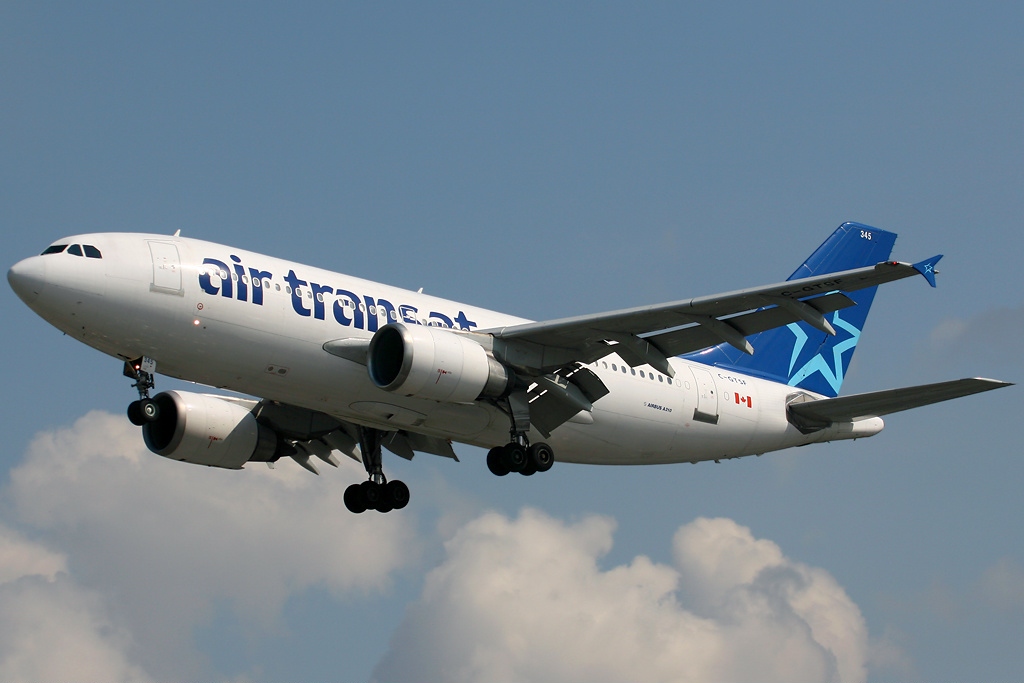
Historical Context & Origins
The Airbus A310-300 emerges as a strategic evolution in the commercial aviation landscape, rooted in the success of its predecessor, the A300. Originally conceived as a shortened and streamlined version of the A300, the A310 aimed to serve medium-haul routes with lower capacity, but with the efficiency and technological innovation that were defining the Airbus brand. This aircraft responded to carriers' growing demand for a more flexible two-engine wide-body.
The introduction of the A310-300 variant, with its first flight in 1985, marked a bold step into the long-haul sector. Maintaining the versatility and low operating costs of the base model, the -300 version has been specifically designed to significantly extend range, opening up new opportunities for transcontinental and intercontinental connections. It represented Airbus' vision for an efficient aircraft capable of covering long distances.
Architecture & Technological Design
The Airbus A310-300 incorporated engineering innovations aimed at maximizing efficiency and range. Its architecture was based on a strong yet lightweight airframe, with the introduction of composite materials in key areas, contributing to significant weight savings. The wing configuration, optimized for long-range flight, offered a superior balance between lift and drag.
The technological heart of the A310-300 lay in its advanced avionics. The "glass cockpit", shared with the A300-600, featured only two pilots, eliminating the need for a flight engineer and dramatically reducing operating costs. This standardization with other Airbus models reflected the manufacturer's philosophy of offering benefits common to airlines, from maintenance to crew training.
Onboard Specifications
- ◆Additional fuel capacity in the central wing tank (CWT): Fundamental for increasing the range up to 9,600 km, allowing long-range connections unthinkable for the basic version.
- ◆Advanced Flight Management System (FMS): Integrated with a high-precision inertial navigation system, it ensured route optimization and fuel consumption reduction.
- ◆Optimized wingtips (winglets): These aerodynamic modifications have improved efficiency, reducing induced drag and contributing to better fuel consumption and increased range.
Operational Career & Operators
The Airbus A310-300 has quickly established itself as a reliable "workhorse" for many airlines around the world. Its ability to operate medium to long-haul routes at competitive costs has made it an attractive choice for carriers such as Lufthansa, Swissair, Air India and Delta Air Lines. It played a crucial role in the opening of new transatlantic and intercontinental routes.
Its operational reliability and twin-engine efficiency made it a pioneer for Extended-range Twin-engine Operational Performance Standards (ETOPS) operations, enabling more direct flights over large bodies of water or remote regions. Many cargo airlines then converted passenger A310-300s into freighters, leveraging their robustness and cargo capacity for decades of continuous service.
Legacy & Cultural Impact
The Airbus A310-300 was not just an airplane, but a symbol of growing confidence in the efficiency of twin-engine long-haul aircraft. It convincingly demonstrated that a two-engined aircraft could travel safely and profitably on routes that had previously been the preserve of three- or four-engined aircraft. This paved the way for future giants like the A330 and B777.
The A310-300's legacy is that of a quiet innovator, contributing significantly to the expansion of the global airline network. It cemented Airbus' reputation as a leader in aeronautical engineering and reducing operating costs. Despite being phased out of passenger service, its lasting impact on the aviation industry and its versatility continue to be recognized and appreciated.
Telemetria Specs (HUD)
Hangar Trivia & Curiosità
- 💡The A310-300 was among the first twin-engine aircraft to achieve ETOPS (Extended-range Twin-engine Operational Performance Standards) certification, enabling it to fly longer over-water routes previously restricted to three or four-engine aircraft.
- 💡Beyond commercial passenger service, several A310-300s were converted for military roles, notably as multi-role tanker transports (MRTT) and VIP transports by various air forces.
- 💡It pioneered a highly integrated 'glass cockpit' design for its era, enabling a two-pilot flight deck without a flight engineer, a significant advancement for wide-body aircraft at the time.
Archivio Avvistamenti Spotter
Immagini scattate dalla community in tutto il mondo
Vettori Rilevati (Flotta Attiva)


Vettori Rilevati (Flotta Storica / Dismessa)


Turkish Airlines
Stato: Dismesso

Lufthansa
Stato: Dismesso

Emirates
Stato: Dismesso

Air France
Stato: Dismesso

Swissair
Stato: Dismesso
Pakistan International Airlines
Stato: Dismesso
EgyptAir
Stato: Dismesso

Air Transat
Stato: Dismesso
Aeroflot
Stato: Dismesso
TAROM
Stato: Dismesso
Royal Jordanian
Stato: Dismesso
Air India
Stato: Dismesso
Sabena
Stato: Dismesso

China Eastern Airlines
Stato: Dismesso
