A310-200
Airbus
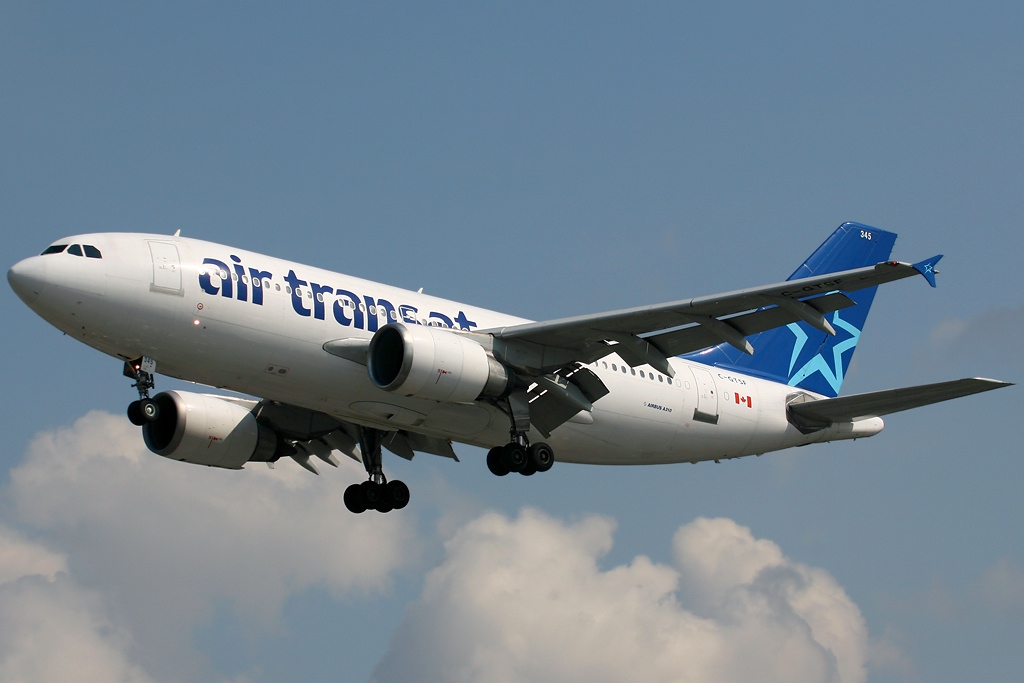
Historical Context & Origins
The Airbus A310-200 emerged in the early 1980s, answering the demand for a smaller, more flexible wide-body. The market was looking for efficient twin-engine aircraft for medium routes, complementary to the Airbus A300, the first aircraft of the consortium.
Derived from the A300B10 project, the A310 represented Airbus' strategy to broaden the product range. It was a shortened version of the A300, but with significant innovations. Its first flight occurred on April 3, 1982, marking an era.
Architecture & Technological Design
The A310-200 featured twin-engine architecture and a wide-body fuselage optimized for 220-250 passengers. This configuration ensured operational flexibility and efficiency, surpassing many contemporary three-engined aircraft.
The design included an innovative supercritical wing, refined from the A300, improving aerodynamics and reducing drag. Structural changes contributed to lower weight and enhanced performance, crucial to profitability.
The cockpit was revolutionary, introducing digital avionics and glass cockpit. This modernization reduced the workload of the pilots, allowing a crew of only two members and anticipating industry trends.
Onboard Specifications
- ◆Digital cockpit (glass cockpit): Multifunction screens for improved ergonomics and crew situational awareness.
- ◆Optimized supercritical wing: Improved the lift-drag ratio, reducing consumption and extending flight range.
- ◆Integrated Flight Management System (FMS): Automated navigation and planning, optimizing fuel and reducing errors.
Operational Career & Operators
Carriers such as Lufthansa and Swissair were early adopters of the A310-200, starting commercial operations in 1983. It quickly became a mainstay for European and transcontinental routes.
Its versatility made it a global success, used for passengers, cargo or as a military MRTT (Multi-Role Tanker Transport). The robustness of the design guaranteed long and reliable service.
Although production ceased in 1998, many A310-200s operated for decades, especially in the cargo and air force sectors. His career testifies to the validity and adaptability of design.
Legacy & Cultural Impact
The Airbus A310-200 has left a lasting legacy, acting as a technological bridge between the A300 and subsequent A330/A340s. His innovations in avionics were critical to future Airbus wide-bodies.
He contributed to the establishment of Airbus as a global leader, offering diversified products. He was crucial in the evolution of ETOPS standards, expanding the operational capabilities of twin-engine aircraft on ocean routes.
A symbol of 1980s European engineering, the A310-200 embodies how design and innovation can ensure sustained success. Its history is a tribute to the vision that shaped modern aviation.
Telemetria Specs (HUD)
Hangar Trivia & Curiosità
- 💡The A310-200 was instrumental in introducing the two-crew flight deck to wide-body commercial aviation, significantly reducing operational costs and crew workload.
- 💡It was one of the first Airbus models to optionally feature wingtip fences, which improved aerodynamic efficiency and fuel economy.
- 💡The A310-200 variant began commercial service in April 1983 with Lufthansa and Swissair, marking its entry into the competitive twin-engine wide-body market.
Archivio Avvistamenti Spotter
Immagini scattate dalla community in tutto il mondo
Vettori Rilevati (Flotta Storica / Dismessa)


Turkish Airlines
Stato: Dismesso

Air Canada
Stato: Dismesso

Lufthansa
Stato: Dismesso

Pan American World Airways
Stato: Dismesso

Emirates
Stato: Dismesso
Wardair Canada
Stato: Dismesso

Air France
Stato: Dismesso

Swissair
Stato: Dismesso
Pakistan International Airlines
Stato: Dismesso
Aeroflot
Stato: Dismesso
Air India
Stato: Dismesso

KLM Royal Dutch Airlines
Stato: Dismesso

Singapore Airlines
Stato: Dismesso