A220-300
Airbus
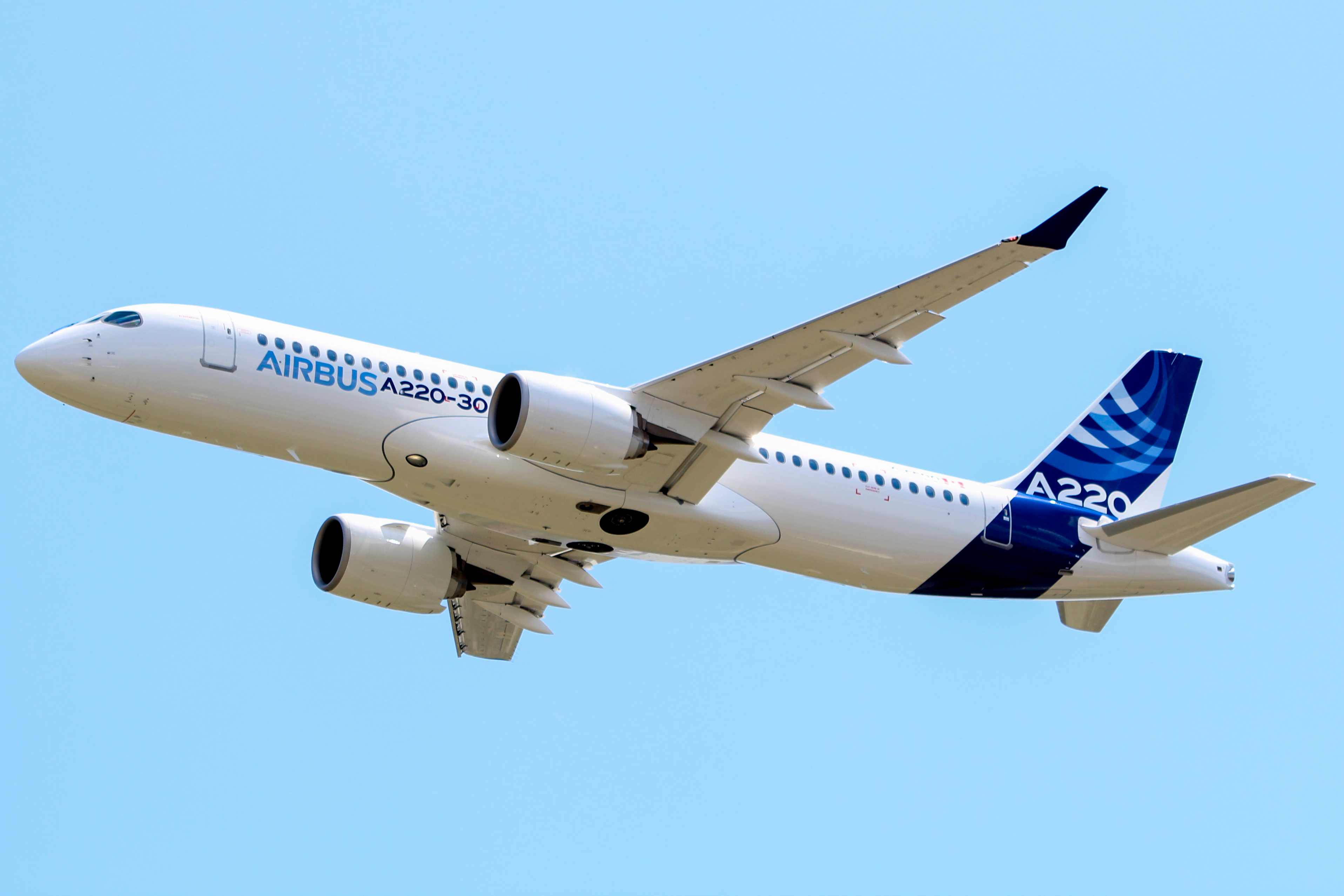
Historical Context & Origins
The Airbus A220-300, although today carrying the prestigious European brand, boasts deeply North American roots. Its history in fact begins as Bombardier CSeries CS300, an ambitious project launched in 2004 by the Canadian manufacturer to redefine the segment of single-aisle aircraft from 100 to 150 seats, optimized for superior efficiency and comfort. The first flight of the larger variant, the CS300 (future A220-300), took place successfully on 27 February 2015, marking a milestone in aeronautical development.
In 2018, following a complex commercial and strategic operation, Airbus acquired a majority share of the CSeries program, officially renaming the aircraft the A220. This move not only ensured its survival and future development, but also opened the doors to a vast global sales and support network, catapulting it onto the world stage.
Architecture & Technological Design
The Airbus A220-300 embodies a design philosophy of efficiency and innovation, with extensive use of advanced composite materials, including carbon composites and aluminium-lithium alloys, which contribute to a significant reduction in structural weight and, consequently, lower fuel consumption. The beating heart of this technological jewel are the Pratt & Whitney PW1500G Geared Turbofan (GTF) engines: these revolutionary engines, using a reduction box, guarantee unrivaled propulsion efficiency, a drastic reduction in noise and a cut in harmful emissions.
On board, the A220-300 offers a superior travel experience thanks to a spacious, single-aisle cabin. Passengers enjoy wider seats (typically 18 inches in 2-3 configuration), significantly larger windows and roomy overhead compartments. The modern cockpit integrates cutting-edge avionics systems and fly-by-wire flight controls, offering pilots intuitive and precise management of the aircraft.
Onboard Specifications
- ◆Pratt & Whitney PW1500G Geared Turbofan Engines: Up to 20% reduction in fuel consumption and CO2 emissions.
- ◆Extensive use of composite materials and Al-Li alloys: For weight optimization and greater structural strength.
- ◆"Airspace" cabin architecture with larger windows: Increases brightness and the perception of space for passengers.
Operational Career & Operators
The CS300 (future A220-300) entered commercial service with AirBaltic in December 2016, immediately demonstrating its exceptional performance on European routes. Its ability to operate over longer distances than other regional aircraft, combined with superior comfort, made it immediately popular with discerning airlines and passengers.
With the rebranding to the Airbus A220-300, the aircraft has seen an acceleration in its global spread. Prominent carriers such as Delta Air Lines, Swiss International Air Lines, Korean Air and Air Canada have integrated the A220-300 into their fleets, leveraging its versatility for short-haul regional, transcontinental and even transatlantic connections, cementing its reputation as a "game changer" in the industry.
Legacy & Cultural Impact
The Airbus A220-300 has left an indelible mark on the commercial aviation landscape, redefining expectations for the small to medium-sized single-aisle segment. It has convincingly demonstrated that it is possible to combine cost efficiency, exceptional performance and a world-class passenger experience, challenging the old paradigm of compromise.
Its technological innovation, in particular the adoption of GTF engines and the extensive use of lightweight materials, has pushed the entire industry towards higher standards in terms of sustainability and reduced environmental impact. Born from a bold plan by Bombardier, it has been transformed by Airbus into a global success, remaining a key pillar for the air connectivity of the future, inspiring confidence and innovation in the sector.
Telemetria Specs (HUD)
Hangar Trivia & Curiosità
- 💡Originally known as the Bombardier CS300, it was rebranded as the Airbus A220-300 after Airbus acquired a majority stake in the CSeries program in 2018.
- 💡The A220 series boasts the widest economy-class seats among single-aisle aircraft, often configured 2-3 abreast, enhancing passenger comfort significantly.
- 💡It utilizes Pratt & Whitney PurePower PW1500G geared turbofan engines, which contribute significantly to its impressive fuel efficiency and reduced noise footprint.
Archivio Avvistamenti Spotter
Immagini scattate dalla community in tutto il mondo
Vettori Rilevati (Flotta Attiva)


Swiss International Air Lines
In Flotta: x21 u.

Air Canada
In Flotta: x33 u.

Air France
In Flotta: x38 u.
Cyprus Airways
In Flotta: x1 u.

Breeze Airways
In Flotta: x18 u.
Bulgaria Air
In Flotta: x1 u.
JetBlue Airways
In Flotta: x27 u.
EgyptAir
In Flotta: x12 u.
Korean Air
In Flotta: x10 u.

Saudia
In Flotta: x2 u.
Uzbekistan Airways
In Flotta: x5 u.
Delta Air Lines
In Flotta: x45 u.

Lufthansa CityLine
In Flotta: x5 u.

ITA Airways
In Flotta: x9 u.