A220-100
Airbus
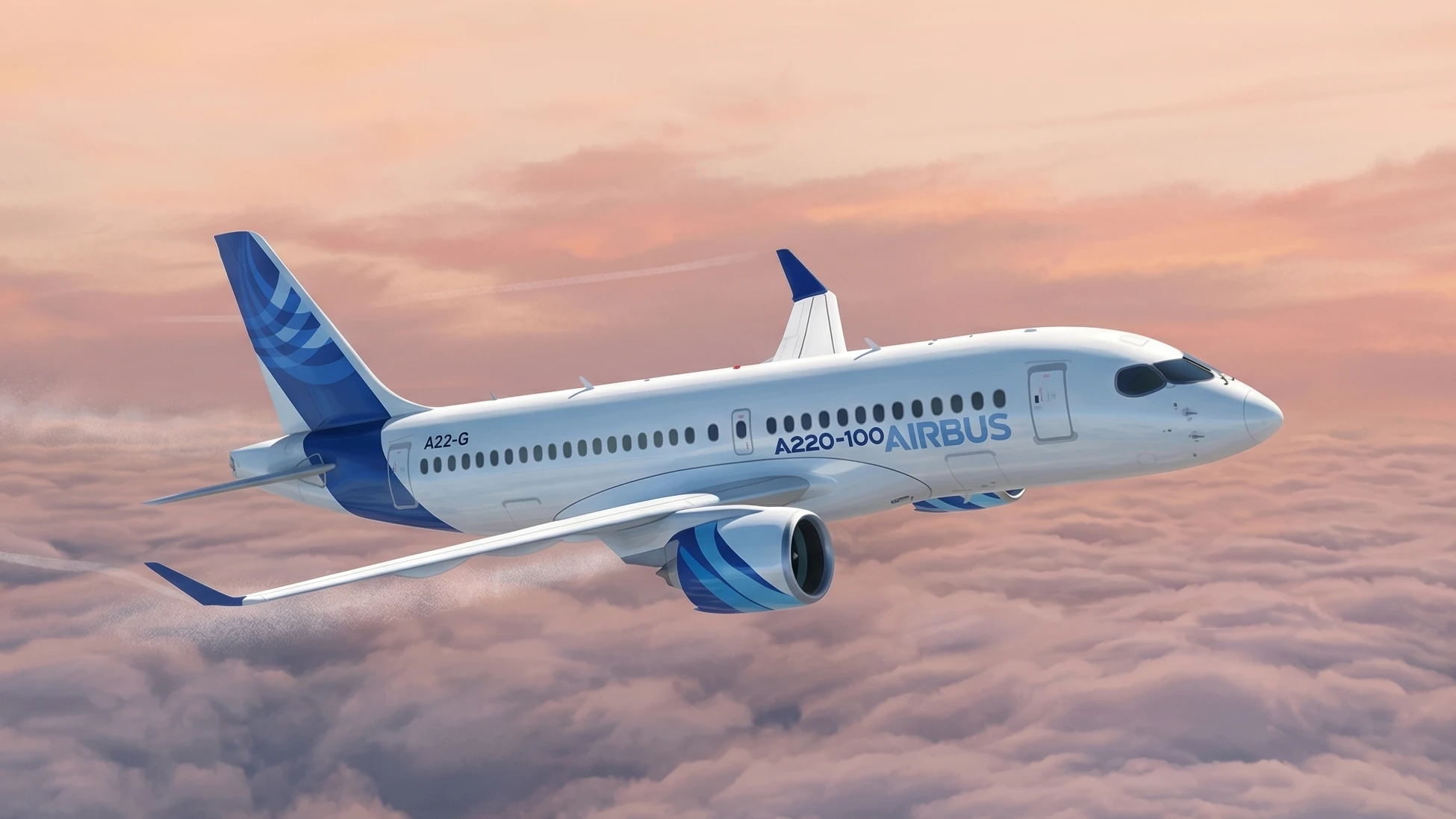
Historical Context & Origins
The Airbus A220-100, originally known as Bombardier CS100, represents a revolutionary chapter in commercial aviation. Its journey begins with Bombardier Aerospace's ambitious intent to redefine the 100-150 seat single aisle aircraft segment, proposing a *clean-sheet* design that promised superior efficiency and comfort. The first flight of this innovative jet took place on September 16, 2013, marking the beginning of a new era.
The project, while technically cutting-edge, faced significant financial and geopolitical challenges for Bombardier. Competition with giants Boeing and Airbus in the global market proved arduous, leading to a series of trade disputes and tariffs. These difficulties culminated in a historic acquisition, with Airbus taking over the majority of the CSeries program in 2018, rebranding the aircraft as the Airbus A220, and integrating the CS100 as the A220-100.
This transition was not just a name change, but a true relaunch. Under the wing of Airbus, the A220-100 has been able to benefit from an unprecedented global sales and support network, consolidating its position as the undisputed protagonist in its market segment. His legacy as a technological pioneer is inextricably linked to both Canadian ingenuity and European industrial might.
Architecture & Technological Design
The Airbus A220-100 stands out for a combination of technical innovations that make it exceptionally efficient and comfortable. At the heart of its design are Pratt & Whitney PurePower PW1500G engines, gear-driven turbofans that deliver significant reductions in fuel consumption and noise emissions, setting new standards in the industry. This propulsion technology was a cornerstone of the project.
The aircraft structure makes extensive use of advanced materials, including aluminum-lithium alloys and composites. This approach allowed the overall weight to be reduced, contributing to exceptional aerodynamic efficiency and structural strength. The fly-by-wire control system, inherited from larger Airbus jets, offers pilots superior precision and maneuverability, improving operational safety.
The cabin of the A220-100 has been designed to maximize passenger comfort, offering a feeling of spaciousness rare for a single-aisle aircraft. Featuring 50% larger windows than competitors and wider seats, the travel experience is significantly improved. The overhead bins have also been optimized to offer greater storage capacity, a detail appreciated by travellers.
Onboard Specifications
- ◆Pratt & Whitney PurePower PW1500G engines for up to 20% greater fuel efficiency.
- ◆Fuselage made of aluminium-lithium and composite materials which reduce weight and improve structural durability.
- ◆"Wide-body feel" cabin with wider aisle, comfortable seats and larger windows for unprecedented spaciousness in the segment.
Operational Career & Operators
The operational career of the A220-100 began with great enthusiasm and immediately demonstrated its promise of efficiency. The first commercial operator was SWISS International Air Lines in 2016, which deployed it on European routes, quickly garnering positive feedback on performance and passenger satisfaction. This successful launch paved the way for further adoption.
Since then, the A220-100 has joined the fleets of prestige global airlines. Carriers such as AirBaltic, which operates an all-A220 fleet, and Delta Air Lines, one of the A220's largest global customers, have touted its versatility, reliability and ability to operate effectively on longer regional and transcontinental routes.
Its operational excellence makes it ideal for airports with noise restrictions or for routes where cost efficiency is crucial. Its proven reliability and ability to adapt to different operating models have cemented its reputation as a valuable asset for any forward-thinking airline.
Legacy & Cultural Impact
The Airbus A220-100 has left an indelible mark on the aviation industry, redefining expectations for regional jets and small single-aisle aircraft. It demonstrated that it is possible to combine excellent fuel efficiency with superior passenger comfort, challenging the *status quo* of existing models. It has become a reference point for new generations of aircraft.
Its success also highlighted the resilience of innovation and the industry's ability to adapt. The transition from Bombardier to Airbus not only saved a worthy project, but elevated it to a global stage, ensuring its full integration into a broader product strategy. This consolidated its role as a game-changer in the aeronautical landscape.
The A220-100 continues to influence the development of future aircraft, with an emphasis on sustainability, operational efficiency and the passenger experience. Its history is a testament to the power of bold engineering and strategic vision, cementing its position not just as an aircraft, but as a symbol of innovation and a harbinger of greener, more comfortable aviation.
Telemetria Specs (HUD)
Hangar Trivia & Curiosità
- 💡It was originally developed by Bombardier Aerospace as the CSeries CS100 before the program was acquired by Airbus in 2018.
- 💡Its first flight on September 16, 2013, marked a significant milestone for the Bombardier CSeries, which later became the A220 family.
- 💡The A220 series features the Pratt & Whitney PW1500G geared turbofan engines, known for their excellent fuel efficiency and reduced noise levels, contributing to a quieter cabin experience.
Archivio Avvistamenti Spotter
Immagini scattate dalla community in tutto il mondo