A.10
Aero
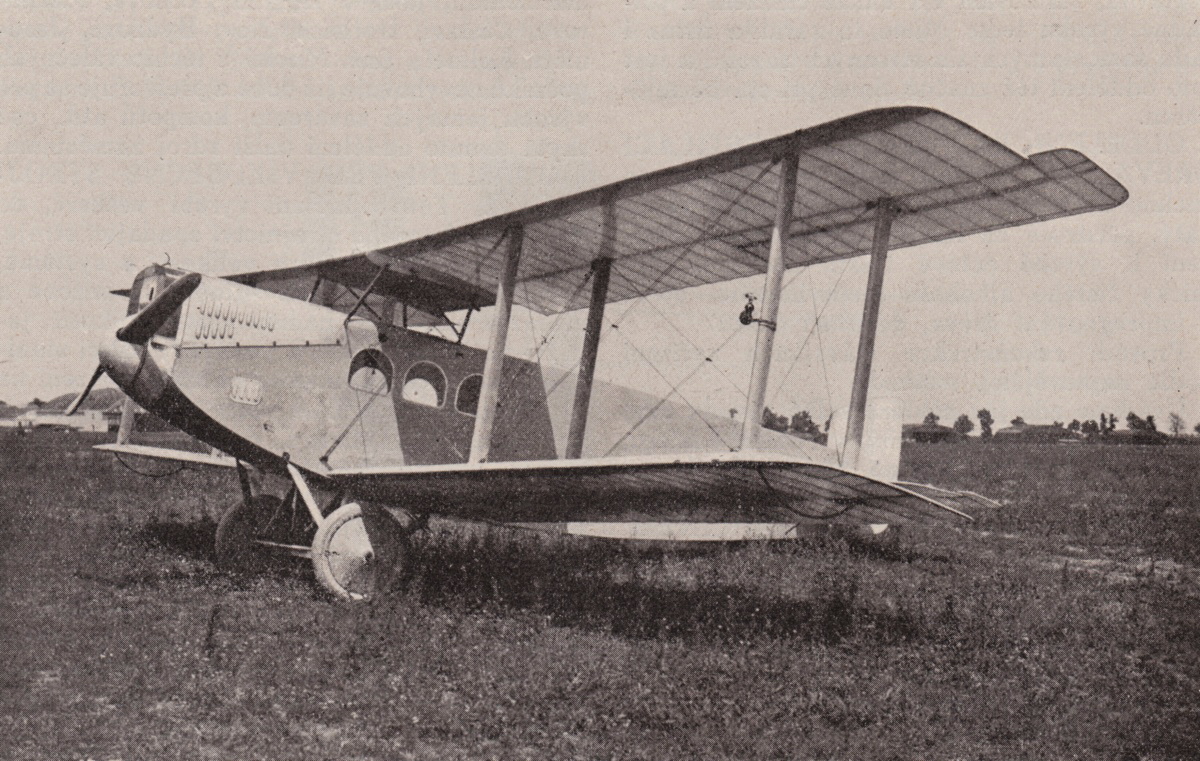
Historical Context & Origins
The Aero A.10 emerged in 1924, a period of fervent reconstruction and ambition for the newly formed Czechoslovakia. In this post-war context, the nation sought to assert not only its political but also technological identity, and civil aviation presented itself as a powerful symbol of progress and connectivity.
It was Aero Vodochody, a company that would become a pillar of the Czechoslovak aviation industry, that took on the challenge of designing its first airliner. The A.10 represented a bold step, a concrete commitment towards the creation of an efficient and reliable national aviation network.
This plane was not just a means of transportation, but a vehicle of hope, intended to connect major Czechoslovakian cities and integrate the country into the growing European aviation landscape, demonstrating local engineering capacity.
Architecture & Technological Design
The Aero A.10 presented itself as a robust biplane, a common and proven configuration for the time, which guaranteed stability and lift. Its construction was typical for the 1920s, with a mixed wood structure covered in canvas, while ensuring lightness and sufficient strength for flight operations.
At the heart of its design was the reliable engine, a Maybach Mb.IVa, a water-cooled inline six-cylinder powerplant, capable of producing approximately 260 HP. This engine choice provided the A.10 with the power needed to carry its payload with a good safety margin, an absolute priority for passenger transport.
A distinguishing feature for the time was the fully enclosed passenger cabin, a significant step forward in terms of comfort and protection from the elements. While pilots operated in an open cockpit, passengers enjoyed a more comfortable, albeit spartan environment, demonstrating a service-oriented vision.
Onboard Specifications
- ◆260 HP Maybach Mb.IVa engine: reliable power for scheduled flights.
- ◆Capacity of 5-6 passengers: an ideal number for initial routes.
- ◆Cruising speed of approximately 135 km/h: adequate for the connections of the time.
Operational Career & Operators
The Aero A.10 had a short but fundamental operational career, mainly with Československé státní aerolinie (ČSA), the newly formed Czechoslovak national airline. It was with these planes that ČSA inaugurated its first regular routes, connecting Prague with Bratislava and other cities.
Although only three examples were built, the A.10 played a crucial role in the foundation of Czechoslovakian civil aviation. These pioneering aircraft, although not numerous, carried the first passengers and mail, laying the foundation for a more complex airline industry.
Its operation, although limited, allowed the accumulation of valuable experience for pilots, mechanics and ground staff, contributing to the development of airport infrastructure and flight procedures in an era when aviation was still in its infancy.
Legacy & Cultural Impact
The Aero A.10 is remembered as an absolute pioneer of Czechoslovakian civil aviation, the pacesetter that opened the doors to a successful future for Aero Vodochody and for national air transport. Its existence demonstrated the ability of the fledgling Czech industry to design and build reliable passenger aircraft.
Although it is not an aircraft produced in large quantities or with revolutionary performance, its value lies in having been the first national airliner, a tangible symbol of independence and technological progress. It set the stage for later, more advanced models, such as the A.23 and A.35.
Today, the Aero A.10 embodies the spirit of boldness and innovation that characterized the early days of aviation. Its story is an essential chapter in the narrative of the industrial and technical development of Czechoslovakia between the two world wars, an icon of embryonic air transport.
Telemetria Specs (HUD)
Hangar Trivia & Curiosità
- 💡Ne furono costruiti solo cinque esemplari, rendendolo un velivolo piuttosto raro.
- 💡Era alimentato da un singolo motore Maybach Mb.IVa di fabbricazione tedesca.
- 💡Fu uno dei primi aerei specificamente progettati per il trasporto passeggeri nella Cecoslovacchia appena indipendente.
Archivio Avvistamenti Spotter
Immagini scattate dalla community in tutto il mondo