787-8
Boeing
Historical Context & Origins
The Boeing 787 Dreamliner, in its initial 787-8 variant, represents a milestone in aeronautical engineering, designed to revolutionize long-haul air travel. Born as a response to the need for a more efficient successor to the Boeing 767, the project, initially called "7E7", immediately focused on reducing fuel consumption and increasing passenger comfort.
Boeing's innovative approach aimed to overcome the limitations of traditional architectures while making the most of emerging technologies. This commitment led to the bold choice to employ composite materials to an unprecedented extent for the primary structure, a key factor in significantly lightweighting the aircraft and improving its overall aerodynamic performance.
The first flight of the Boeing 787-8 occurred on December 15, 2009, marking the beginning of a new era for commercial aviation. It was not just a new plane, but the embodiment of a vision that promised more accessible direct routes, eliminating the need for large hubs for intercontinental flights and opening up new markets.
Architecture & Technological Design
The architecture of the Boeing 787-8 is a triumph of modern engineering, with approximately 50% of its primary structure, including the fuselage and wings, made of carbon fiber composite materials. This choice allowed for a drastic reduction in weight, greater resistance to fatigue and corrosion compared to traditional metals, and the possibility of shaping the fuselage more efficiently.
The technological heart of the Dreamliner also lies in its "more-electric" architecture, which eliminated traditional bleed-air systems powered by engines for air conditioning and defrosting. This allowed for greater energy efficiency, noise reduction and simplified maintenance, entrusting the power supply to powerful on-board electric generators.
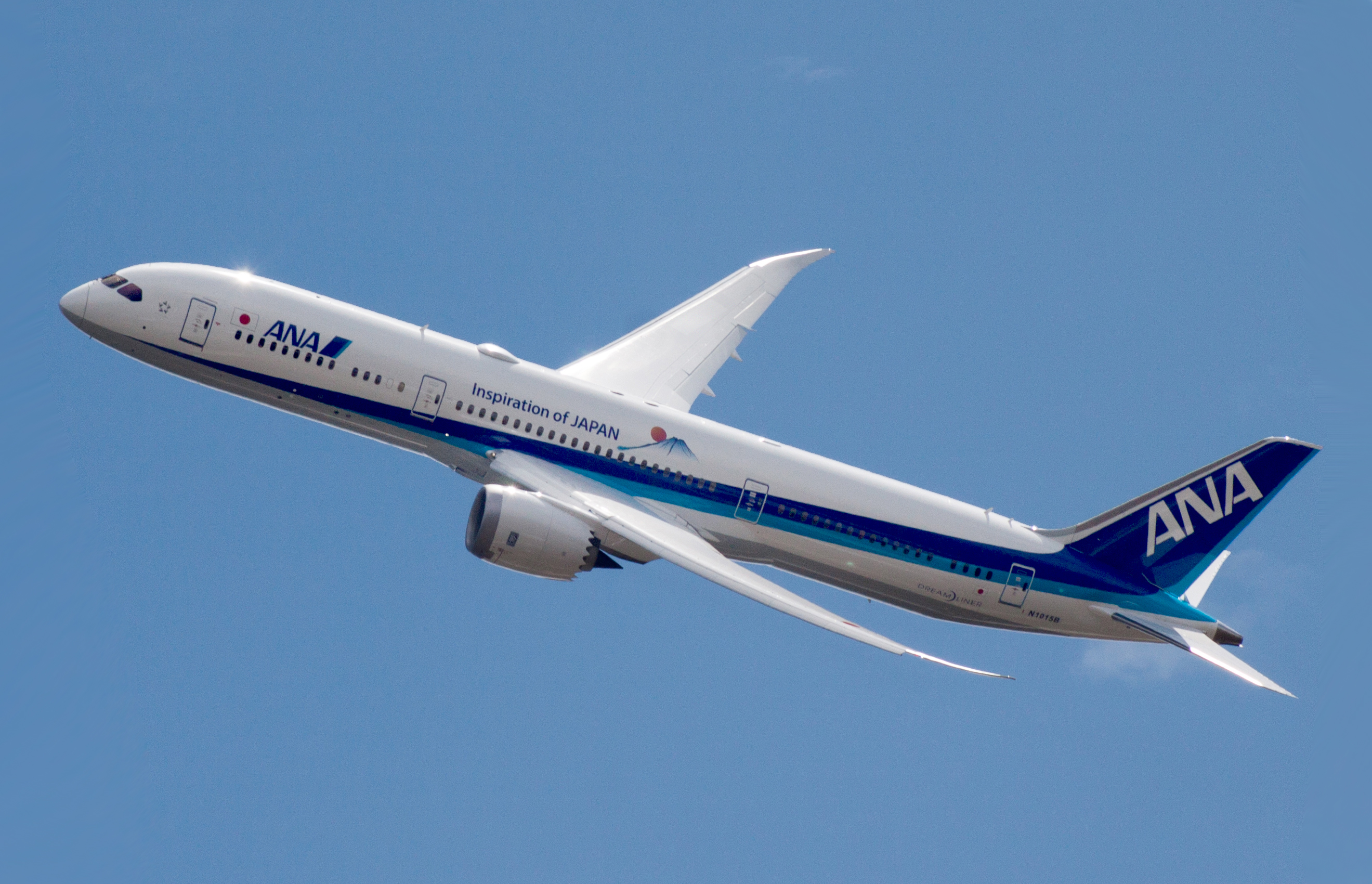
The advanced aerodynamic design, featuring high-aspect ratio wings and tapered wingtips, along with new-generation engines such as the General Electric GEnx and Rolls-Royce Trent 1000, contributed to 20-25% higher fuel efficiency than the similarly sized aircraft it was intended to replace. Every aspect has been taken care of to maximize performance and flying experience.
Onboard Specifications
- ◆Electrochromic windows 65% larger than previous aircraft, eliminating physical shades and allowing passengers to control brightness.
- ◆"More-electric" architecture, which replaces traditional pneumatic systems with electric systems, improving fuel efficiency and reducing emissions.
- ◆Extensive use of composite materials (approximately 50% of the primary structure), which contributes to significant weight savings, greater strength and lower maintenance.
Operational Career & Operators
The Boeing 787-8 began commercial service in October 2011 with All Nippon Airways (ANA), quickly becoming a mainstay for numerous global airlines. Its ability to operate long-haul routes with scale efficiency has revolutionized the "hub-and-spoke" model, favoring the "point-to-point" concept and opening up new opportunities for direct connections between secondary cities.
Despite a start-up characterized by some technical challenges, particularly related to the lithium-ion battery system, Boeing and the airlines have worked diligently to resolve the issues, restoring confidence in the program. Its reliability and economical operation have made it a favorite for carriers such as Qatar Airways, United Airlines and Japan Airlines.
The 787-8 has demonstrated its versatility, typically carrying between 242 and 323 passengers over distances that can exceed 13,620 kilometers. This flexibility makes it ideal for a wide range of intercontinental routes, from the US East Coast to Europe, to less busy trans-Pacific routes.
Legacy & Cultural Impact
The Boeing 787-8 has left an indelible legacy in the aviation industry, not only as a successful aircraft but as a catalyst for change. It demonstrated the feasibility and economic benefits of the massive use of composite materials, prompting other manufacturers to follow this trend and redefining design standards for future aircraft.
The onboard experience offered by the Dreamliner, with more comfortable cabin pressure, higher humidity and its iconic electrochromic windows, has raised passengers' expectations. It has set new standards for comfort and well-being during long-haul flights, directly influencing the interior design and equipment of almost all new aircraft.
In conclusion, the Boeing 787-8 is more than just an aircraft; it is a symbol of innovation and technological progress. It redefined the way people fly, making intercontinental travel quieter, more comfortable and more efficient, cementing its place in aviation history as a true “Dreamliner.”
Telemetria Specs (HUD)
Hangar Trivia & Curiosità
- 💡È il primo aereo di linea al mondo la cui struttura primaria è composta per oltre il 50% da materiali compositi (fibra di carbonio).
- 💡I suoi oblò sono più grandi del 65% rispetto agli aerei tradizionali e utilizzano una tecnologia elettrocromatica per scurirsi elettronicamente, eliminando le tradizionali tendine.
- 💡Il nome 'Dreamliner' è stato scelto tramite un concorso pubblico internazionale indetto da Boeing nel 2003.
Archivio Avvistamenti Spotter
Immagini scattate dalla community in tutto il mondo
Vettori Rilevati (Flotta Attiva)


TUI Airlines Nederland
In Flotta: x3 u.

Scoot
In Flotta: x10 u.

Air Europa
In Flotta: x8 u.

Air Canada
In Flotta: x8 u.

American Airlines
In Flotta: x22 u.
Privilege Style
In Flotta: x1 u.

China Southern Airlines
In Flotta: x10 u.

Air Austral
In Flotta: x2 u.
Ethiopian Airlines
In Flotta: x8 u.
Azerbaijan Airlines
In Flotta: x2 u.
Oman Air
In Flotta: x2 u.
Kenya Airways
In Flotta: x9 u.

Qatar Airways
In Flotta: x30 u.
Royal Brunei Airlines
In Flotta: x4 u.
Hainan Airlines
In Flotta: x12 u.
TUI Airlines Belgium
In Flotta: x1 u.
Xiamen Air
In Flotta: x6 u.

British Airways
In Flotta: x12 u.
Air India
In Flotta: x27 u.
United Airlines
In Flotta: x12 u.
Aeroméxico
In Flotta: x9 u.
Royal Air Maroc
In Flotta: x5 u.
El Al
In Flotta: x3 u.
Uzbekistan Airways
In Flotta: x6 u.

Japan Airlines
In Flotta: x29 u.
LATAM Airlines Group
In Flotta: x10 u.
All Nippon Airways
In Flotta: x36 u.