777-300ER
Boeing
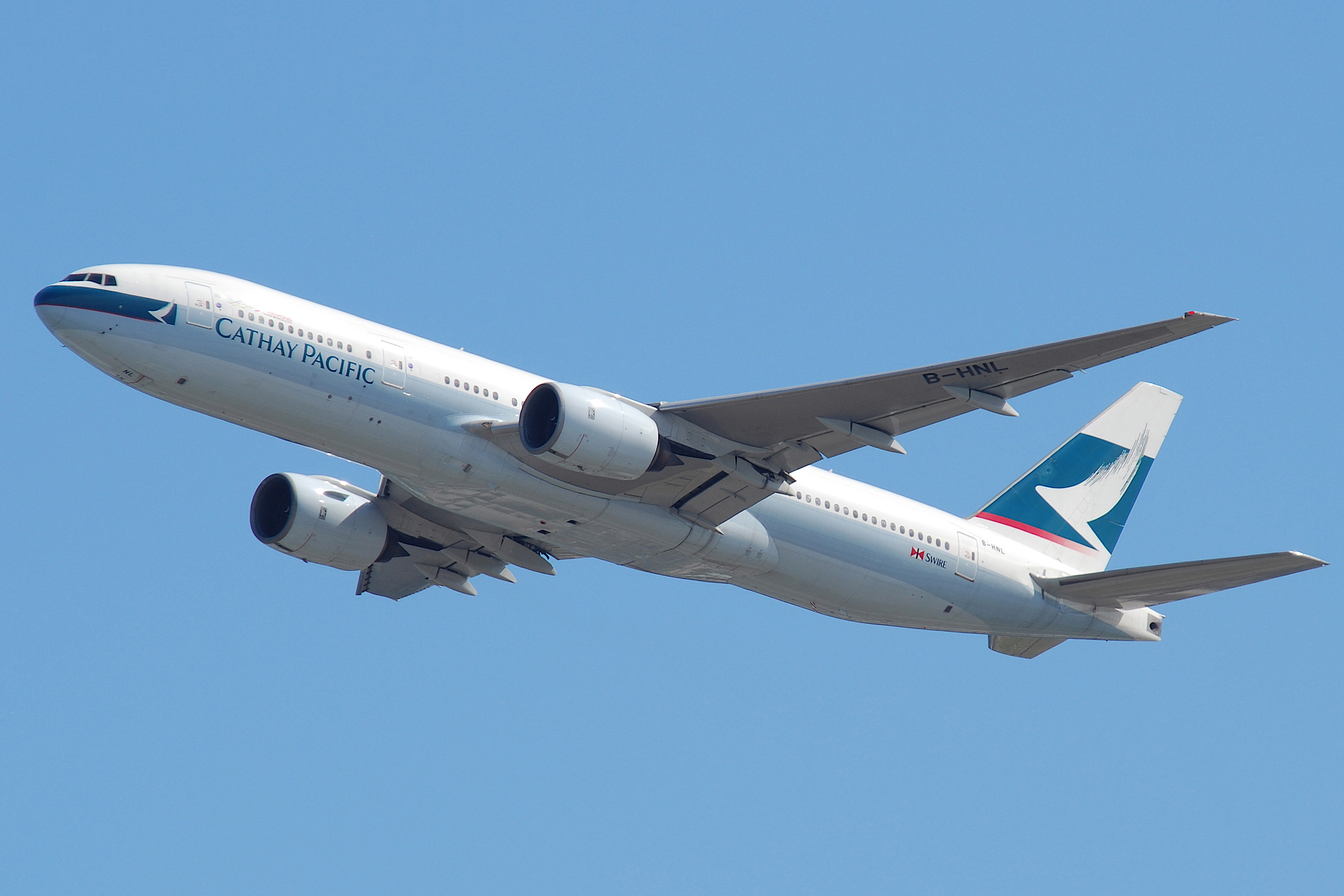
Historical Context & Origins
The Boeing 777, nicknamed "Triple Seven", was an ambitious project from its conception in the 1990s, created to fill the gap between the 767 and the 747. The success of the original series pushed Boeing to explore even more capable and long-range versions, responding to the growing demand for direct connections between distant cities, without the need for more expensive and less efficient four-engined aircraft.
It is in this context that the Boeing 777-300ER (Extended Range) emerges, an evolution of the already impressive 777-300. This twin-engine giant was not just a fuselage lengthening, but a significant redesign designed to dominate transcontinental and transoceanic routes, taking full advantage of the ETOPS (Extended-range Twin-engine Operational Performance Standards) certifications.
- ◆*February 24, 2003** marked its first flight, ushering in a new era for long-haul air travel. With its extraordinary combination of capacity, efficiency and range, the 777-300ER quickly positioned itself as the ideal successor to older Boeing 747s and MD-11s, promising dramatically reduced operating costs.
Architecture & Technological Design
The architecture of the 777-300ER represents a pinnacle of aeronautical engineering, combining innovation and reliability. At the heart of its long-range capability are the General Electric GE90-115B engines, the most powerful ever fitted to a commercial aircraft at the time of their introduction. These giants are the key to the aircraft's extended range and extraordinary performance.
In addition to the propulsion, the airframe has undergone significant modifications. The wings have been lengthened and equipped with raked wingtips, optimized to improve aerodynamic efficiency and reduce fuel consumption over long distances. The landing gear has been strengthened to accommodate the increased take-off weight, with an innovative integration of a third pair of wheels on the central main landing gear.
The fully digital fly-by-wire cockpit design offers pilots precise control and advanced management of flight systems, reflecting Boeing's commitment to safety and efficiency. The extended fuselage, with its 73.9 meters, maximizes passenger and cargo carrying capacity, making it a true workhorse of the skies.
Onboard Specifications
- ◆General Electric GE90-115B engines: With an impressive thrust of 115,300 lb (approximately 513 kN) per engine, they hold the horsepower record for a commercial jet engine.
- ◆Increased Fuel Capacity: The 777-300ER can carry up to 195,000 liters of fuel, providing a range of over 14,500 km.
- ◆Reinforced Structure and Raked Wingtips: Improve lift, reduce induced drag and increase fuel efficiency, critical for long-range operations.
Operational Career & Operators
Since its introduction, the Boeing 777-300ER has conquered the global market, becoming the backbone of many of the world's most prestigious airlines on international routes. Carriers such as Emirates, Cathay Pacific, Qatar Airways, British Airways and Air France have adopted it in large numbers, recognizing its unrivaled balance of capacity, range and operating costs.
Its reliability and ability to operate long, thin routes with just one stop have made it a "game-changer". It has enabled the opening of new direct routes, such as non-stop connections between North America and Asia or Europe and Australia, transforming the map of the skies and reducing travel times for millions of passengers.
Not only for passengers, but also for cargo transport, the 777-300ER offers significant capabilities. Its versatility, combined with an excellent reputation for cabin comfort and onboard experience, has cemented its position as one of the most popular and successful long-range aircraft in the history of commercial aviation.
Legacy & Cultural Impact
The Boeing 777-300ER is not just an airplane; it is an icon that has redefined expectations of long-range aviation. It demonstrated unequivocally that twin-engine aircraft could not only match, but exceed the performance and efficiency of four-engine aircraft on the longest routes, setting a new standard for wide-body aircraft design.
Its influence extends far beyond just technical performance. It has shaped the way people travel, making previously difficult-to-reach destinations more accessible and convenient. Its presence is a constant in the world's major airports, a symbol of global connectivity and technological progress.
The legacy of the 777-300ER is that of a pioneer. He pioneered a new generation of long-range twin-engine aircraft, directly influencing the development of aircraft such as the Boeing 787 Dreamliner and Airbus A350, which continued his vision of efficiency and autonomy. It remains an irreplaceable pillar of modern air transport, a true masterpiece of engineering and design.
Telemetria Specs (HUD)
Hangar Trivia & Curiosità
- 💡The 777-300ER was the largest twinjet aircraft in the world until the introduction of the 777X series.
- 💡It holds an ETOPS-330 certification, allowing it to fly up to 330 minutes away from the nearest diversion airport on a single engine.
- 💡Its GE90-115B engines are the most powerful commercial jet engines ever produced, with a fan diameter larger than the fuselage of a Boeing 737.
Archivio Avvistamenti Spotter
Immagini scattate dalla community in tutto il mondo
Vettori Rilevati (Flotta Attiva)

China Airlines
In Flotta: x10 u.
Biman Bangladesh Airlines
In Flotta: x4 u.

Turkish Airlines
In Flotta: x33 u.

Swiss International Air Lines
In Flotta: x12 u.

American Airlines
In Flotta: x20 u.
EVA Air
In Flotta: x13 u.

Emirates
In Flotta: x133 u.

China Southern Airlines
In Flotta: x10 u.

Air France
In Flotta: x43 u.
Etihad Airways
In Flotta: x19 u.
Ethiopian Airlines
In Flotta: x6 u.
Oman Air
In Flotta: x6 u.
Kenya Airways
In Flotta: x3 u.

Qatar Airways
In Flotta: x57 u.
Hainan Airlines
In Flotta: x10 u.
Thai Airways
In Flotta: x17 u.
Aeroflot
In Flotta: x17 u.

British Airways
In Flotta: x16 u.
Garuda Indonesia
In Flotta: x10 u.
Philippine Airlines
In Flotta: x10 u.
Korean Air
In Flotta: x26 u.
Air India
In Flotta: x13 u.
United Airlines
In Flotta: x22 u.

Saudia
In Flotta: x35 u.

KLM Royal Dutch Airlines
In Flotta: x16 u.
TAAG Angola Airlines
In Flotta: x3 u.
El Al
In Flotta: x6 u.

Singapore Airlines
In Flotta: x27 u.

Japan Airlines
In Flotta: x13 u.

LATAM Airlines Brasil
In Flotta: x10 u.
All Nippon Airways
In Flotta: x15 u.
Air China
In Flotta: x28 u.