777-200ER
Boeing
Historical Context & Origins
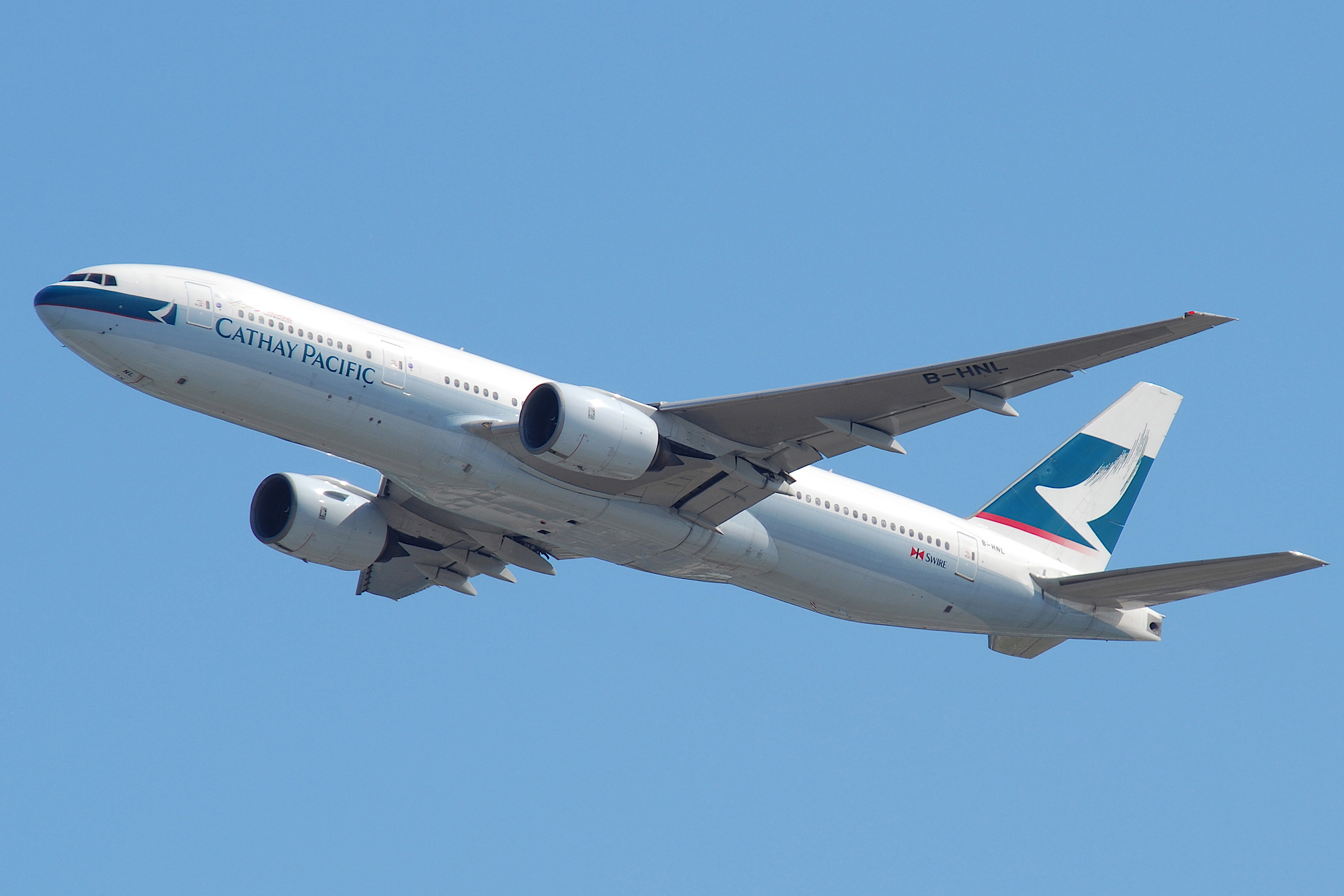
The Boeing 777-200ER (Extended Range) emerges as a strategic response to airlines' growing need for a twin-engine wide-body aircraft, capable of operating long-haul routes with high efficiency and reduced operating costs. Developed as part of the larger 777 program, nicknamed the "Triple Seven", this model was designed to bridge the gap between the smaller Boeing 767 and the iconic four-engine 747.
The -200ER variant in particular, with its first flight in 1996, represented a crucial evolution compared to the standard 777-200, offering a significant extension of range and load capacity. The objective was to allow carriers to cover transoceanic distances with a more modern and less fuel-hungry aircraft than previous models, fully exploiting the benefits of ETOPS certification.
This version quickly established itself as the standard for long-range flights that did not require the extreme capacity or increased range of the later -300ER, setting the stage for the wide-range twin-engine era. Its success anticipated a trend that would redefine commercial aviation for decades to come.
Architecture & Technological Design
The Boeing 777-200ER stands out for a series of technological innovations that have made it a pioneer in its segment. It was the first Boeing airplane to integrate a full digital fly-by-wire system, a flight control architecture that increased precision, safety and redundancy, while ensuring an optimized piloting experience.
The aerodynamic design of the 777-200ER, featuring high-aspect ratio wings and an optimized fuselage, was intended to maximize fuel efficiency over long distances. Its structure extensively incorporated advanced composite materials, reducing the overall weight of the aircraft and further contributing to its remarkable operational economy and structural strength.
A distinctive aspect was its engines: the 777-200ER could be equipped with the largest and most powerful turbofan engines of the time, such as the General Electric GE90, the Pratt & Whitney PW4000 or the Rolls-Royce Trent 800. These giants provided the necessary thrust for fully loaded takeoffs and efficient cruises on transcontinental routes, often operating in extended ETOPS environments.
Onboard Specifications
- ◆Full digital fly-by-wire system: Boeing's first, revolutionized flight control with improved precision and safety.
- ◆GE90/PW4000/Trent 800 engines: Among the largest and most powerful turbofans ever mounted on an airliner, fundamental for autonomy and thrust.
- ◆"Boeing Signature Interior" cabin design: Featuring larger luggage compartments, indirect lighting and greater perceived space for passengers, raising the standard of comfort.
Operational Career & Operators
The Boeing 777-200ER has quickly conquered the long-haul market, thanks to its exceptional combination of range, capacity and operating costs. Its extended ETOPS certification, often up to 180 or 207 minutes, has allowed carriers to open new transoceanic routes, especially across the Atlantic and Pacific, with greater flexibility and without the need for frequent stopover airports.
Prestigious airlines such as British Airways, Emirates, American Airlines and Cathay Pacific have integrated it as the backbone of their long-haul fleets. The 777-200ER has become a true "workhorse", widely appreciated for its operational reliability and its ability to maintain flight schedules, crucial elements in modern aviation economics.
Its introduction has enabled a significant expansion of carriers' global networks, making possible point-to-point connections previously not economically feasible with four-engine aircraft. This has not only improved the efficiency of operations but also offered passengers a greater choice of direct routes, reducing travel times.
Legacy & Cultural Impact
The Boeing 777-200ER is not just an aircraft, but a milestone in the history of commercial aviation. It set new standards for long-range twin-engine aircraft, demonstrating unequivocally that efficiency, autonomy and safety could coexist in a balanced design. Its legacy is visible in the widespread adoption of twin-engine configurations for intercontinental flights.
This model directly influenced the development of later variants, such as the 777-300ER, and laid the conceptual foundation for future wide-body designs by Boeing and its competitors. It demonstrated that a twin-engined aircraft could not only match, but in many cases exceed the performance of older four-engined aircraft in terms of economy and operational versatility.
Culturally, the 777-200ER has become an icon of reliability and comfort in skies around the world, an aircraft that many travelers have associated with safe and enjoyable transoceanic flights. Its success cemented industry and public confidence in ETOPS twin-engine aircraft, shaping perceptions and expectations for 21st-century long-range air travel.
Telemetria Specs (HUD)
Hangar Trivia & Curiosità
- 💡Il suffisso "ER" sta per "Extended Range", indicando le sue eccezionali capacità di volo prolungato, spesso certificate per operazioni ETOPS-180, ETOPS-207 e persino ETOPS-330 con specifici motori.
- 💡È stato il primo aereo commerciale ad essere offerto con una scelta di tre diversi modelli di motori principali da diversi produttori: General Electric GE90, Pratt & Whitney PW4000 e Rolls-Royce Trent 800.
- 💡Un Boeing 777-200ER detiene il record per il più lungo volo di consegna senza scalo per un aereo commerciale, percorso da Boeing Field (Seattle) a Kuala Lumpur nel 1997, coprendo 20.044 km in 21 ore e 23 minuti.
Archivio Avvistamenti Spotter
Immagini scattate dalla community in tutto il mondo
Vettori Rilevati (Flotta Attiva)


American Airlines
In Flotta: x47 u.
United Airlines
In Flotta: x74 u.

British Airways
In Flotta: x46 u.

Air France
In Flotta: x25 u.

KLM Royal Dutch Airlines
In Flotta: x15 u.
Korean Air
In Flotta: x16 u.
Asiana Airlines
In Flotta: x9 u.
EVA Air
In Flotta: x9 u.
Air New Zealand
In Flotta: x8 u.
EgyptAir
In Flotta: x6 u.
Ethiopian Airlines
In Flotta: x6 u.

Saudia
In Flotta: x23 u.
Austrian Airlines
In Flotta: x6 u.
Biman Bangladesh Airlines
In Flotta: x4 u.
Pakistan International Airlines
In Flotta: x8 u.
Turkmenistan Airlines
In Flotta: x4 u.Vettori Rilevati (Flotta Storica / Dismessa)


Japan Airlines
Stato: Dismesso
All Nippon Airways
Stato: Dismesso

Cathay Pacific
Stato: Dismesso

Singapore Airlines
Stato: Dismesso
Delta Air Lines
Stato: Dismesso

Emirates
Stato: Dismesso

Qatar Airways
Stato: Dismesso

China Eastern Airlines
Stato: Dismesso
China Southern Airlines
Stato: Dismesso
Air China
Stato: Dismesso
Kenya Airways
Stato: Dismesso

Turkish Airlines
Stato: Dismesso
Malaysia Airlines
Stato: Dismesso
Thai Airways
Stato: Dismesso
Kuwait Airways
Stato: Dismesso