777-200
Boeing
Historical Context & Origins
In the late 1980s, the commercial aviation landscape called for a new class of aircraft, capable of bridging the gap between the Boeing 767 and the 747. Airlines sought a more efficient and versatile successor to tri-jets (such as the DC-10 and L-1011), desiring an aircraft capable of operating long-haul routes with the reliability, safety, and, most importantly, significantly lower operating costs of a twin-engine.
Boeing responded to this pressing need with an ambitious and unprecedented program, "Working Together." This revolutionary approach saw major global carriers, such as United Airlines, British Airways, All Nippon Airways and American Airlines, actively involved in the design phase. This ensured that the final aircraft was truly "tailored" to their operational needs. On June 12, 1994, after years of meticulous development, the Boeing 777-200 prototype made its first flight, ushering in an exciting new era in long-haul aviation.
Architecture & Technological Design
The 777-200 represented a bold break with Boeing's engineering tradition, incorporating radical innovations that made it a pioneer. It was the Seattle giant's first commercial aircraft to employ a fully digital fly-by-wire control system, albeit with a cockpit interface that maintained ergonomic familiarity with previous systems, easing the transition for pilots.
Its architecture saw the birth of a newly developed supercritical wing, characterized by high aspect ratio and optimized for high-speed, long-range efficiency. The extensive use of advanced composite materials not only for the control surfaces but also for significant sections of the fuselage, helped to drastically reduce structural weight and improve aerodynamic performance, pushing the limits of twin-engine operational efficiency.
Onboard Specifications
- ◆Full digital fly-by-wire with envelope protections: The integrated system offered greater precision, operational safety and a significant reduction in pilot workload.
- ◆World's Largest and Most Powerful Turbofan Engines (GE90): The 777-200 was the first to be equipped with the colossal GE90s, with a fan diameter comparable to that of a 737 fuselage, crucial for ETOPS certifications.
- ◆Wider and more comfortable "Boeing Signature Interior" cabin: an innovative design with more vertical internal walls, larger luggage compartments and indirect lighting, ensuring a significantly superior passenger experience in terms of spaciousness and perceived comfort.
Operational Career & Operators
Upon its entry into scheduled service with United Airlines in June 1995, the Boeing 777-200 immediately demonstrated its incredible versatility and reliability. Its ability to fly transoceanic routes, thanks to its exceptional ETOPS (Extended-range Twin-engine Operational Performance Standards) certifications, which quickly reached the peak of ETOPS-330, revolutionized the planning of long-range routes, allowing twin-engine aircraft to cover distances previously reserved for four-engine aircraft.
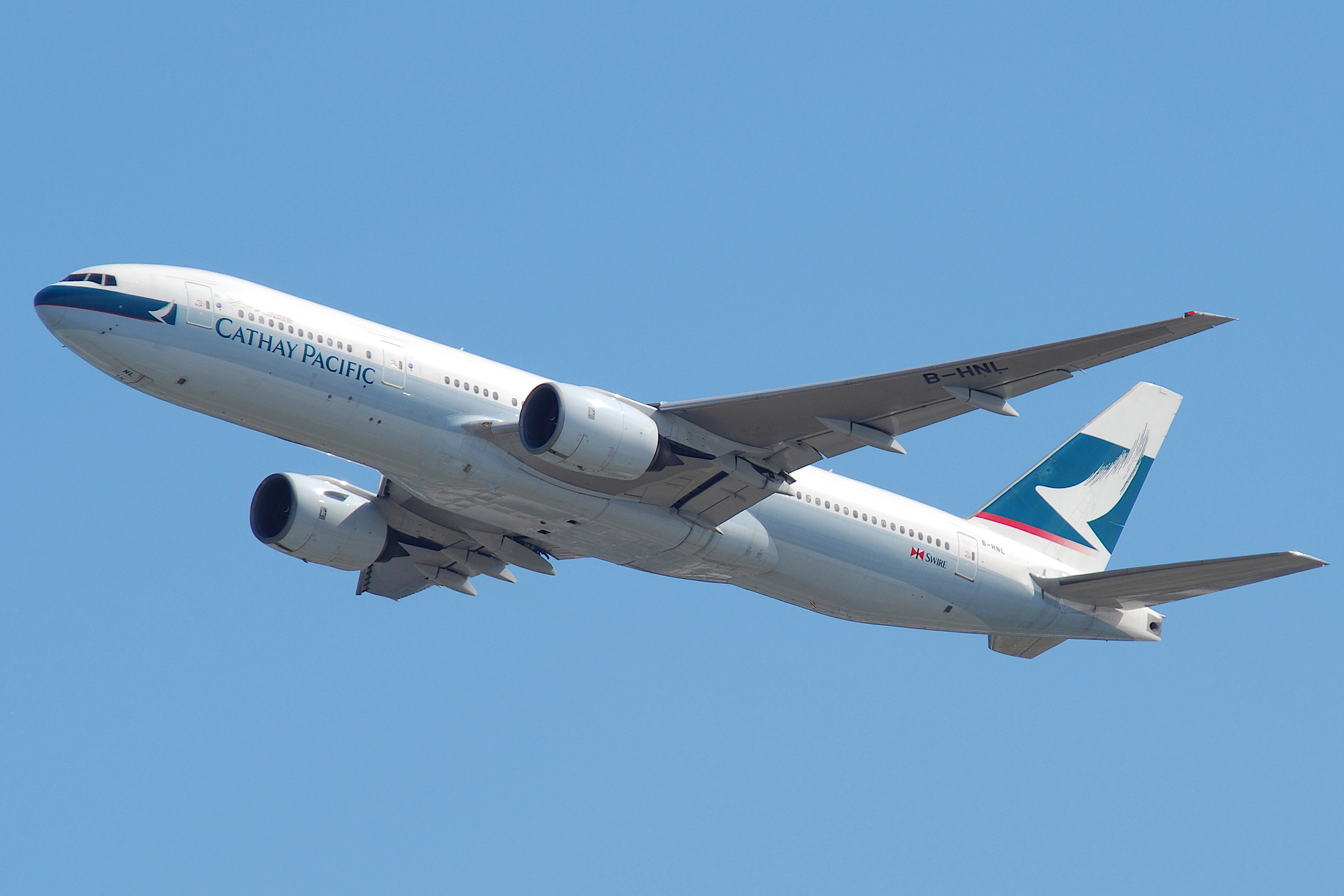
Leading global airlines such as British Airways, Emirates, Cathay Pacific and Singapore Airlines quickly adopted the 777-200. Its reputation for operational reliability, high fuel efficiency and superior comfort quickly made it the workhorse for countless intercontinental routes, solidifying twin-engine supremacy in long-range aviation.
Legacy & Cultural Impact
The Boeing 777-200 was not only a commercially successful aircraft; it was a real game changer in the aeronautical sector. It redefined expectations and operational standards for long-range twin-engine aircraft, demonstrating unequivocally that it was possible to combine high passenger carrying capacity with the operational efficiency, unrivaled safety and reliability that were once the exclusive preserve of four-engine aircraft.
Its profound legacy is visible in every modern twin-engine long-haul, from its 777X successor to Airbus competitors such as the A350 and A330neo, which capitalized on the path blazed by the "Triple Seven". It has shaped not only how people fly and the comfort they expect, but also how airlines manage their fleets, ushering in an era of greater flexibility in routing and significantly reduced operating costs, making it an enduring icon of aeronautical engineering and global connectivity.
Telemetria Specs (HUD)
Hangar Trivia & Curiosità
- 💡Il Boeing 777 è stato il primo aereo commerciale ad essere progettato interamente al computer, utilizzando il software CAD di Dassault Systèmes CATIA.
- 💡Il 777-200 è stato un pioniere nella certificazione ETOPS, espandendo significativamente le capacità di autonomia degli aerei bimotore su rotte transoceaniche.
- 💡Al momento della sua introduzione, il 777-200 presentava i pneumatici del carrello di atterraggio più grandi mai visti su un aereo di linea commerciale, evidenziando le sue dimensioni e il suo peso imponenti.
Archivio Avvistamenti Spotter
Immagini scattate dalla community in tutto il mondo