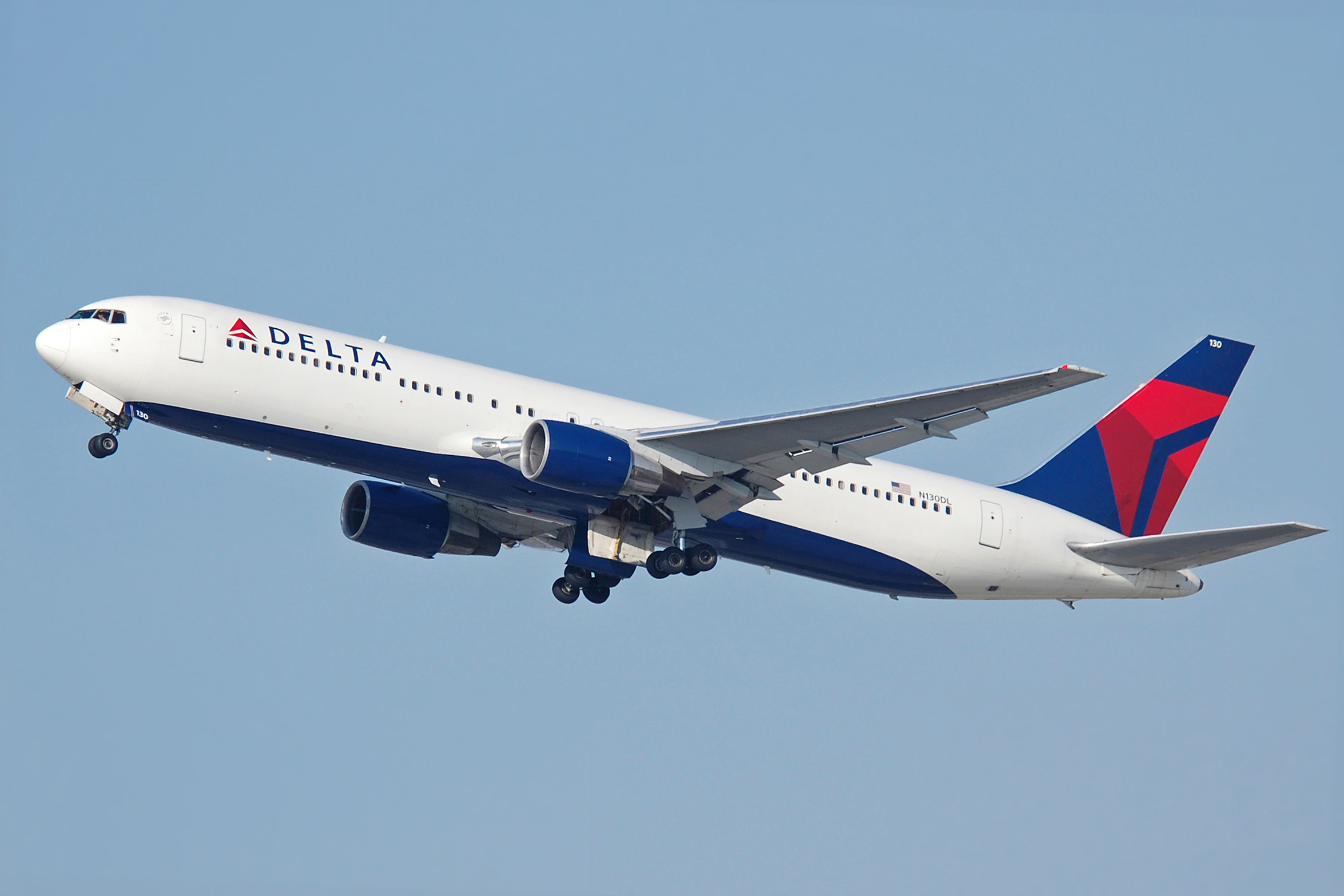
767-200ER
Boeing
Historical Context & Origins
The Boeing 767 program was a pivotal moment for the company, designed to fill an emerging market segment. The goal was to offer an efficient wide-body aircraft for medium-to-long-haul routes, positioning itself between single-aisle jets and the largest three- or four-engine long-range aircraft of the time. The original Boeing 767-200 entered service in 1982, demonstrating remarkable operational efficiency.
The Boeing 767-200ER, with its first flight in 1984, represented a fundamental evolution of that pioneering project. The acronym ER (Extended Range) was not a simple suffix, but symbolized a qualitative leap in the aircraft's capabilities, allowing it to travel significantly greater distances than the basic model and responding to the growing demand for more direct and convenient transatlantic and intercontinental routes.
Architecture & Technological Design
The 767-200ER's architecture was cutting-edge for its time, notable for its wide-body twin-engine configuration, still a relatively new concept for long-haul flights. This design choice promised significantly lower operational efficiency and fuel consumption than its three- or four-engine competitors, helping to revolutionize the economics of aviation.
The technological heart of the 767 lay in its advanced cockpit. It was among the first airliners to introduce a digital glass cockpit, which replaced traditional analogue instruments with CRT screens. This innovation not only reduced pilots' workload, but also increased situational awareness and flight safety, laying the foundation for future generations of commercial aircraft.
The distinctive element of the ER version was the increase in performance. Thanks to additional fuel tanks and a higher maximum take-off weight (MTOW), the 767-200ER could cover distances previously unthinkable for a twin-engine aircraft. This capability unlocked new routes, making intercontinental travel more accessible and direct, a true paradigm shift for airlines and passengers.
Onboard Specifications
- ◆Advanced digital cockpit (glass cockpit) with multifunction CRT display, revolutionizing the pilot-machine interface and flight management.
- ◆Greater fuel capacity and increased maximum take-off weight (MTOW), essential for extended range and long transoceanic routes.
- ◆Supercritical wing design for optimized lift and reduced drag, significantly improving fuel efficiency.
Operational Career & Operators
The Boeing 767-200ER quickly became a favorite among global airlines, eager to take advantage of its new long-range capabilities. Prominent carriers such as El Al Israel Airlines, which received it as its first operator, and subsequently American Airlines and Delta Air Lines, employed it to inaugurate or strengthen transatlantic and transpacific routes, demonstrating its robustness and reliability in demanding operating environments.
Its reliability and compliance with stringent ETOPS (Extended-range Twin-engine Operational Performance Standards) regulations, which the 767-200ER helped define and surpass, made it an excellent choice for ocean flights. These standards allowed twin-engine aircraft to fly routes that were previously the exclusive preserve of three- or four-engine aircraft, cutting flight times and dramatically reducing operating costs.
Legacy & Cultural Impact
The 767-200ER was not just an airplane, but a true pioneer that redefined expectations for long-range twin-engine aircraft. Its proven efficiency and reliability paved the way for future giants like the Boeing 787 Dreamliner, inheriting part of its design philosophy focused on twin-engine efficiency for intercontinental flights.
His long and illustrious career, together with his iconic presence in the skies around the world, have left an indelible mark on the collective imagination and on the aviation industry. For many passengers and enthusiasts, the 767-200ER represents the epitome of the transition to more efficient and connected aviation, a true workhorse that has made the world smaller and more accessible.
Telemetria Specs (HUD)
Hangar Trivia & Curiosità
- 💡The 'ER' in its designation stands for 'Extended Range', signifying its increased fuel capacity and capability for longer flights compared to the standard 767-200.
- 💡It was one of the first twin-engine aircraft to receive ETOPS (Extended-range Twin-engine Operational Performance Standards) approval, allowing it to fly safely on routes further from diversion airports over oceans.
- 💡While many units have been converted to freighters or retired, the 767-200ER played a pivotal role in enabling airlines to open new direct international routes that previously required three- or four-engine aircraft.
Archivio Avvistamenti Spotter
Immagini scattate dalla community in tutto il mondo
Vettori Rilevati (Flotta Attiva)


Vettori Rilevati (Flotta Storica / Dismessa)


Air Canada
Stato: Dismesso
Avianca
Stato: Dismesso

American Airlines
Stato: Dismesso
Gulf Air
Stato: Dismesso
Canadian Airlines
Stato: Dismesso

China Southern Airlines
Stato: Dismesso
Ethiopian Airlines
Stato: Dismesso
TWA (Trans World Airlines)
Stato: Dismesso

Transbrasil
Stato: Dismesso
EgyptAir
Stato: Dismesso
Korean Air
Stato: Dismesso
United Airlines
Stato: Dismesso
China Eastern Airlines
Stato: Dismesso
Aeroméxico
Stato: Dismesso
El Al
Stato: Dismesso
Delta Air Lines
Stato: Dismesso
LOT Polish Airlines
Stato: Dismesso