757-300
Boeing
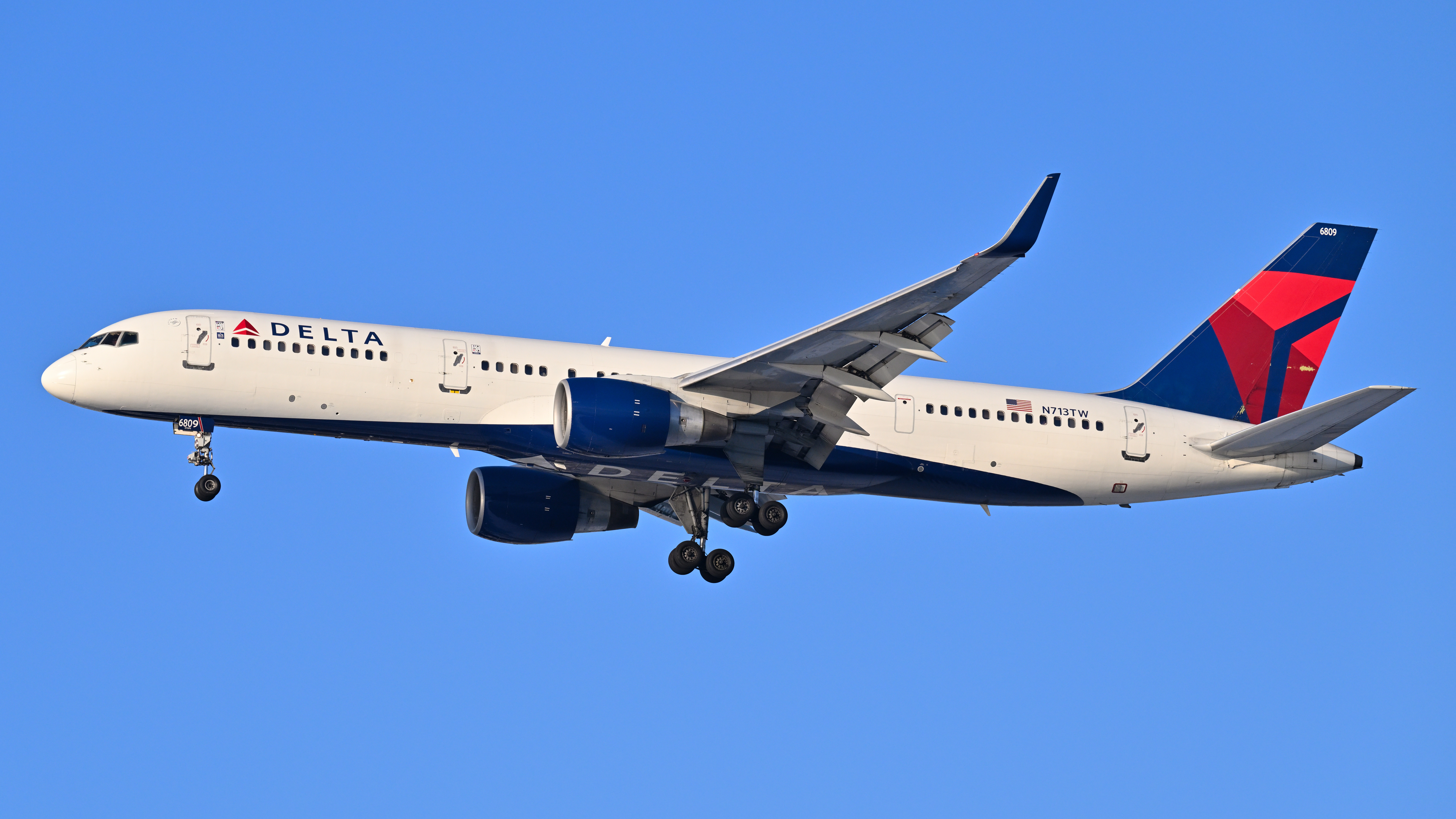
Historical Context & Origins
The Boeing 757, since its launch, had established itself as a flagship aircraft for medium-haul routes, offering excellent performance and remarkable efficiency. As the 1990s came to a close, demand for increased capacity for high-density leisure and charter flights grew exponentially, posing Boeing with the challenge of further expanding offerings without disrupting the success of the existing design.
In response to this specific market demand, Boeing conceived the 757-300, a lengthened and upgraded version. Its goal was to provide airlines with an intermediate solution between narrow-bodies and wide-bodies, combining the operational flexibility of a single aisle with a passenger capacity comparable to that of some twin-aisle aircraft. The first flight of the prototype occurred in 1998, marking the beginning of a new era for the "Super Pencil".
Architecture & Technological Design
The heart of the 757-300's innovation lay in its significantly lengthened fuselage, making it the longest single-aisle twinjet ever built to that point. This lengthening was not a simple design exercise, but required specific structural reinforcements and aerodynamic optimization to maintain the excellent flight characteristics of the original 757.
Despite the increase in size and weight, the 757-300 maintained propulsive efficiency thanks to the adoption of advanced turbofan engines such as the Rolls-Royce RB211-535E4B or the Pratt & Whitney PW2043. These engines, combined with the high aspect ratio wing, guaranteed excellent range and cruising speed, consolidating the 757's reputation as a "hot rod" of the sky, capable of surprising performance.
Onboard Specifications
- ◆Fuselage lengthened by 8.13 meters: compared to the 757-200 model, bringing the overall length to 54.4 meters.
- ◆High passenger capacity: up to 289 passengers in single class configuration, or approximately 243 in two classes.
- ◆Advanced avionics: "glass cockpit" shared with the Boeing 767, reducing crew training costs (common type rating).
Operational Career & Operators
The Boeing 757-300 found its ideal niche primarily with charter and tourism-oriented airlines, where high capacity on medium-haul routes was key. Carriers such as Condor Flugdienst, Thomas Cook Airlines and Arkia Israeli Airlines were among the earliest and most frequent operators, taking advantage of its ability to transport large numbers of passengers to beach or tourist destinations.
Its operation proved particularly effective for high-density flights, allowing airlines to maximize revenue per seat-mile. The 757-300 stood out for its ruggedness and reliability, tackling intense flight cycles with ease and helping set the standard for high-capacity single-aisle jets in its segment.
Legacy & Cultural Impact
Despite production limited to just 55 examples, the Boeing 757-300 has left a significant footprint in commercial aviation. It demonstrated the feasibility and demand for a single-aisle aircraft with wide-body capability, acting as a bridge between two categories of aircraft and offering a unique solution that is still difficult to directly replace with current models.
Its legacy lies in its ability to challenge convention, providing an effective response to specific market needs and maintaining, even today, a valuable role in some fleets. For aviation enthusiasts, the 757-300 remains a symbol of bold engineering and adaptability, a true "workhorse" of the skies that continues to ply the routes with its unmistakable elongated silhouette.
Telemetria Specs (HUD)
Hangar Trivia & Curiosità
- 💡È il più lungo aereo a corridoio singolo e doppio-motore mai prodotto dalla Boeing.
- 💡Spesso soprannominato "matita volante" (flying pencil) per la sua fusoliera eccezionalmente allungata.
- 💡Condivideva molte parti e sistemi con il 757-200, semplificando la formazione dei piloti e la manutenzione per le compagnie aeree.
Archivio Avvistamenti Spotter
Immagini scattate dalla community in tutto il mondo