757-200PF
Boeing
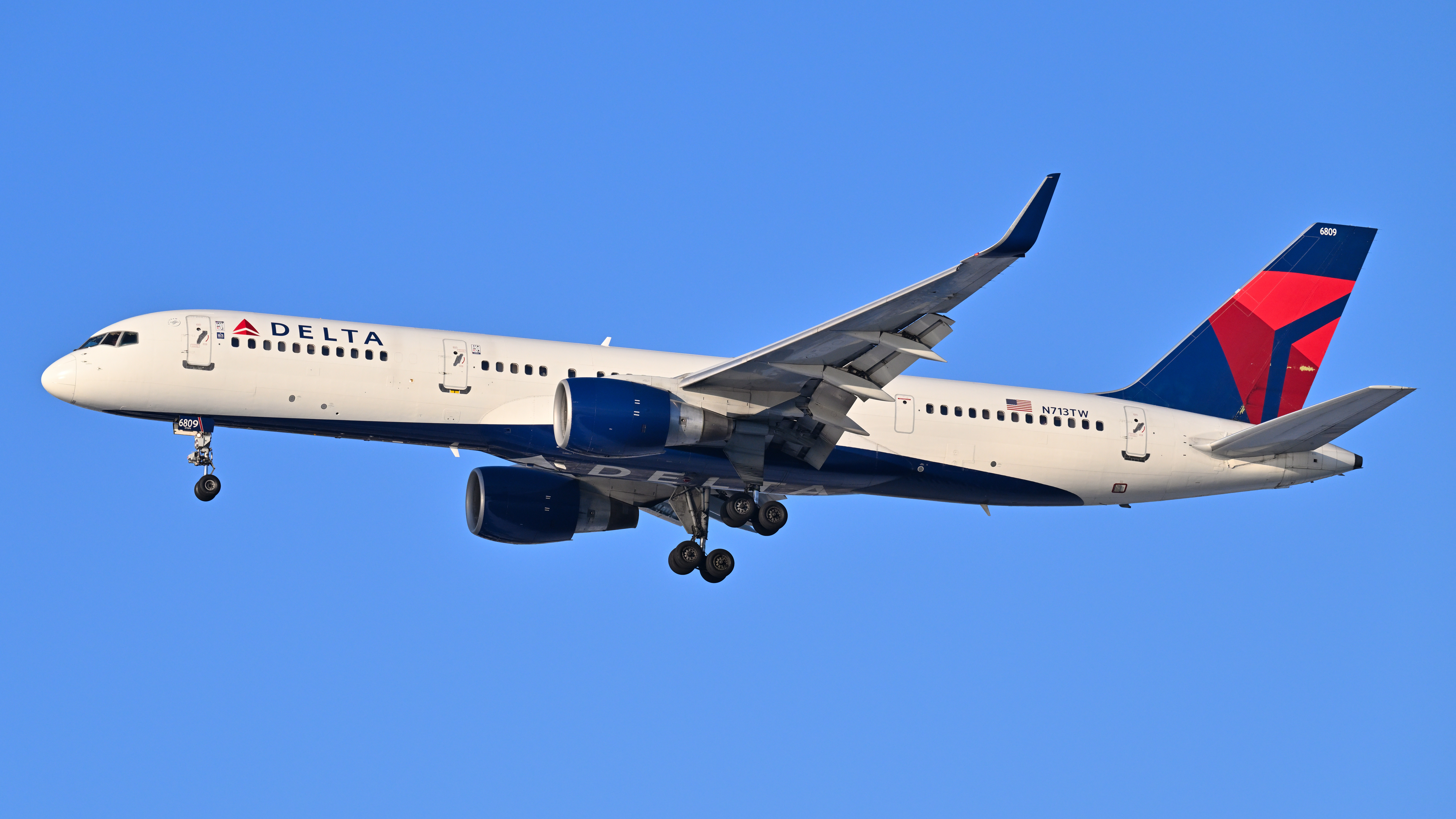
Historical Context & Origins
The Boeing 757, conceived as a direct replacement for the venerable Boeing 727, represented a bold step in aeronautical engineering in the 1980s. Designed to operate medium-range routes efficiently and cost-effectively, the 757-200 passenger first flew in 1982, quickly earning a reputation for excellent performance and versatility.
The expansion of the global market and the rise of e-commerce soon required increasingly faster and more capable air cargo solutions. It was in this context that Boeing recognized the need for a dedicated cargo variant, capable of handling significant volumes with the same reliability as the passenger model.
Thus, in 1987, the Boeing 757-200PF (Package Freighter) took to the skies, an evolution aimed at meeting the growing needs of express courier companies. This model solidified the 757 family as a true workhorse, not only for passengers but also for global logistics.
Architecture & Technological Design
The 757-200PF was based on the robust architecture of the passenger 757, maintaining distinctive aerodynamic features such as the advanced high aspect ratio wing and a streamlined fuselage. However, for its new cargo vocation, significant structural changes were introduced to optimize space and load resistance.
Key transformations included the removal of all passenger windows and the installation of a reinforced main cargo door, usually located on the left front fuselage. The main deck floor was strengthened to support heavy loads and a motorized cargo handling system was integrated, essential for the efficient handling of pallets and ULD containers.
The cockpit, an advanced digital glass cockpit, shared considerable commonality with that of the Boeing 767, offering operational efficiency and reducing training costs for pilots rated on both models. It was powered by high-efficiency turbofan engines such as the Rolls-Royce RB211 or the Pratt & Whitney PW2000, ensuring power and autonomy.
Onboard Specifications
- ◆Exceptional load capacity: Up to 15 pallets (LD3-equivalent) on the main deck and additional volumes in the lower holds.
- ◆Main loading door: Large opening of 3.4 x 2.2 metres to easily load standard pallets and containers.
- ◆Commonality with Boeing 767: Reduced operating and maintenance costs thanks to shared parts and systems.
Operational Career & Operators
The Boeing 757-200PF quickly became the backbone of the cargo fleets of many of the world's largest logistics companies. Carriers such as DHL, UPS and FedEx made it a central element of their global networks, taking advantage of its unique combination of range, capacity and short runway performance.
Its operational reliability and ability to operate on medium to long-range routes with significant payload made it ideal for transcontinental express delivery and for connecting major cargo hubs with regional airports. Its efficiency helped reduce delivery times in an era of increasing globalization.
Many examples of the 757 passenger were later converted into the SF (Special Freighter) or PCF (Passenger to Cargo Freighter) version, extending the operational life of this extraordinary aircraft and demonstrating its robustness and engineering versatility.
Legacy & Cultural Impact
The Boeing 757-200PF has left an indelible legacy in the air cargo industry. It has redefined the concept of global rapid delivery, enabling the exponential growth of e-commerce and just-in-time logistics around the world.
This iconic cargo plane was a true "workhorse", prized for its tireless reliability and its ability to operate in diverse conditions. Its unmistakable silhouette, often seen streaking across night skies, has become synonymous with efficiency and global connectivity.
Although production ceased in 2004, and many examples are reaching the end of their operational lives, the 757-200PF remains a symbol of the aeronautical ingenuity that has shaped the modern era of cargo transportation, proving that a versatile design can find success in multiple roles.
Telemetria Specs (HUD)
Hangar Trivia & Curiosità
- 💡The 757-200PF is a factory-built freighter, meaning it was designed and constructed specifically for cargo operations, unlike many converted passenger aircraft.
- 💡UPS Airlines was the launch customer for the 757-200PF, receiving its first aircraft in September 1987, solidifying its role in express parcel delivery.
- 💡The 'PF' in its designation stands for 'Package Freighter', reflecting its primary role in transporting time-sensitive parcels and goods globally.
Archivio Avvistamenti Spotter
Immagini scattate dalla community in tutto il mondo
Vettori Rilevati (Flotta Attiva)


SF Airlines
In Flotta: x28 u.

ASL Airlines Belgium
In Flotta: x6 u.
Blue Dart Aviation
In Flotta: x6 u.
ASL Airlines Ireland
In Flotta: x6 u.

UPS Airlines
In Flotta: x60 u.
YTO Cargo Airlines
In Flotta: x6 u.
DHL Aero Expreso
In Flotta: x3 u.
FedEx Express
In Flotta: x124 u.

European Air Transport Leipzig
In Flotta: x12 u.
China Postal Airlines
In Flotta: x8 u.