747-8I
Boeing
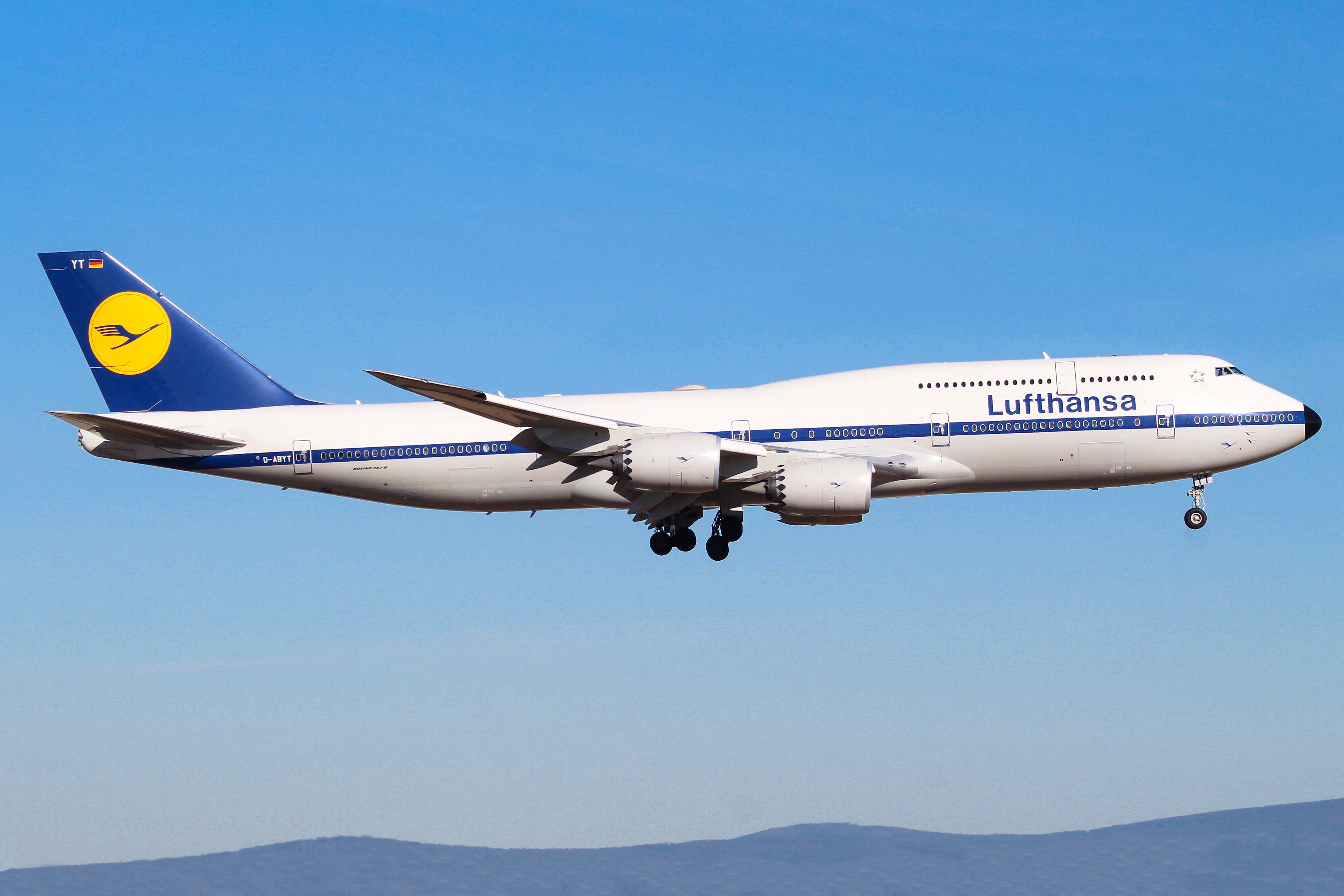
Historical Context & Origins
The Boeing 747, universally recognized as the "Queen of the Skies", has dominated the commercial aviation landscape for decades. However, faced with the challenges of an evolving market and the growing drive towards greater efficiency and capacity, Boeing found itself in need of conceiving an evolution that was up to date, capable of competing with the new giants of the skies.
The creation of the 747-8I (where "I" stands for Intercontinental) was the strategic response of the American manufacturer. This was not an entirely new aircraft, but an extensive modernization that preserved the iconic silhouette of the 747 while infusing it with the most advanced technologies available. The goal was to redefine the standards of luxury and efficiency for a large four-engine aircraft.
The first flight of the 747-8I occurred on February 8, 2011, marking the beginning of a new chapter for the illustrious lineage of the 747. This event demonstrated Boeing's commitment to continuing the legacy of an aircraft that revolutionized the way of travel, adapting it to the needs of the 21st century with significant aerodynamic and propulsion improvements.
Architecture & Technological Design
The Boeing 747-8I represents the evolutionary pinnacle of the 747 design, integrating significant innovations that improve its performance and efficiency. Its distinctive architecture includes a stretched fuselage of 5.6 meters compared to the 747-400, bringing the total length to an impressive 76.3 meters, making it the longest passenger aircraft ever built up to that point.
This extension not only increased passenger and cargo capacity, but was accompanied by a completely redesigned wing. The new wing boasts an optimized aerodynamic profile, a larger wingspan and the integration of raked wingtips, dramatically improving fuel efficiency, cruise performance and take-off and landing capabilities.
The adoption of latest generation engines has further raised the technological profile of the 747-8I. These engines, together with aerodynamic improvements, have allowed the aircraft to achieve remarkable efficiency and a significant reduction in noise footprint, aligning itself with the most stringent global environmental and operational standards.
Onboard Specifications
- ◆General Electric GEnx-2B67 Engines: Designed for efficiency and noise reduction, these engines offer up to 15% fuel efficiency improvements and 30% noise reductions compared to previous generation 747 engines, ensuring superior performance and lower environmental impact.
- ◆New wing with tapered and raked wingtips: The advanced wing design, with its larger span and distinctive raked wingtips, optimizes lift and reduces drag, contributing to improved fuel efficiency and extended range, making the 747-8I ideal for ultra-long routes.
- ◆Elongated fuselage (76.3 m): This significant extension has allowed passenger capacity to be increased to 467 seats in a standard three-class configuration, while also offering additional lower cargo volume and greater flexibility for operators in configuring the interior.
Operational Career & Operators
The operational career of the Boeing 747-8I has been characterized by a focused and high-profile presence in the commercial aviation sector. Prestigious airlines such as Lufthansa, Korean Air and Air China have chosen this impressive aircraft for their intercontinental routes, making the most of its exceptional passenger capacity and its remarkable autonomy.
Despite its advanced technical capabilities and superior comfort offered to passengers, the 747-8I has faced a market increasingly oriented towards long-range twin-engine aircraft, perceived as more efficient and flexible for many routes. However, for the needs of high traffic density on specific destinations, the 747-8I has maintained its role as flagship, demonstrating its irreplaceable versatility.
Legacy & Cultural Impact
The Boeing 747-8I represents the culmination of one of the most legendary aeronautical sagas in history. As the largest and most technologically advanced passenger variant of the “Queen of the Skies,” this aircraft solidified the 747's legacy as the undisputed symbol of luxury air travel and global connectivity.
Although production of the entire 747 family, including the -8, ended in 2023, the cultural impact of the 747-8I will continue to resonate. Not only does it remain a flagship for several world-class airlines, but it is also the model selected for future versions of Air Force One, ensuring its iconic status and prestige role for decades to come.
Telemetria Specs (HUD)
Hangar Trivia & Curiosità
- 💡It is the longest commercial aircraft in service, surpassing the Airbus A340-600.
- 💡The 747-8I is powered by four General Electric GEnx-2B engines, which are more fuel-efficient and quieter than those on previous 747 models.
- 💡The 'I' in 747-8I stands for 'Intercontinental,' distinguishing it from the freighter variant, the 747-8F.
Archivio Avvistamenti Spotter
Immagini scattate dalla community in tutto il mondo




