737-800
Boeing
Historical Context & Origins
The Boeing 737-800 has its roots in the innovative 737 "Original" family, launched in the 1960s, an aircraft designed to revolutionize short-haul air connections. With the evolution of the market and the growing demand for greater capacity and autonomy, Boeing introduced the "Classic" series in the 1980s, setting new standards of efficiency and comfort for the time.
The true genesis of the 737-800 was in the mid-1990s, when Boeing responded to airlines' need for a higher-performance successor to the popular 737-400. This led to the development of the "Next Generation" (NG) series, a profound evolution that maintained the familiarity of the design but integrated cutting-edge technologies.
The 737-800 made its first flight on July 31, 1997, representing the cornerstone of this new generation. It was not a simple lengthening, but a significant overhaul aimed at optimizing performance, operating economy and passenger comfort in a rapidly expanding market.
Architecture & Technological Design
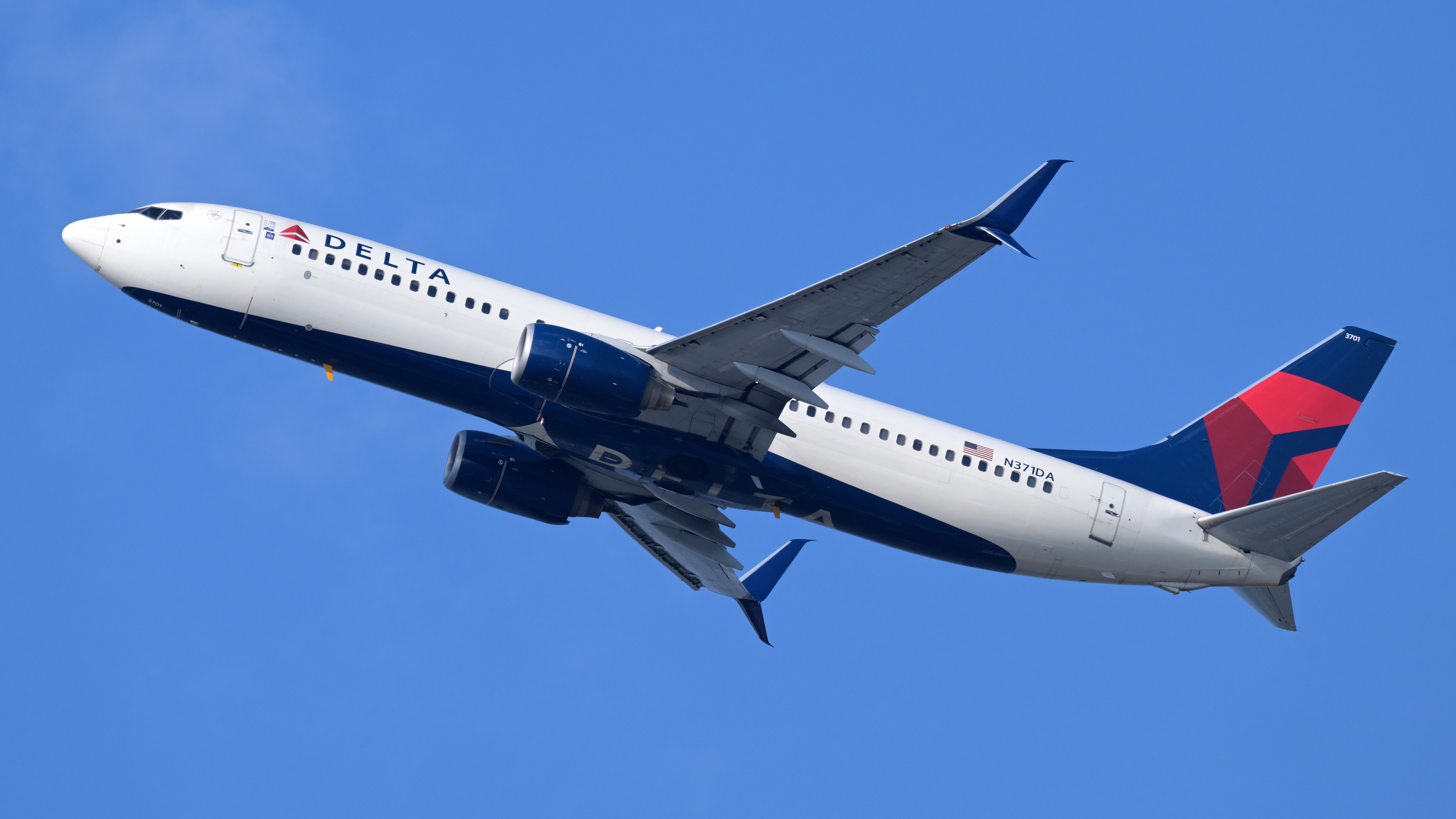
The heart of the 737-800's design lies in its stretched fuselage, capable of accommodating significantly more passengers than its predecessors, combined with radically improved aerodynamics. The redesign of the "Next-Generation" wings was a crucial step, increasing the wingspan and surface area, ensuring greater fuel efficiency and superior take-off and landing performance.
This advanced architecture was complemented with more powerful and efficient CFM56-7 turbofan engines, known for their reliability and lower noise emissions. The introduction of a fully digital cockpit, featuring the latest generation avionics, transformed the flying experience for pilots, providing clear, integrated flight data on LCD displays.
A further innovation, often adopted subsequently, were the "blended winglets", curved wingtips that reduce induced drag, further increasing range and fuel efficiency, making the 737-800 a true jewel of aeronautical engineering.
Onboard Specifications
- ◆Redesigned wings with increased span and surface area, optimized for efficiency and increased fuel capacity.
- ◆Latest generation Honeywell or Collins digital avionics, with glass cockpit that reduces the pilot's workload.
- ◆Typical passenger capacity of 162 in two-class configuration (up to 189 in high-density single class).
Operational Career & Operators
The Boeing 737-800 entered commercial service in 1998 with Hapag-Lloyd Flug (now TUI fly Deutschland), quickly establishing itself as the workhorse par excellence in the short and medium range market segment. Its combination of reliability, efficiency and capacity has made it irresistible to airlines around the world.
Airlines such as Ryanair, Southwest Airlines and American Airlines have built much of their fleets around the 737-800, leveraging its versatility to expand their networks and offer competitive fares. Its robustness and component standardization across the 737 family have simplified maintenance and reduced operating costs.
Its presence is ubiquitous, from the frenetic North American and European air traffic, to the emerging skies of Asia and South America. The 737-800 is a symbol of global connectivity, connecting cities and continents with unprecedented frequency and safety.
Legacy & Cultural Impact
The Boeing 737-800 is not just an airplane, but a milestone in the evolution of mass air transportation. It has been able to take up the legacy of its "Classic" predecessors, raising the standards of comfort and performance and laying the foundations for future innovations. It demonstrated the immense potential of a proven design, continually updated and improved.
Its impact has been profound on the aviation industry, particularly on the business model of low-cost airlines, who have found the 737-800 to be the perfect tool for their exponential growth. It has made air travel accessible to millions of people, democratizing a luxury once reserved for the few.
Even with the introduction of the 737 MAX series, the 737-800 continues to dominate the skies, a testament to its incredible longevity and relevance. Its unmistakable silhouette and success story make it an icon loved by pilots, passengers and aviation enthusiasts around the world.
Telemetria Specs (HUD)
Hangar Trivia & Curiosità
- 💡It is one of the most produced variants of the 737 family, with over 5,000 units delivered, making it a common sight globally.
- 💡Many 737-800 airframes have been successfully converted into cargo aircraft (737-800BCF/BDSF), extending their service life significantly.
- 💡Some later models incorporated the Boeing Sky Interior, featuring modern sculpted sidewalls, larger overhead bins, and dynamic LED lighting.
Archivio Avvistamenti Spotter
Immagini scattate dalla community in tutto il mondo
Vettori Rilevati (Flotta Attiva)


Ryanair
In Flotta: x450 u.

Southwest Airlines
In Flotta: x200 u.
American Airlines
In Flotta: x300 u.
United Airlines
In Flotta: x140 u.

Turkish Airlines
In Flotta: x110 u.

Qantas
In Flotta: x75 u.
Lion Air
In Flotta: x100 u.

Gol Linhas Aéreas
In Flotta: x80 u.

Air China
In Flotta: x100 u.
China Southern Airlines
In Flotta: x160 u.

WestJet
In Flotta: x50 u.
Copa Airlines
In Flotta: x60 u.
Aeroméxico
In Flotta: x40 u.
SunExpress
In Flotta: x60 u.
LOT Polish Airlines
In Flotta: x15 u.
El Al
In Flotta: x15 u.
Ethiopian Airlines
In Flotta: x20 u.

Flydubai
In Flotta: x70 u.
Garuda Indonesia
In Flotta: x70 u.
Korean Air
In Flotta: x25 u.
Pegasus Airlines
In Flotta: x20 u.