737-300
Boeing
Historical Context & Origins
The Boeing 737 had already established itself as the "workhorse" of the sky since its launch. However, the evolution of the market and the growing needs for efficiency, noise reduction and capacity pushed Boeing to conceive a new generation of aircraft for the short and medium range segment.
Thus, in the 1980s, the "Classic" series was born, with the 737-300 as its pioneer and turning point. Its first flight, in 1984, marked the beginning of a new era for the famous "Jumbo Jet Mini", responding to the pressing demand for a more modern and cost-effective airliner.
This version was a direct response to the challenges posed by the energy crisis of the 1970s and the need to comply with more stringent environmental regulations. Its development was a strategic investment to maintain leadership in the competitive commercial aviation market.
Architecture & Technological Design
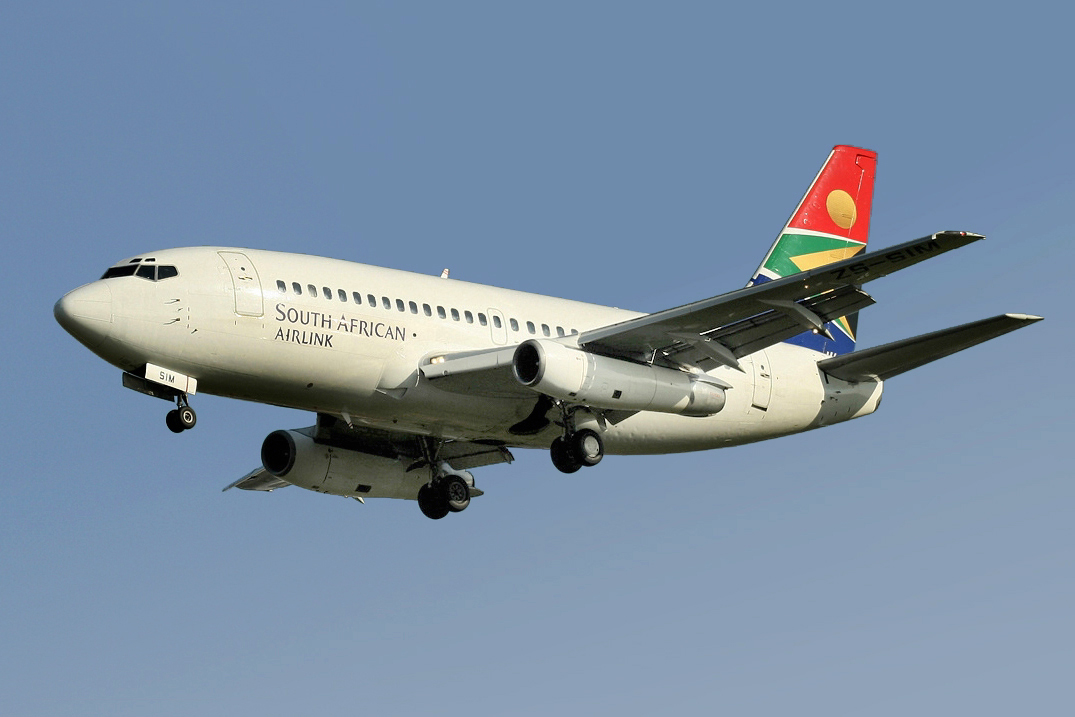
The most obvious and crucial innovation of the 737-300 was the adoption of modern CFM International CFM56-3 turbofan engines. These engines, significantly larger and more efficient than the original Pratt & Whitney JT8D, required a redesign of the nacelles, which were made flatter underneath and moved forward of the wing, a distinctive and immediately recognizable solution.
In addition to the new engines, the aircraft benefited from a 2.64 meter longer fuselage compared to the 737-200, increasing passenger capacity to approximately 140-149 seats in typical configuration. Aerodynamic and structural improvements were also implemented, with the introduction of new flaps and slats to optimize low-speed performance.
The cockpit, while retaining some analogue elements, received significant upgrades with the introduction of digital instrumentation (EFIS) and a Flight Management System (FMS). This significantly improved pilots' situational awareness and reduced their workload, laying the foundation for future digital generations.
Onboard Specifications
- ◆Eco-efficient, low-emission CFM56-3 engines
- ◆Two-crew cockpit with partial EFIS instrumentation
- ◆Extended fuselage for increased passenger capacity
Operational Career & Operators
The Boeing 737-300 immediately became a resounding commercial success, ordered by airlines around the world. Entering service with USAir in 1984, it was quickly adopted by giants such as Lufthansa, Southwest Airlines and American Airlines, who recognized its extraordinary efficiency and operational reliability.
Its versatility made it ideal for a wide range of routes, from high-frequency regional connections to holiday charter flights. Its robustness and ease of maintenance made it a mainstay of global fleets, allowing rapid expansion of air networks at competitive costs.
The 737-300 has enabled countless passengers to travel more affordably, cementing its reputation as one of the most successful and beloved airliners of all time. Even today, decades after its debut, numerous examples continue to fly actively in various parts of the world.
Legacy & Cultural Impact
The Boeing 737-300 wasn't just a successful airplane; it was a technological bridge between the first generations of jets and the digital age. Its introduction of the CFM56-3 engines set a new standard for efficiency and noise reduction, profoundly influencing the development of subsequent single-aisle aircraft designs.
Its influence extends far beyond technical specifications. It has significantly contributed to the democratization of air travel, making travel more accessible and opening up new air routes. Many pilots and technicians began their careers on this iconic model, appreciating its reliability and maneuverability.
Today, although many companies have retired it in favor of newer aircraft, the 737-300 remains a symbol of aeronautical engineering and a testament to an era of great growth for commercial aviation. Its legacy continues to live on in subsequent generations of Boeing 737s, which have inherited its design philosophy and vocation for efficiency.
Telemetria Specs (HUD)
Hangar Trivia & Curiosità
- 💡I motori CFM56 del 737-300 hanno una carenatura appiattita sul fondo (spesso chiamata 'hamster pouch') per mantenere la distanza dal suolo, dato il diametro maggiore rispetto ai precedenti motori JT8D e la bassa altezza da terra dell'ala del 737.
- 💡Il 737-300 è stato il modello di lancio della serie "737 Classic", che include anche le varianti -400 (ulteriormente allungata) e -500 (più corta, simile al 737-200, ma con motori CFM56).
- 💡Il primo volo del Boeing 737-300 avvenne il 24 febbraio 1984, aprendo la strada a una nuova era di efficienza e comfort per la famiglia 737.
Archivio Avvistamenti Spotter
Immagini scattate dalla community in tutto il mondo
Vettori Rilevati (Flotta Storica / Dismessa)


Southwest Airlines
Stato: Dismesso
United Airlines
Stato: Dismesso
Alaska Airlines
Stato: Dismesso
AirTran Airways
Stato: Dismesso

Lufthansa
Stato: Dismesso

Canadian Airlines
Stato: Dismesso
Delta Air Lines
Stato: Dismesso

China Southern Airlines
Stato: Dismesso
SAS (Scandinavian Airlines)
Stato: Dismesso

Varig
Stato: Dismesso

Ansett Australia
Stato: Dismesso
American Airlines
Stato: Dismesso
Malaysia Airlines
Stato: Dismesso

KLM Royal Dutch Airlines
Stato: Dismesso

Air France
Stato: Dismesso
Transavia
Stato: Dismesso