737-200 Advanced
Boeing
Historical Context & Origins
The Boeing 737, nicknamed the "Baby Boeing", was born in the 1960s to meet the growing demand for short-haul flights. Its concept was that of an efficient and compact jet, capable of operating from smaller airports. The goal was to create an aircraft that could compete in the regional jet segment, offering superior comfort and speed compared to turboprops of the time.
The success of the first variants quickly led to the need for a model with greater capacity and autonomy. Thus, the 737-200 was developed, introducing a longer fuselage and upgraded engines. This evolution represented a crucial step for the 737 family, significantly expanding its market potential.
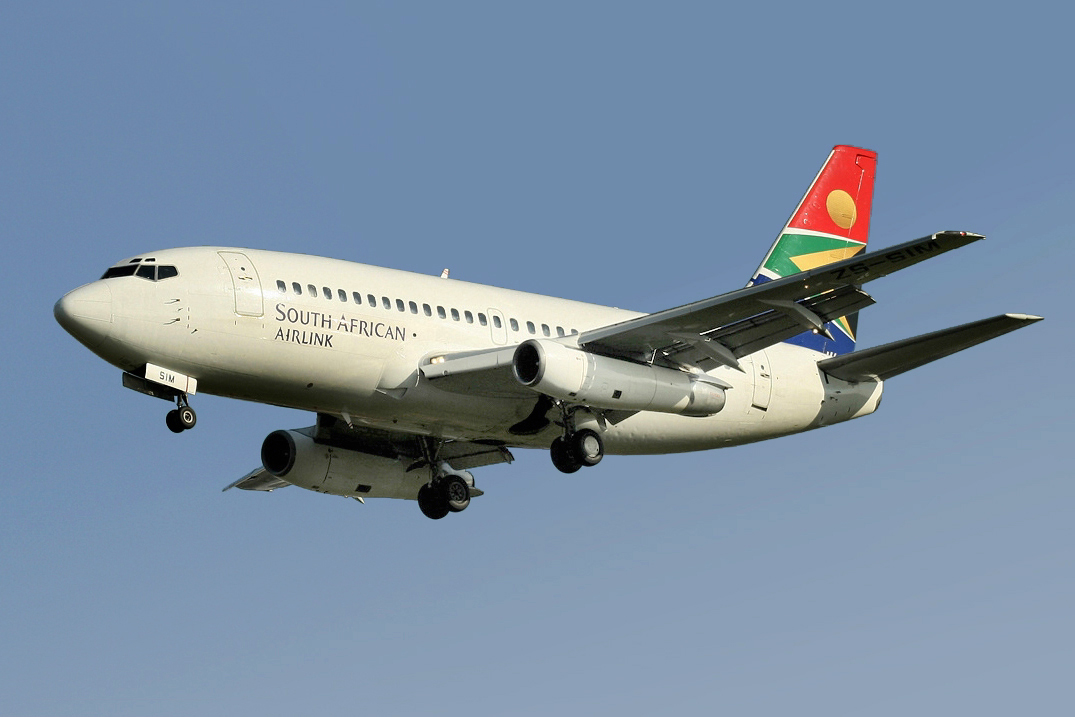
Further refinement culminated in the 737-200 Advanced, which stands out for its significant technological and operational improvements. Its first flight occurred in 1971, marking the beginning of an era for this extraordinary aircraft, destined to become a true backbone for many airlines around the world.
Architecture & Technological Design
The 737-200 Advanced distinguished itself from its predecessor with a number of key upgrades. Its architecture, while maintaining the robustness of the original design, incorporated innovations aimed at improving performance and versatility. The design featured a swept wing optimized for cruise speeds and takeoff and landing capability on shorter runways.
At the heart of its performance were the powerful Pratt & Whitney JT8D-15 or JT8D-17 turbofan engines, mounted under the wings. These thrusters not only provided considerable thrust, but were also known for their reliability and ease of maintenance. Their configuration allowed for efficient operation even in less well-equipped airport contexts.
Another distinguishing feature was the improved avionics, which offered pilots more precise instruments and more sophisticated navigation systems. These innovations made the 737-200 Advanced extremely capable, even in adverse weather conditions, cementing its reputation as a reliable and flexible aircraft for any type of mission.
Onboard Specifications
- ◆Pratt & Whitney JT8D-15/17 turbofan engines for increased thrust and efficiency, with up to 16,000 lb of unit thrust.
- ◆Advanced avionics which included inertial navigation systems (INS) and an improved autopilot, crucial for all-weather operations and more complex routes.
- ◆Reinforced undercarriage structure and Gravel Kit option to protect engines from debris, allowing operations on semi-prepared or gravel runways, greatly expanding operational versatility.
Operational Career & Operators
The 737-200 Advanced quickly became a mainstay of global airline fleets. Airlines such as United Airlines, Lufthansa, and many others adopted it for its exceptional combination of efficiency and robustness. Its ability to operate on regional and even major routes made it incredibly valuable.
Its reliability and low operating costs made it a popular choice, not just for passenger transport. Many examples were converted for freight transport or used in specialized roles, demonstrating its inherent flexibility. This aircraft has flown to every corner of the world, tackling different climates and operating conditions with remarkable success.
Tens of millions of passengers traveled aboard this iconic aircraft, which helped connect cities and communities in an era of major air travel expansion. Its operational longevity, spanning decades, testifies to the solidity of the design and the quality of its construction, becoming a true workhorse of the skies.
Legacy & Cultural Impact
The Boeing 737-200 Advanced has left an indelible legacy in the history of commercial aviation. It perfected the concept of short- and medium-range aircraft, paving the way for future generations of the 737, the most produced jet series ever. His influence is visible in every subsequent model of the 737 family.
It was not just a transportation vehicle, but a symbol of connection and accessibility to air travel. Its global spread has helped make flying a more common and accessible experience for millions of people, democratizing air travel like few other models before it.
Even today, the 737-200 Advanced is fondly remembered by pilots, crews and aviation enthusiasts for its reliability and its unmistakable JT8D engine noise. It represents a golden age of aeronautical engineering, a true flying classic that continues to inspire and fascinate, witnessing an era of unprecedented innovation and growth.
Telemetria Specs (HUD)
Hangar Trivia & Curiosità
- 💡The 737-200 Advanced could be equipped with an optional 'gravel kit', protecting its engines and underbelly from foreign object damage during operations on unpaved or semi-prepared runways.
- 💡Many 737-200s, including Advanced variants, were converted for military roles, such as the T-43 navigator trainer for the United States Air Force.
- 💡Despite being an older generation aircraft, some 737-200s remained in active commercial service well into the 21st century, especially in regions with demanding operational environments, a testament to its durable design.
Archivio Avvistamenti Spotter
Immagini scattate dalla community in tutto il mondo
Vettori Rilevati (Flotta Attiva)


Air Canada
In Flotta: x45 u.

Lufthansa
In Flotta: x40 u.

Aer Lingus
In Flotta: x25 u.
Ethiopian Airlines
In Flotta: x12 u.

Alaska Airlines
In Flotta: x35 u.
United Airlines
In Flotta: x105 u.

Transavia
In Flotta: x19 u.
Delta Air Lines
In Flotta: x70 u.
Ryanair
In Flotta: x29 u.