737-200
Boeing
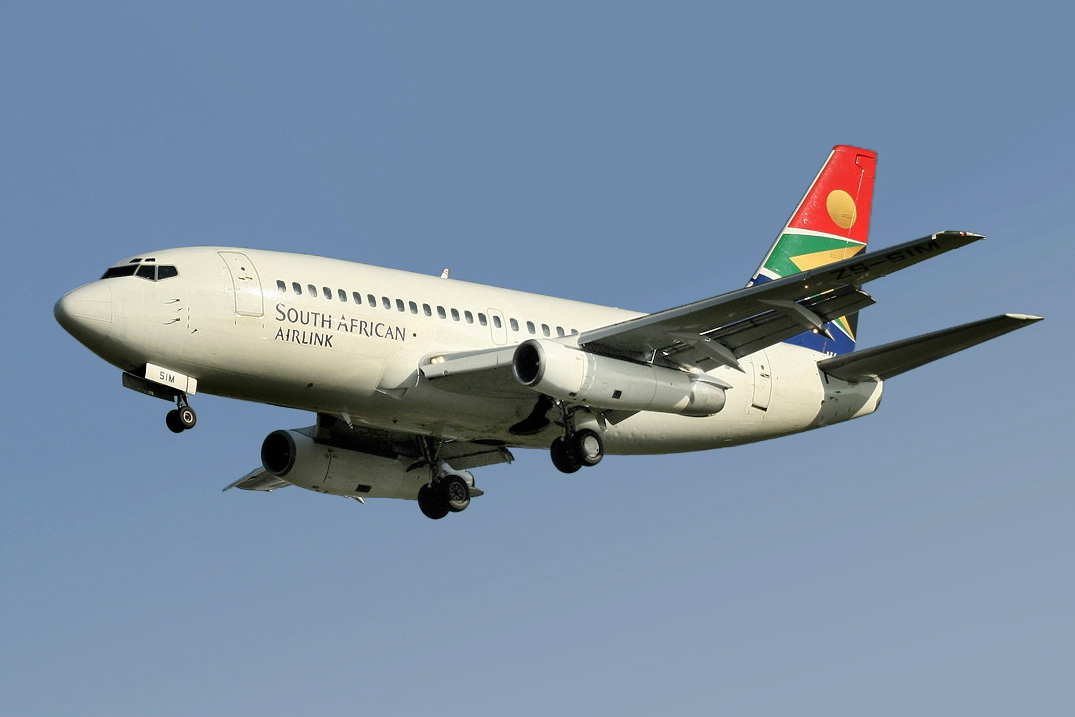
Historical Context & Origins
The Boeing 737-200 emerged in an era of fervent aeronautical innovation, in the mid 1960s. The industry was looking for a reliable and versatile jetliner for the short-haul market, capable of serving regional routes and smaller airports. Il modello 737-100 fu la risposta iniziale di Boeing, ma il vero game-changer si rivelò essere la sua variante allungata.
The first flight of the 737-200 occurred on 8 August 1967, less than a year after the 737-100. This version, more capable and with greater passenger capacity, was promptly adopted, quickly demonstrating its potential as a "workhorse" for airlines seeking operational efficiency and flexibility.
Architecture & Technological Design
The design of the 737-200 embodied a philosophy of practicality and ruggedness. Featuring Pratt & Whitney JT8D engines positioned under the wings, it retained the distinctive low wing and conventional empennage that would define the entire 737 family. This configuration allowed for easier maintenance and good accessibility to the engine compartment.
The 737-200's fuselage was a strong point, offering a wider cabin than major competitors of the time, such as the McDonnell Douglas DC-9. This allowed a configuration with six seats per row (3+3), optimizing capacity or, alternatively, providing greater comfort with configurations with five seats (2+3), particularly appreciated by passengers.
Onboard Specifications
- ◆Pratt & Whitney JT8D engines: Reliable dual-flow turbojets (low bypass ratio turbofans), known for their ruggedness and distinctive sound, a mainstay of short- and medium-range operations for decades.
- ◆Gravel Kit: A revolutionary technical option that allowed the 737-200 to operate from unpaved or semi-prepared runways, extending its operation to remote regions and unlocking new routes.
- ◆Wide Fuselage: With an internal width of 3.54 meters, it offered greater space and configuration flexibility than its direct competitors, improving the travel experience.
Operational Career & Operators
The Boeing 737-200 enjoyed resounding commercial success, quickly becoming a mainstay of global airline fleets. United Airlines was the launch customer for the passenger version, followed by countless other companies, including Lufthansa, for the -100 but also widely using the -200, and American Airlines. Its versatility made it ideal for a wide range of operations.
Many examples of the 737-200 remained in service for decades, some converted for cargo roles or used in special operations. Its ability to adapt to different operational environments, from high-density routes to regional flights in challenging environments, cemented its reputation as an extremely reliable and cost-effective aircraft.
Legacy & Cultural Impact
The Boeing 737-200 was not just a successful airplane; it was the real launching pad for the 737 family, which would become the most produced series of commercial airplanes in the history of aviation. Its basic architecture informed subsequent generations, from the 737 Classic to the 737 NG and, finally, the 737 MAX.
This aircraft democratized air travel, making jet travel accessible to more cities and communities. Its ubiquity and longevity have made it an icon of modern aviation, a symbol of efficiency and a key pillar in the evolution of global air travel, whose influence is still felt today.
Telemetria Specs (HUD)
Hangar Trivia & Curiosità
- 💡Il 737-200 è stato il primo jet passeggeri a beneficiare di un kit per 'piste non asfaltate', permettendogli di operare su aeroporti con superfici di ghiaia o sterrato, particolarmente utile in regioni remote come l'Alaska o il Canada.
- 💡Nonostante sia un modello degli anni '60, un piccolo numero di 737-200 rimane tuttora in servizio attivo, principalmente per operazioni cargo, ruoli militari o voli specializzati in contesti dove la sua robustezza è ancora un vantaggio.
- 💡Fu spesso soprannominato 'Baby Boeing' insieme al 737-100, a causa delle sue dimensioni relativamente compatte rispetto ai wide-body che Boeing stava sviluppando contemporaneamente.
Archivio Avvistamenti Spotter
Immagini scattate dalla community in tutto il mondo
Vettori Rilevati (Flotta Storica / Dismessa)


Pacific Southwest Airlines
Stato: Dismesso

Air Canada
Stato: Dismesso
Air Florida
Stato: Dismesso
American Airlines
Stato: Dismesso

Lufthansa
Stato: Dismesso
Mexicana de Aviación
Stato: Dismesso
Cubana de Aviación
Stato: Dismesso
TWA (Trans World Airlines)
Stato: Dismesso
Air New Zealand
Stato: Dismesso
Alaska Airlines
Stato: Dismesso

British Airways
Stato: Dismesso
Korean Air
Stato: Dismesso
Air India
Stato: Dismesso
United Airlines
Stato: Dismesso
Aloha Airlines
Stato: Dismesso

Ansett Australia
Stato: Dismesso
Delta Air Lines
Stato: Dismesso

Ryanair
Stato: Dismesso
Southwest Airlines
Stato: Dismesso
Air Zimbabwe
Stato: Dismesso