737-100
Boeing
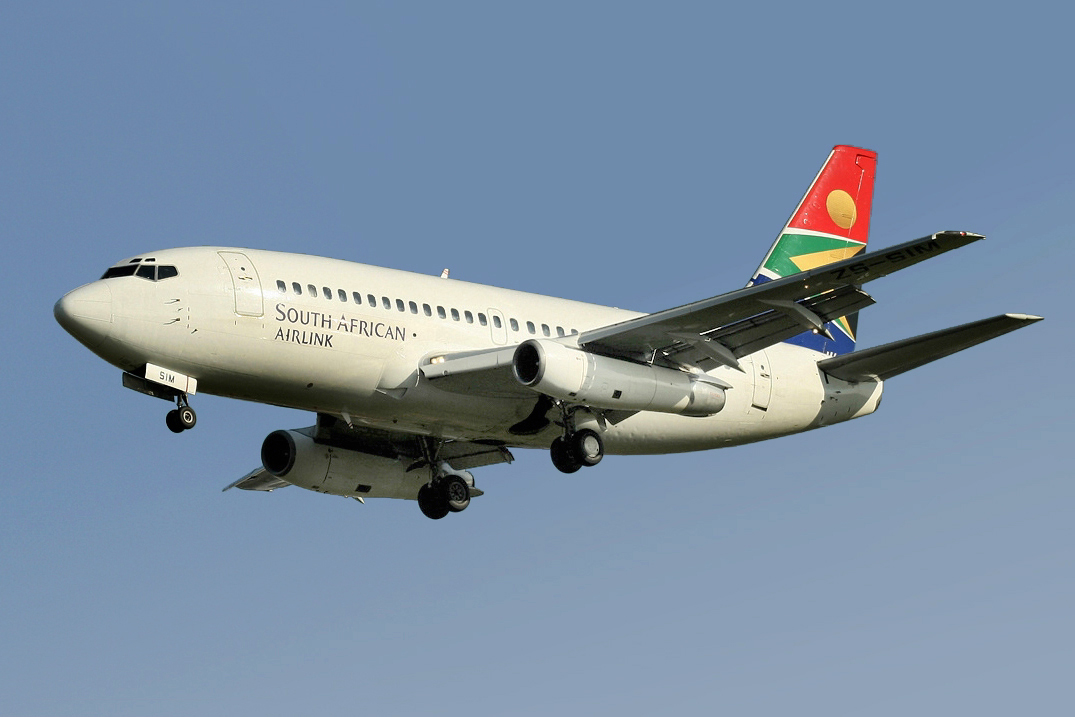
Historical Context & Origins
In the mid-1960s, the aviation industry was in turmoil, with growing demand for jet aircraft for short- and medium-range routes. While Boeing dominated the long-haul market with the 707 and the medium-haul market with the 727, it felt the pressure of competition from aircraft such as the Douglas DC-9 and the BAC One-Eleven, which were already capturing significant market share on regional routes. The need for an agile and efficient aircraft was pressing.
Boeing responded with an ambitious project, conceived as the "Baby Boeing": a twin-engine jet that would offer efficiency, reliability and the ability to operate effectively even from airports with more modest infrastructure. The primary objective was to create an aircraft that could complement, not replace, the existing airline fleet, maximizing parts compatibility and familiarity for crews and ground personnel.
- ◆*April 9, 1967marked a milestone in the history of aviation: theBoeing 737-100** made its maiden flight. This event kicked off an unparalleled success story, positioning the 737 as the foundational pillar for an entire generation of regional and domestic air travel, poised to revolutionize the industry.
Architecture & Technological Design
The architecture of the 737-100 was, in many respects, an exercise in visionary engineering. Unlike its main competitors, who typically mounted their engines in the tail, Boeing opted for a bold configuration with the engines positioned directly under the wings. This engineering choice, although requiring a more sophisticated wing design to manage forces and vibrations, provided numerous operational benefits, including greater ease of access for ground maintenance and improved overall aerodynamic efficiency.
The fuselage of the 737-100 strategically shared the same cross section as the famous 707 and the versatile 727, allowing for considerable standardization of internal components and greater familiarity for ground and flight personnel. This "wide body" for a smaller aircraft was a significant advantage, offering more space and comfort to passengers than other short-haul jets of the time, improving the on-board experience.
The overall design was conceived for maximum operational reliability and to allow exceptionally fast turnaround times, crucial characteristics for high-frequency, short-range operations. Its intrinsic structural simplicity, combined with proven and robust systems, made it a true tireless workhorse, capable of operating efficiently and constantly in any condition.
Onboard Specifications
- ◆Pratt & Whitney JT8D Engines: Extensively proven turbofans known for their exceptional robustness, reliability and relatively low maintenance costs.
- ◆Negatively Swept Flaps: An innovative wing design that significantly improved low-speed performance, optimizing short takeoff and landing capabilities.
- ◆Miniature wide-body fuselage: Sharing the cross-section with its larger 707/727 siblings maximized passenger space and simplified interior fit-out logistics.
Operational Career & Operators
The first Boeing 737-100 was delivered with great enthusiasm to the German airline Lufthansa in December 1967, officially inaugurating a brilliant operational career. Shortly thereafter,United Airlines** in the United States also became a key operator, cleverly leveraging its ability to efficiently connect major hubs with myriad regional destinations.
The 737-100 immediately proved to be a resounding success thanks to its extraordinary versatility and remarkably low operating costs. Its inherent ability to operate from shorter runways, combined with rapid turnaround times between flights, made it the ideal aircraft for the emerging point-to-point air traffic model and to significantly increase flight frequency.
Although the original -100 version was produced in relatively limited numbers, with just 30 units in total, it laid the solid foundations for the development of the subsequent, larger and more capacious variants, which would go on to dominate the market unchallenged. Its reputation for reliability in service helped cement confidence in Boeing's design and its ability to innovate.
Legacy & Cultural Impact
The legacy of the Boeing 737-100 is nothing short of monumental, having given rise to the most produced and most successful family of commercial airplanes in aviation history. Every single iteration of the 737, from the "Classic" to the "Next Generation" to the most recent "MAX", unquestionably carries in its DNA the ingenious intuitions and pioneering engineering solutions introduced by the initial series.
This aircraft has literally redefined the concept of short-haul flight, making it not only accessible but also extremely convenient for millions of passengers in every corner of the world. Its irreplaceable role in the democratization of air transport is absolutely undeniable, having enabled the exponential expansion of routes and a dramatic increase in flight frequency, radically transforming the way people travel and connect.
The 737-100, although no longer in active commercial service, remains an undisputed symbol of Boeing's aeronautical ingenuity and extraordinary ability to create a versatile product, capable of evolving and successfully adapting to the changing needs of the global market. He is the progenitor of a true icon, a tireless pioneer who literally shaped and continues to shape the sky above us.
Telemetria Specs (HUD)
Hangar Trivia & Curiosità
- 💡Lufthansa was the launch customer for the Boeing 737-100, receiving the first aircraft in December 1967.
- 💡Only 30 units of the 737-100 were ever produced, making it the least common variant of the classic 737 family.
- 💡The 737-100 introduced the distinctive short, wide fuselage that characterized the early generations of the 737, designed to seat six abreast.
Archivio Avvistamenti Spotter
Immagini scattate dalla community in tutto il mondo
Vettori Rilevati (Flotta Storica / Dismessa)


Pacific Southwest Airlines
Stato: Dismesso
Avianca
Stato: Dismesso
Air Florida
Stato: Dismesso

Lufthansa
Stato: Dismesso
Alaska Airlines
Stato: Dismesso
Air Gabon
Stato: Dismesso

Transavia
Stato: Dismesso
Piedmont Airlines
Stato: Dismesso

Pacific Western Airlines
Stato: Dismesso

Malaysia–Singapore Airlines
Stato: Dismesso