727-200 Advanced
Boeing
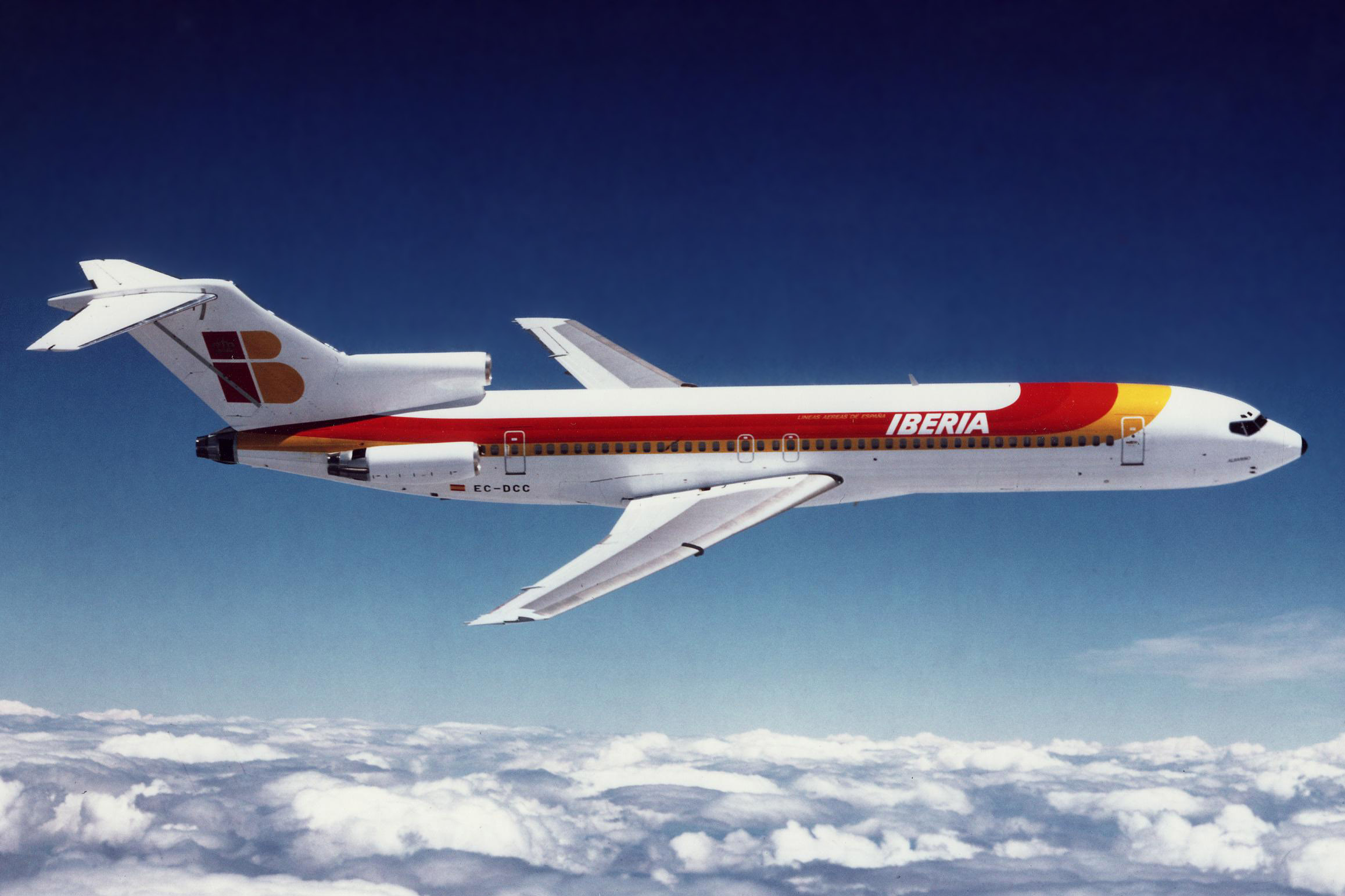
Historical Context & Origins
The Boeing 727 was born from the specific need of American airlines such as United, American and Eastern Airlines, in the early 1960s, for a short-medium range airliner capable of operating from airports with shorter runways and less equipped facilities than those required by four-engined aircraft such as the 707. The result was an innovative trijet with a T-tail configuration, one of a kind.
Initially designed as a 100-seat aircraft, the success of the 727 prompted Boeing to develop a stretched version to meet growing demand for passenger capacity. The 727-200, introduced in 1967, extended the fuselage by more than 6 meters, significantly increasing the number of available seats. This variant quickly became the most popular of the series.
The evolution culminated with the 727-200 Advanced, which made its first flight in 1971. This improved version was not simply a 727-200 with a few superficial upgrades, but integrated more powerful and quieter engines, extended range and numerous refinements that made it even more versatile and competitive in the market.
Architecture & Technological Design
The 727-200 Advanced retained the distinctive tail-mounted three-engine Pratt & Whitney JT8D configuration, with the central engine integrated into the root of the vertical fin. This arrangement provided operational redundancy and a quieter passenger cabin, making it ideal for busy routes and urban airports.
The aerodynamic design of the 727-200 Advanced was exceptional, featuring a state-of-the-art high lift system. The wings featured full-span leading edge slats and triple-slot trailing edge flaps, giving it takeoff and landing capabilities on extremely short runways, a significant competitive advantage for the time.
Advanced series engines, such as the JT8D-15 or JT8D-17, offered greater thrust and better fuel efficiency than previous versions. These engines helped extend range and improve overall performance, cementing the 727's reputation as a "hot rod" of the sky, beloved by pilots for its responsiveness.
Onboard Specifications
- ◆Upgraded Pratt & Whitney JT8D engines for greater thrust and range.
- ◆Advanced high lift system with complex slats and flaps for STOL performance.
- ◆Updated avionics which included improvements in navigation and communication systems.
Operational Career & Operators
The Boeing 727-200 Advanced quickly became an irreplaceable mainstay in the fleets of hundreds of airlines around the world. Its incredible versatility allowed it to operate successfully on high-density domestic routes and medium-range international charter flights.
Iconic airlines such as American Airlines, United Airlines, Delta Air Lines, Lufthansa and Alitalia themselves made it their workhorse, appreciating its reliability, rapid turnaround and ability to adapt to different operational requirements. It was an airplane that made destinations accessible that were previously difficult to reach by jet.
The 727-200 Advanced's robustness and operating economy also made it an ideal candidate for cargo conversions, significantly extending its career well beyond passenger service. Dozens of examples were transformed into "freighters" and continued to sail the skies for decades, testifying to the solidity of the original design.
Legacy & Cultural Impact
The Boeing 727-200 Advanced has left an indelible mark on commercial aviation. It was the aircraft that democratized air travel on many routes, allowing airlines to expand their networks and offer greater flexibility to passengers, thanks to its operational efficiency and ability to reach smaller airports.
Beloved by generations of pilots for its flight characteristics, the 727 is often remembered as a fun and rewarding airplane to fly. Its unmistakable silhouette, with the three engines at the tail and the T-tail, became an icon of the jet age, appearing in numerous films and television series, symbolizing air travel.
Although most 727s have been retired from commercial service due to noise regulations (Stage 3/4) and the efficiency of modern twin-engine aircraft, its contribution remains vital. The 727-200 Advanced was not just an airplane, but a symbol of progress, innovation and global connectivity, whose technical and cultural legacy still resonates today.
Telemetria Specs (HUD)
Hangar Trivia & Curiosità
- 💡Il 727 è stato l'unico aereo trimotore prodotto da Boeing, caratterizzato da tre motori Pratt & Whitney JT8D montati nella fusoliera posteriore.
- 💡La designazione 'Advanced' per il 727-200 indicava motori migliorati, un peso lordo maggiore e una capacità di carburante aumentata rispetto al 727-200 standard.
- 💡La sua configurazione unica con coda a T e motori posteriori consentiva eccellenti prestazioni su campi corti e un aspetto distintivo, rendendolo un cavallo di battaglia su molte rotte domestiche.
Archivio Avvistamenti Spotter
Immagini scattate dalla community in tutto il mondo
Vettori Rilevati (Flotta Storica / Dismessa)


Northwest Airlines
Stato: Dismesso
Avianca
Stato: Dismesso
American Airlines
Stato: Dismesso

Lufthansa
Stato: Dismesso
Mexicana de Aviación
Stato: Dismesso
Pan American World Airways
Stato: Dismesso

Air France
Stato: Dismesso
TWA (Trans World Airlines)
Stato: Dismesso
United Airlines
Stato: Dismesso

Iberia
Stato: Dismesso
Delta Air Lines
Stato: Dismesso

Varig
Stato: Dismesso
Continental Airlines
Stato: Dismesso
FedEx Express
Stato: Dismesso