727-200
Boeing
Historical Context & Origins
The Boeing 727 was born in the 1960s to respond to a growing need in the aeronautical market: a short-medium range airliner, capable of operating from airports with shorter runways and less developed infrastructure. Major U.S. airlines, including United, American and Eastern, were looking for an affordable, versatile aircraft to connect mid-sized cities. Its initial design, culminating in the first flight of the 727-100 in 1963, represented a bold gamble for Boeing.
The 727-200 variant, which made its first flight in July 1967, emerged as the natural and most successful evolution of the design. This stretched version, with its fuselage extended by 6.1 metres, offered greater passenger capacity and slightly greater range, cementing its position as the "workhorse" for domestic and regional routes around the world.
Architecture & Technological Design
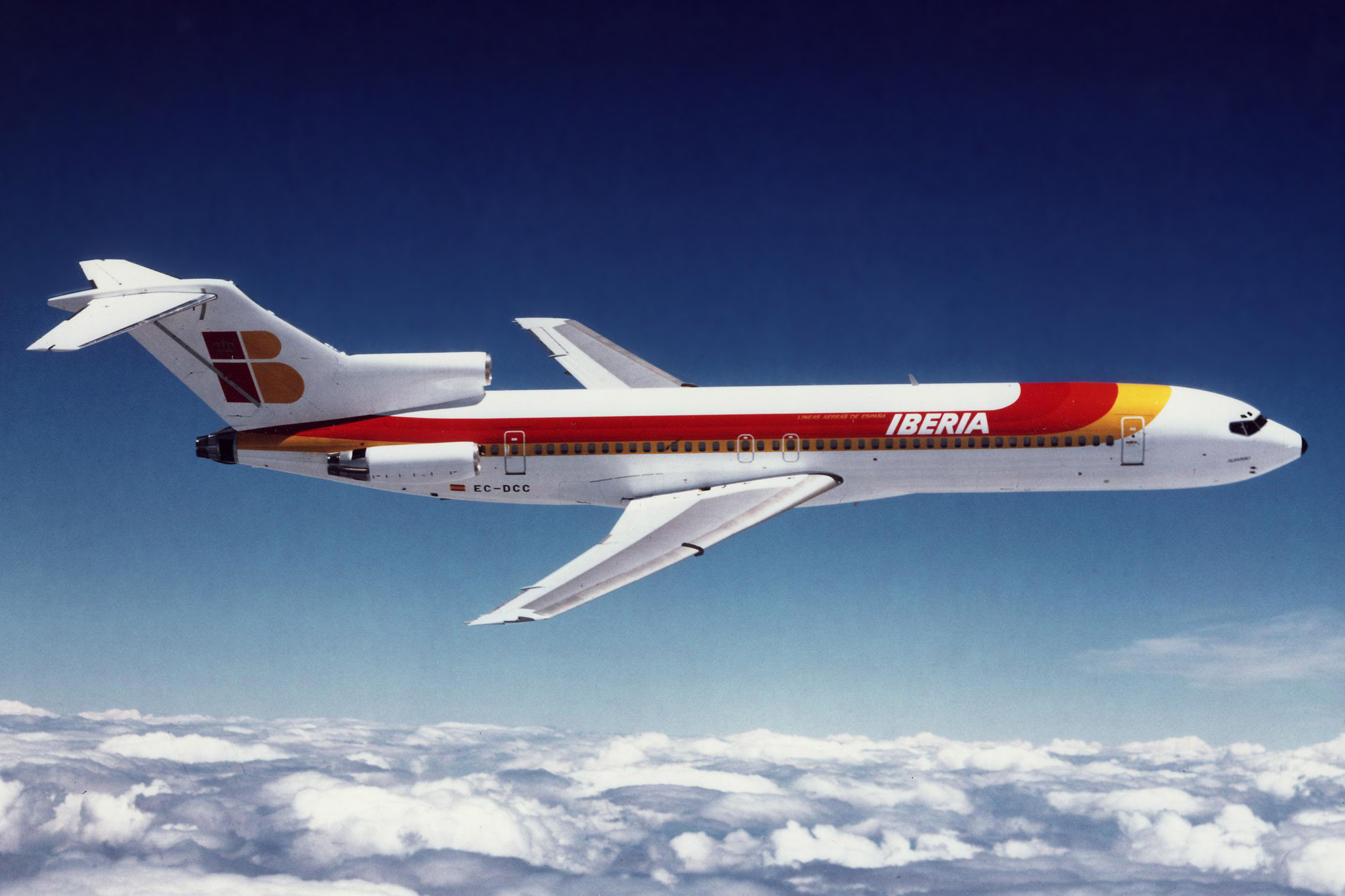
The Boeing 727-200 was notable for its three-jet configuration, with two engines mounted on the rear sides of the fuselage and a third engine housed in the root of the T-shaped fin. This configuration, equipped with Pratt & Whitney JT8D turbofans, not only provided the necessary thrust for takeoffs from short runways but also reduced the reliance on ground equipment, thanks to the integration of an auxiliary power unit (APU).
The clean, engine-free wing design allowed the integration of exceptionally sophisticated high-lift systems, such as triple-stage flaps and leading-edge slats. These features ensured remarkable STOL (Short Take-Off and Landing) performance, making the 727-200 ideal for airports with runway restrictions or high altitude. Its unmistakable silhouette, with the distinctive T-tail, became a symbol of the jet age.
Onboard Specifications
- ◆Triple-stage flaps and leading edge slats: Allowed takeoffs and landings on significantly shorter runways.
- ◆Integrated APU: provided electrical and pneumatic power to the ground, making the aircraft independent of airport infrastructure.
- ◆Rear door with retractable ladder: allowed passengers to board and disembark quickly even in the absence of fingers.
Operational Career & Operators
The Boeing 727-200 quickly became a standout commercial success, with over 1830 built, establishing itself as the world's best-selling aircraft for much of the 1970s. Its robustness, reliability and versatility made it a mainstay in the fleets of countless airlines, including giants such as American Airlines, United Airlines, Delta Air Lines, Lufthansa and Alitalia.
This aircraft has literally shaped the regional and domestic air transportation landscape, serving as an "air bridge" for thousands of daily connections. Its ability to operate in almost any weather condition and from challenging runways made it an irreplaceable asset, guaranteeing profits and consolidating its reputation for operational reliability.
Legacy & Cultural Impact
The legacy of the Boeing 727-200 is monumental. It has played a crucial role in the democratization of air travel, connecting cities previously inaccessible to jets and contributing to global economic expansion. Although it has been progressively withdrawn from major passenger fleets due to noise regulations and operating costs (especially fuel consumption compared to more modern twin-jets), many examples continue to fly as freighters.
Its distinctive T-shaped silhouette and three-jet configuration remain iconic in the public imagination, often associated with the golden era of commercial aviation. The 727-200 was not just an airplane, but a true pioneer that redefined the standards of efficiency and versatility in medium-range air transport, leaving an indelible mark on the history of aeronautics.
Telemetria Specs (HUD)
Hangar Trivia & Curiosità
- 💡Il Boeing 727 è stato l'unico trijet prodotto da Boeing, distinguendosi per la sua configurazione a tre motori posteriori e la coda a T.
- 💡L'aereo è famoso per essere stato il tipo di velivolo utilizzato nel misterioso dirottamento di D.B. Cooper nel 1971, in particolare per la sua scala posteriore retrattile, accessibile in volo.
- 💡Con oltre 1.832 unità prodotte, il 727 è stato per un lungo periodo l'aereo di linea più venduto al mondo prima di essere superato dal Boeing 737.
Archivio Avvistamenti Spotter
Immagini scattate dalla community in tutto il mondo
Vettori Rilevati (Flotta Storica / Dismessa)


Northwest Airlines
Stato: Dismesso
Avianca
Stato: Dismesso
American Airlines
Stato: Dismesso

Lufthansa
Stato: Dismesso
Mexicana de Aviación
Stato: Dismesso
Pan American World Airways
Stato: Dismesso

Air France
Stato: Dismesso
TWA (Trans World Airlines)
Stato: Dismesso
United Airlines
Stato: Dismesso

Qantas
Stato: Dismesso

Iberia
Stato: Dismesso

Alitalia
Stato: Dismesso
Delta Air Lines
Stato: Dismesso
FedEx Express
Stato: Dismesso
Eastern Air Lines
Stato: Dismesso