727-100
Boeing
Historical Context & Origins
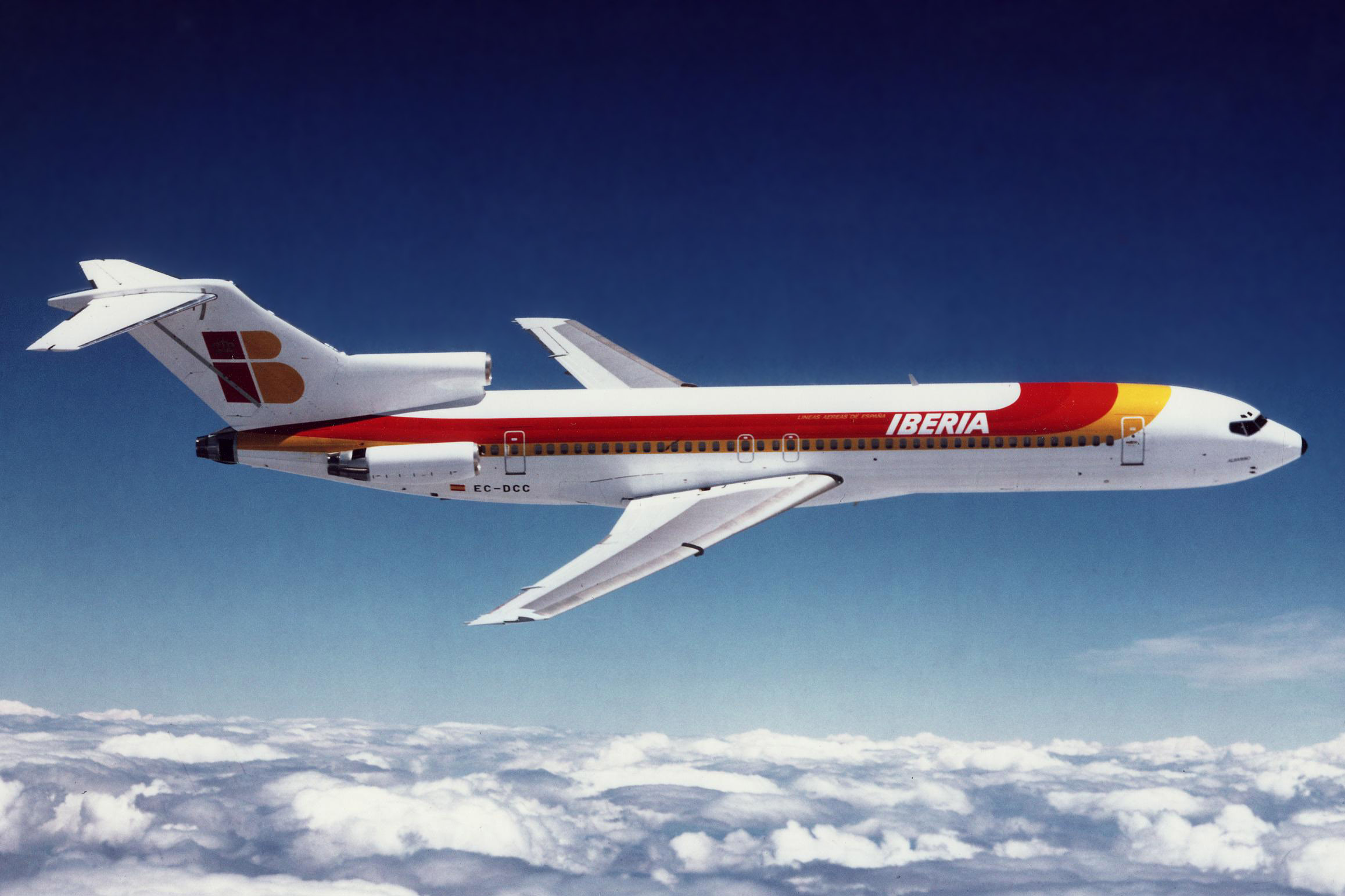
The Boeing 727-100, whose first flight occurred on February 9, 1963, emerged in an era of fervent expansion of air travel. Its genesis was Boeing's response to an urgent request from American airlines, such as United Airlines, Eastern Air Lines and American Airlines, for an efficient and versatile jetliner, capable of operating on medium-to-short-haul routes and from airports with shorter runways and limited infrastructure.
This ambitious project aimed to combine the reliability of long-range jets with the flexibility to serve a vast network of medium-sized cities. The result was an innovative configuration, the tri-reactor, which offered an ideal balance between power, efficiency and the ability to operate independently even on less well-equipped airports, immediately becoming a point of reference in the sector.
Architecture & Technological Design
The 727-100 was immediately notable for its cutting-edge architecture: a T-tail and three Pratt & Whitney JT8D-1 turbofan engines mounted in the tail section. This arrangement not only ensured a clean wing to maximize aerodynamic efficiency, but also dramatically reduced the risk of debris ingestion (FOD) and offered a significantly quieter passenger cabin.
To meet the challenges of short runways and peripheral airports, the 727 was equipped with state-of-the-art high-lift devices. Its complex triple-slotted flaps and leading-edge slats** were key to generating enormous lift at low speeds, allowing for short landings and takeoffs, a crucial feature for its diverse operation and unprecedented success.
Onboard Specifications
- ◆Integrated APU (Auxiliary Power Unit): The 727-100 was the first commercial jet to include a standard APU, allowing the aircraft to be self-contained for ground power and air conditioning, without the need for external equipment.
- ◆Speed Brakes on the wing back: Panels positioned on the upper surface of the wings that lifted to increase aerodynamic drag, allowing rapid descents without gaining excessive speed or tiring the engines.
- ◆Retractable rear ladder (Air-Stair): A ladder integrated into the fuselage, under the tail, which allowed passengers to board and disembark independently even in airports without boarding bridges, revolutionizing operational flexibility.
Operational Career & Operators
The Boeing 727-100 quickly established itself as the workhorse for countless airlines around the world. Its exceptional reliability, ability to operate in different weather conditions and logistical flexibility made it a valuable asset for carriers such as Lufthansa, Ansett, Japan Airlines and, of course, the major US airlines that requested its development.
Its popularity was such that, for a time, the 727 became the best-selling jetliner in the world. The model helped democratize air travel, bringing jet service to an unprecedented number of cities and setting new efficiency standards for regional and domestic routes before the advent of newer and sometimes less flexible models.
Legacy & Cultural Impact
The Boeing 727-100 was not only a commercially successful aircraft, but a true aviation icon. Its distinctive silhouette, with its T-tail and three clustered engines, is instantly recognizable and has shaped the collective imagination of passenger jets for decades, inspiring admiration and trust.
Although most 727s have now ended their passenger careers, giving way to more fuel-efficient and less noisy aircraft, their impact on the history of aviation remains indelible. It established the foundation for the design of many subsequent short- to medium-range aircraft, and its technical and operational legacy continues to be studied and appreciated by enthusiasts and industry experts.
Telemetria Specs (HUD)
Hangar Trivia & Curiosità
- 💡Il Boeing 727-100 è stato il primo jet commerciale a essere equipaggiato con un'APU (Auxiliary Power Unit) integrata, rendendolo indipendente dall'attrezzatura di terra per l'avvio e l'energia in aeroporti meno attrezzati.
- 💡Era famoso per la sua capacità di operare su piste più corte e in aeroporti più piccoli, grazie al suo design robusto e alle eccezionali prestazioni di decollo e atterraggio, in particolare con l'uso dei suoi flap Fowler a triplo slot.
- 💡La celebre scaletta posteriore integrata (airstair) ha reso il 727 unico e fu resa famigerata dall'hijacker D.B. Cooper nel suo noto dirottamento aereo del 1971.
Archivio Avvistamenti Spotter
Immagini scattate dalla community in tutto il mondo
Vettori Rilevati (Flotta Storica / Dismessa)


Braniff International Airways
Stato: Dismesso
American Airlines
Stato: Dismesso

Lufthansa
Stato: Dismesso
Mexicana de Aviación
Stato: Dismesso
Pan American World Airways
Stato: Dismesso

Air France
Stato: Dismesso
TWA (Trans World Airlines)
Stato: Dismesso
United Airlines
Stato: Dismesso
Allegheny Airlines
Stato: Dismesso
National Airlines
Stato: Dismesso

Alitalia
Stato: Dismesso
Delta Air Lines
Stato: Dismesso

Japan Airlines
Stato: Dismesso