717-200
Boeing
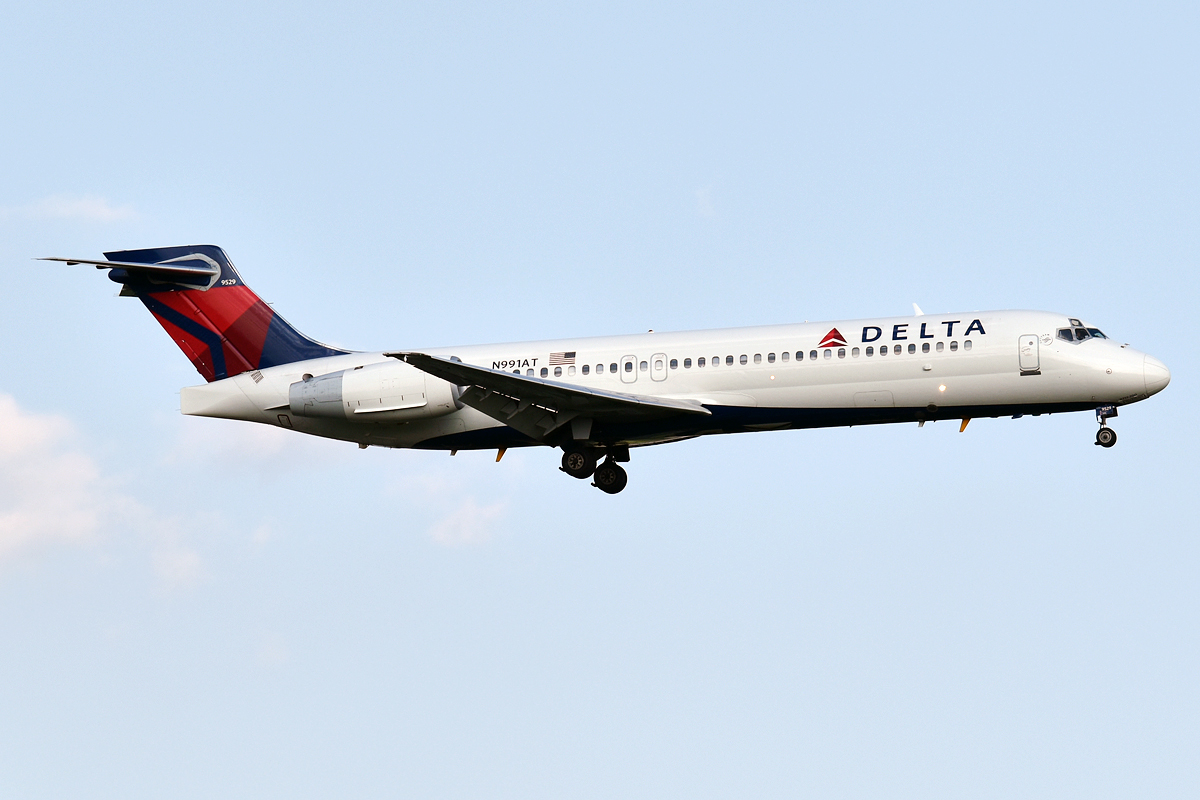
Historical Context & Origins
The Boeing 717-200, originally conceived as the McDonnell Douglas MD-95, represents the latest chapter in a legendary lineage of short-range airliners. Born out of the need to replace the aging Douglas DC-9 fleet and compete in the growing regional jet market, the project was an attempt to modernize a proven design with advanced technologies.
Its development was marked by a historic event in the aeronautical sector: the acquisition of McDonnell Douglas by Boeing in 1997. This merger led to the renaming of the MD-95 to the Boeing 717, a gesture intended to preserve a piece of the MD heritage while placing it under the prestigious Boeing brand. The first flight took place on 2 September 1998, marking the beginning of a short but intense career.
Architecture & Technological Design
The Boeing 717-200 is a narrow-body twin-engine aircraft designed for short- and medium-range routes, continuing the characteristic tail-mounted engine configuration iconic of the DC-9/MD-80 series. This design choice minimized the engines' exposure to debris on the runway and reduced cabin noise for passengers.
One of the most significant innovations was the adoption of modern Rolls-Royce BR715 turbofan engines, chosen for their exceptional fuel efficiency, reduced noise footprint and low emissions. The cockpit was equipped with an advanced EFIS (Electronic Flight Instrument System) glass cockpit, which reduced the pilots' workload and increased operational safety.
Onboard Specifications
- ◆High efficiency, low noise Rolls-Royce BR715 engines, optimized for the regional sector and reduced operating costs.
- ◆State-of-the-art cockpit with EFIS (Electronic Flight Instrument System) glass cockpit for greater efficiency and reduction of pilot workload, making flight management intuitive.
- ◆Robust design and fast turnaround times, inherited from the DC-9, ideal for high-frequency, short-range operations at airports with limited infrastructure.
Operational Career & Operators
Despite its advanced features, the Boeing 717-200 operated in a specific market niche. Its first and best-known carriers included AirTran Airways and Hawaiian Airlines, who appreciated its affordability and reliability on high-density regional routes. Its reputation for low operating costs and high reliability was a key factor for operators.
Production of the 717 ended in 2006, with a total of just 156 units built. Boeing's decision was influenced by the saturation of the regional jet market and its desire to concentrate resources on its more established 737 line. Despite limited production, carriers that have adopted it have often praised its robustness and operational effectiveness.
Legacy & Cultural Impact
The Boeing 717-200 holds the somewhat melancholy title of being the last commercial airliner designed entirely by McDonnell Douglas to enter production. Its existence testifies to an era of transition for the aviation industry and the adaptability of a fundamentally sound design to new technological and market challenges.
Even years after production ended, the 717 continues to fly, particularly in the fleet of Delta Air Lines, which inherited many examples and appreciates its efficiency and reliability. It represents a bridge between the glorious past of McDonnell Douglas and the future of commercial aviation, an aircraft that, despite not having achieved widespread diffusion, has left a lasting legacy of innovation and performance.
Telemetria Specs (HUD)
Hangar Trivia & Curiosità
- 💡The 717 was originally developed by McDonnell Douglas as the MD-95 before their merger with Boeing, and was the final aircraft design from the McDonnell Douglas lineage.
- 💡Despite its '717' designation, it shares no direct design lineage with the original Boeing 7x7 series, being a modern evolution of the venerable Douglas DC-9.
- 💡It was the last commercial aircraft produced at the historic Long Beach, California plant, a site that had been manufacturing aircraft since the 1920s under Douglas and McDonnell Douglas.
Archivio Avvistamenti Spotter
Immagini scattate dalla community in tutto il mondo