707-320B
Boeing
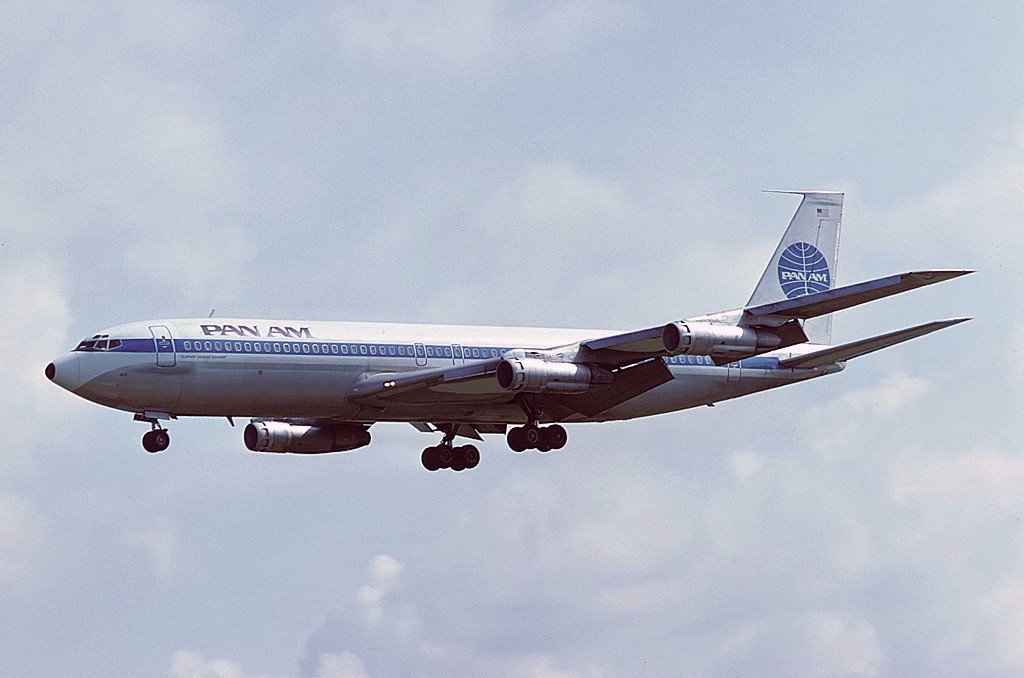
Historical Context & Origins
The dawn of the jet age in the 1950s was a time of extraordinary excitement and innovation, with the original Boeing 707 quickly establishing itself as a pioneer. However, it was the Boeing 707-320B, with its first flight in 1962, that definitively consolidated Boeing's dominance in the long-range air transport market, responding to growing needs for efficiency and autonomy.
This advanced version was not just a simple evolution, but a redefinition of transcontinental and intercontinental capabilities. Designed specifically to tackle long routes across oceans and continents, the 707-320B became the workhorse of major airlines, radically transforming the way we travel on a global scale.
Architecture & Technological Design
The heart of the 707-320B innovation lay in its refined aerodynamic design and cutting-edge propulsion. Retaining the iconic 35-degree swept wing, which provided exceptional subsonic performance and increased cruise speed, Boeing made significant structural changes to support higher operating weights and increased fuel capacities.
The real technological turning point was the adoption of Pratt & Whitney JT3D turbofan engines. These engines, a considerable evolution over previous turbojets, offered a significant increase in thrust, improved fuel efficiency and a notable reduction in noise, making flights cheaper, faster and significantly more comfortable.
Onboard Specifications
- ◆Pratt & Whitney JT3D Turbofan Engines: Revolutionary power and efficiency, with lower fuel consumption and reduced noise impact compared to previous turbojets.
- ◆Transcontinental/intercontinental autonomy: Ability to cover extreme distances, exceeding 8,000 km, opening new non-stop routes globally.
- ◆High cruise speed: Up to 970 km/h (Mach 0.86), setting new standards for the speed of commercial air travel.
Operational Career & Operators
The Boeing 707-320B dominated international skies for decades, becoming a mainstay of global airline fleets. Prestigious carriers such as Pan Am, TWA, BOAC, Lufthansa and Air France, and of course our Alitalia, chose it for its reliability and its ability to connect the world with direct flights, redefining the concept of scheduled air travel.
Its robustness, its load capacity and its intrinsic versatility made it ideal not only for passenger transport, but also for cargo conversions and specialized military roles, such as supply or patrol versions. Many examples remained operational for over 30-40 years, an eloquent testament to the engineering durability and foresight of Boeing's design.
Legacy & Cultural Impact
The legacy of the Boeing 707-320B is immense, not only as an icon of commercial aviation, but as a catalyst for global tourism and global connectivity. It has inspired generations of engineers and pilots, and its unmistakable silhouette has become synonymous with the international "jet-set", deeply permeating popular culture.
Considered a true game-changer, it laid the foundation for all of Boeing's future narrow-body airliners, including the famed 727 and 737, setting standards for performance and reliability. Its impact on modern air travel is incalculable, having shaped the expectations and infrastructure we now take for granted, making it a true flying monument to aviation history.
Telemetria Specs (HUD)
Hangar Trivia & Curiosità
- 💡La 'B' nel nome 707-320B indica l'adozione dei motori turbofan Pratt & Whitney JT3D, che fornivano una spinta maggiore e un'efficienza superiore rispetto ai turboreattori montati sui modelli 'A' originali.
- 💡Ha svolto un ruolo cruciale nell'aprire nuove rotte aeree intercontinentali, rendendo i viaggi a lunga distanza più veloci, confortevoli ed economicamente vantaggiosi per un pubblico più ampio.
- 💡Sebbene il 707 sia spesso confuso con il tanker militare KC-135 Stratotanker, entrambi derivano dal prototipo Boeing 367-80, ma sono velivoli distinti con design e scopi differenti.
Archivio Avvistamenti Spotter
Immagini scattate dalla community in tutto il mondo
Vettori Rilevati (Flotta Attiva)

Middle East Airlines
In Flotta: x3 u.

Lufthansa
In Flotta: x5 u.

Air France
In Flotta: x11 u.
Pakistan International Airlines
In Flotta: x5 u.
Air India
In Flotta: x4 u.
South African Airways
In Flotta: x7 u.

Qantas
In Flotta: x10 u.
El Al
In Flotta: x3 u.